REVIEW · PARIS
Paris: Choux Pastry and Chocolate Éclair Making Class
Book on GetYourGuide →Operated by Le Foodist · Bookable on GetYourGuide
Choux pastry feels fancy, but this class makes it practical. You get hands-on coaching to master choux pastry and the creamy fills, plus a small-group vibe with individual attention.
One possible drawback: if you’re traveling with kids, the kitchen rules are strict, so check ages before you book.
In This Review
- Key things I think you’ll care about
- Finding Le Foodist in Paris’s Latin Quarter for Choux and Eclairs
- The 3-Hour Flow: Welcome, Then Two Hours of Baking Work
- The Real Skill: Pâte à Choux, Crème Pâtissière, and Chantilly
- Piping Practice: How Your Chocolate Éclairs Actually Get Their Shape
- Tea-Time Stories with the Pastry Chef: Culture, Puns, and Coffee
- What You’ll Leave With: A Take-Home Box You Can Actually Use
- Price and Value: What $151 Buys You in Real Terms
- Who This Class Fits Best (and Who Should Think Twice)
- Quick tips to get better results when you’re piping in a class
- Should You Book This Choux and Éclair Class at Le Foodist?
- FAQ
- How long is the Paris choux pastry and éclair class?
- Where do I meet for the class?
- Is the class taught in English?
- How big are the groups?
- What pastries will I make?
- Do I get recipes to take home?
- Will I be able to take food home?
- Are children allowed?
- What does the class cost?
- Is cancellation and pay-later available?
Key things I think you’ll care about
- Small group size (up to 8) means you’re not just watching from the sidelines
- Hands-on instruction for the core trio: pâte à choux, crème pâtissière, and chantilly
- Real piping time for chocolate éclairs and choux puffs, not just theory
- Tea-time storytelling from English-speaking pastry chefs, with a playful French culture angle
- Take-home box + English recipes so you can repeat the results later
Finding Le Foodist in Paris’s Latin Quarter for Choux and Eclairs
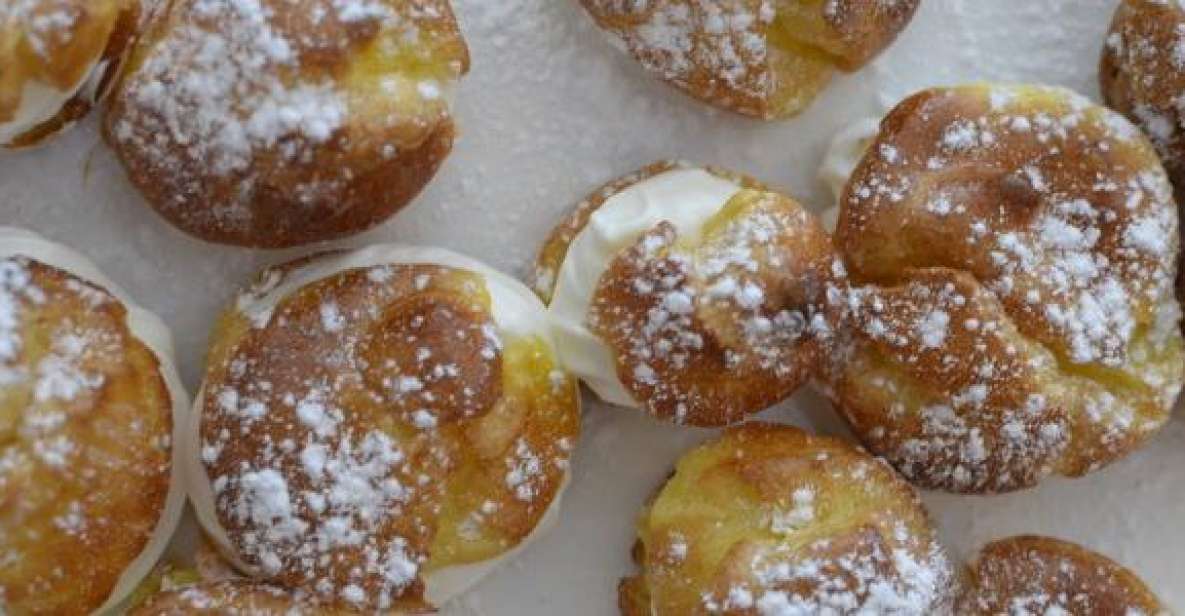
This class starts in the Latin Quarter, at Le Foodist, 59 rue Cardinal Lemoine (75005). It’s a great neighborhood to land in if you’re already doing the Notre-Dame area, because you can walk off the nerves afterward or plan a post-class stroll.
I like that the meeting point is specific and central. In a city where “nearby” can mean ten different things, knowing the exact address helps you show up calm and ready to bake.
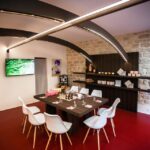
Also, the location matters because the vibe feels like a working pastry space rather than a show kitchen. That tends to make the whole session more hands-on. You’ll wear an apron, use the equipment provided, and focus on what you’re making, not on figuring out the room.
You can also read our reviews of more tours and experiences in Paris


The 3-Hour Flow: Welcome, Then Two Hours of Baking Work
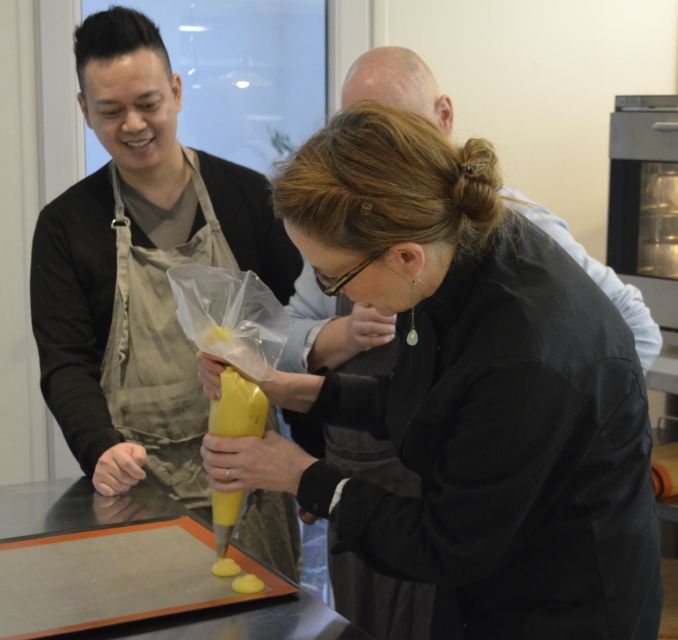
The total experience runs about 3 hours. Expect a welcome moment first, then roughly 2 hours of hands-on baking instruction. After that, you slow down with tea-time and storytelling while you enjoy what you made.
That structure is smart. Choux pastry is temperamental enough that rushing doesn’t help, and you need time to learn the basics before you pipe anything. The schedule gives you that ramp-up: you’re taught the building blocks first, then you build the final pastries.
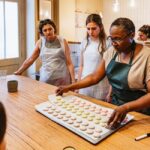
You’ll also meet your group at the start. Classes run in small groups, typically between 3 and 7 people, with a maximum of 8. That size is a big deal: you can ask questions without repeating yourself five times, and you’re more likely to get direct correction when your batter or consistency needs attention.
The Real Skill: Pâte à Choux, Crème Pâtissière, and Chantilly
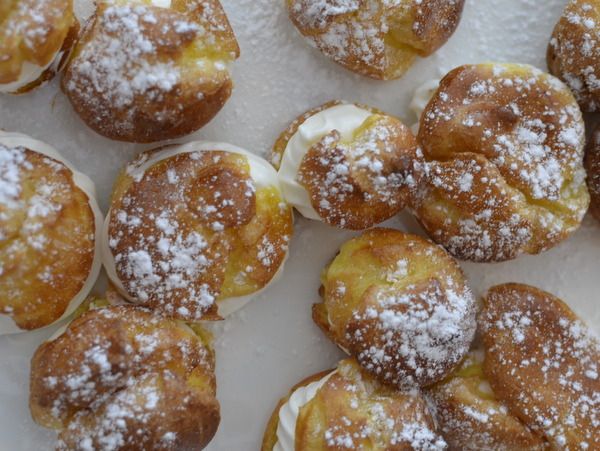
This class is built around three classic foundations. If you ever wondered how French patisserie produces those clean shapes and silky fillings, this is where you see it in action.
You’ll be taught how to make:
- Pâte à Choux (the dough used for éclairs and cream puffs)
- Crème Pâtissière (the custard filling base)
- Chantilly (a lighter, whipped cream-style component)
Why this trio matters: chocolate éclairs and choux puffs are not just “sweet treats.” They’re proof of technique. The success of a choux pastry mostly comes down to correct texture and proper baking behavior, and the fillings depend on getting them smooth and ready to pipe.
In a good class, the teacher doesn’t just tell you what to do. They explain what each part is supposed to look like as you work. You’ll see that here, with instruction in English and plenty of guidance as you move from one step to the next.
And yes, you’ll likely cover more than only sweet pastries along the way. The class description notes savory delicacies as part of the hands-on work, which is a nice change if you get bored only doing desserts.
Piping Practice: How Your Chocolate Éclairs Actually Get Their Shape
After the foundations, it’s time for the part most people come for: piping and assembling.
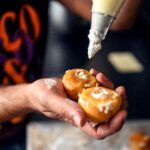
You’ll learn how to pipe and apply your skills to make:
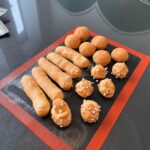
- Chocolate éclairs
- Choux puffs (often called cream puffs)
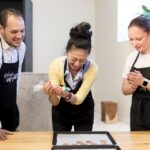
This is where the small-group format earns its keep. Piping is one of those skills where tiny differences matter. Your angle, your pressure, and your timing can change the final look. In a group of 8, the instructor can actually help you correct issues as they happen rather than only at the end.
Also, the class has a “from scratch” feel. You’re not handed finished shells. You’re making the base dough and working through the process enough to understand what you’re building.
One neat bonus from past sessions: choux variations can include more decorative classic forms. In at least one class, the group made an old-fashioned swan shape using choux pastry designs. If that style shows up during your time slot, it’s a fun reminder that pastry isn’t only about taste, it’s about form and technique too.
Tea-Time Stories with the Pastry Chef: Culture, Puns, and Coffee
A native French pastry chef enters during the session and brings in story time. It’s described as tongue-in-cheek, which usually means it’s funny without turning corny. You’ll get tea, coffee, or organic fruit juices as you listen.
What I like about this part is that it turns a cooking class into something more like a mini French cultural moment. You’re learning food, but you’re also getting the why behind certain traditions and habits that show up in French bakeries.
The instructor energy also comes through strongly in the way the class is run. Past classes have featured English-speaking chefs named Stefan, Florence, Stéphane (listed in a couple spelling variations), and Anne. Across those sessions, the consistent theme is clear instruction, patience, and a high-energy teaching style that keeps the atmosphere friendly rather than stiff.
This matters because pastry work is detail work. If you’re rushed or confused, choux pastry fights back. A relaxed but focused teacher makes a real difference.
You can also read our reviews of more tours and experiences in Paris



What You’ll Leave With: A Take-Home Box You Can Actually Use
At the end, you leave with a box of your own pastries. That means you’re not stuck with “taste it and forget it.” You can bring something home to share, or you can keep it for yourself over the next couple of days.
I also appreciate that the class includes both:
- a hard copy and
- an electronic copy
of recipes in English.
That turns your class from a one-time experience into a repeatable skill. You’ll have your reference right there when you try again later. Baking works better when you can check steps and ratios without guessing.
If you’re the type who wants to bring something back that feels personal, a take-home pastry box beats most souvenirs. It also makes your trip feel useful, because you’re not just consuming Paris—you’re practicing something that Paris is known for.
Price and Value: What $151 Buys You in Real Terms
At $151 per person for about 3 hours, this class sits in the mid-to-upper range for Paris cooking experiences. The question is: what are you actually paying for?
Here’s what you’re getting that helps justify the cost:
- Hands-on time (about 2 hours) where you actively work the dough and learn techniques
- Small group teaching with limited seats (between 3 and 7, up to 8)
- Equipment + apron are included, so you’re not paying extra for gear
- Recipes in English in both printed and electronic format
- Take-home pastries in a box you made yourself
- Tea-time storytelling that adds value beyond pure cooking instruction
In other words, you’re paying for time with an instructor and the chance to leave with edible results, plus the written backup to recreate the skills later.
If you enjoy cooking already, this is a strong choice because you’ll likely apply what you learn. If you’re brand new to baking, it can still be worth it, as long as you’re comfortable following detailed steps and don’t mind getting a little flour on your sleeves.
Who This Class Fits Best (and Who Should Think Twice)
This experience is ideal if you want a practical Paris food skill. It’s also good if you like sweet baking but want to learn technique, not just eat dessert.
It tends to work well for:
- first-time bakers who want clear guidance in English
- more serious cooks who want to refine choux pastry and pastry cream fundamentals
- couples or friends who want a shared hands-on project
- parent-child bonding trips, especially because at least one session included a mother-daughter pairing and emphasized how memorable the shared work was
One area to watch: kids and kitchen access. Unaccompanied minors aren’t allowed. More importantly, children under 12 can’t enter the kitchen and can’t participate. Children ages 12 to 16 must be accompanied by a participating adult. If you’re traveling with younger kids, plan around these limits or choose a different activity.
Quick tips to get better results when you’re piping in a class
Even though the instructor guides you, you’ll get better outcomes if you keep a few practical habits in mind:
- Watch the consistency cues the instructor uses. Choux pastry success is visual and tactile, not just measured by time.
- Pipe at the pace you can control. It’s better to move steadily than to rush toward the end.
- Ask about the next step while you still have time. Pastry has a rhythm, and waiting until the end can mean you bake the wrong thing twice.
- Take notes from the recipe pack immediately. The English recipes help later, so mark anything you want to remember for your next attempt.
Should You Book This Choux and Éclair Class at Le Foodist?
Yes, I’d book it if you want real technique and a small-group experience in a classic French pastry category. The combo of pâte à choux practice, crème pâtissière and chantilly building, and then actual piping for chocolate éclairs and choux puffs is exactly the kind of structured learning that sticks.
You should probably think twice if:
- you’re traveling with children who won’t meet the kitchen access rules
- you want a purely sightseeing-focused activity rather than a hands-on kitchen experience
- you dislike the idea of making dessert from scratch, even if it’s taught step-by-step
If your goal is to leave Paris with skills you can repeat, plus a take-home box and English recipes, this class delivers.
FAQ
How long is the Paris choux pastry and éclair class?
The class lasts 3 hours, with about 2 hours of hands-on baking instruction.
Where do I meet for the class?
Meet at Le Foodist, 59 rue Cardinal Lemoine, 75005 Paris.
Is the class taught in English?
Yes. The instructor provides instruction in English.
How big are the groups?
It’s a small group class, typically between 3 and 7 people, limited to 8 participants.
What pastries will I make?
You’ll make choux pastry (pâte à choux), crème pâtissière, and chantilly, then you’ll pipe and assemble chocolate éclairs and choux puffs.
Do I get recipes to take home?
Yes. You receive a hard copy and an electronic copy of all recipes in English.
Will I be able to take food home?
Yes. You’ll leave with a box of your own creations.
Are children allowed?
Unaccompanied minors are not allowed. Children under 12 years old cannot enter the kitchen, so they can’t participate. Children between 12 and 16 years old must be accompanied by a participating adult.
What does the class cost?
The price is $151 per person.
Is cancellation and pay-later available?
Free cancellation is available up to 24 hours in advance for a full refund. You can also reserve now & pay later.