
REVIEW · PARIS
Paris: Baguette and French Breads Class
Book on GetYourGuide →Operated by Le Foodist · Bookable on GetYourGuide
Baguettes have attitude, and you’ll learn it fast. In this Paris bread class with Le Foodist, I like the small group (max 8) and the fact that you leave with a bag full of your own breads to share. You get the full rhythm of French baking, from mixing through shaping, proofing, signing, and baking.
The main thing to consider: this is hands-on, but you may not be watching every tiny stage in extreme detail. One review notes you work in pairs, and they wished for more time seeing dough mixing and the bakes in the oven more directly, plus clearer bread ID by pair.
In This Review
- Key Things to Know Before You Go
- Paris Bread Class: Four Ingredients, Then a Lot of Choice
- Mixing Dough in a Small Group: What to Watch for First
- Proofing, Deflating, and Resting: The Timeline That Makes Bread Work
- Shaping Baguette and Brioche: Tension vs. Rolling
- Proofing and “Signing” Your Bread: Looks and Results
- Baking in a Real Oven: Temperature, Time, Humidity
- Taste Your Bread Like a Parisian: Cheese, Jam, and Pain Perdu Ideas
- Price and Value: Is $175 for 4 Hours Worth It?
- Who This Bread Class Suits Best (and Who Might Want Something Else)
- Should You Book the Paris Baguette and French Breads Class?
- FAQ
- How long is the bread class in Paris?
- What is the group size?
- What language is the instruction?
- What kinds of breads will I make?
- Is there an option to reserve without paying right away?
- What is the cancellation policy?
Key Things to Know Before You Go
- Small group size (8 max) means more attention than a big class.
- You start from four ingredients: flour, water, salt, yeast.
- You learn multiple shapes, including baguette tension and brioche rolling.
- You practice proofing, deflating, and resting, not just baking.
- Signing the dough matters, both visually and for results.
- You taste what you make with classic pairings like cheese, jam, and even a Pain Perdu-style idea.
Paris Bread Class: Four Ingredients, Then a Lot of Choice
The whole class centers on a simple truth: French bread isn’t magic, it’s method. You begin with the basics—flour, water, salt, yeast—and you learn how small decisions change the dough and the final crumb. That’s the part I find most useful. Once you understand what the dough is telling you, you can adjust later at home without guessing.
Because this is a short 4-hour session, everything moves in an efficient flow. You measure, mix, proof, shape, and bake. Along the way, your instructor explains what to look for as the dough changes. That’s key: bread is time-based, but it’s also visual and tactile. If you want a class that teaches the why behind the technique, this format works.
This is also a great way to get a taste of Paris food culture without doing another museum sprint. Bread is everywhere here, but learning the process gives you a new kind of respect when you walk into a boulangerie and notice details you would have missed before.
You can also read our reviews of more tours and experiences in Paris



Mixing Dough in a Small Group: What to Watch for First
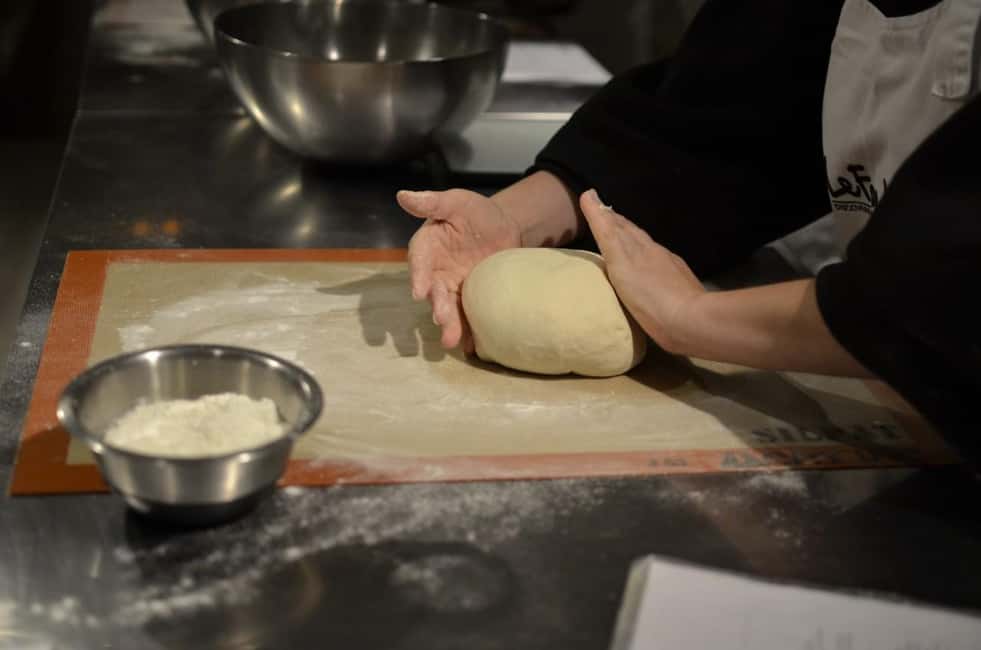
Before anything goes into the oven, you earn your bread. The class starts with measuring and mixing. You’ll mix your doughs first, and you’ll get guidance on what you’re aiming for when the dough comes together.
What I like about this portion is how it’s framed as “do this first, then you can do a lot of things.” The instructor points out that with the four ingredients, you can build variety, and even small additions like butter or oil lead you toward richer breads. That helps you connect simple recipes to real-world French variety.
Practically, you’ll learn early “do’s and don’ts” while you work. Bread dough has a feel, and it’s very sensitive to small changes. If your dough is too dry or too slack, your shaping and final structure will fight you later. A class like this saves you from learning that the hard way at home.
One more useful detail: you’ll work in a small setup, and some people end up working in pairs. That can speed things up, and it also means you’re not alone. Still, if you’re the kind of person who learns best by watching every moment closely, you might want to keep your questions handy and ask the instructor to walk you through specific steps while you’re already in motion.
Proofing, Deflating, and Resting: The Timeline That Makes Bread Work
After mixing, the class moves into proofing and rising. Proofing is where bread stops being a recipe and becomes a schedule. You’ll learn why dough needs time to rise, and then you’ll also practice deflating before shaping.
This is where technique matters. Proofing can’t be rushed without consequences. But you also can’t let the dough overdo it. The instructor’s job is to keep you on track with the timing and the logic. You’ll understand that each step has its own purpose, not just busywork between dough stages.
Resting shows up more than once, because shaping isn’t just about forming the loaf. It’s about building structure. For example, you’ll shape baguettes with tension. That tension isn’t a style choice; it affects how the bread expands in the oven. If the dough has been handled incorrectly or hasn’t rested properly, that tension can’t do its job.
If you’re hoping to learn “exactly what to do” for classic French shapes, this portion gives you the backbone. When you later try bread on your own, you’ll remember that success isn’t only about flour and yeast—it’s about sequencing.
Shaping Baguette and Brioche: Tension vs. Rolling
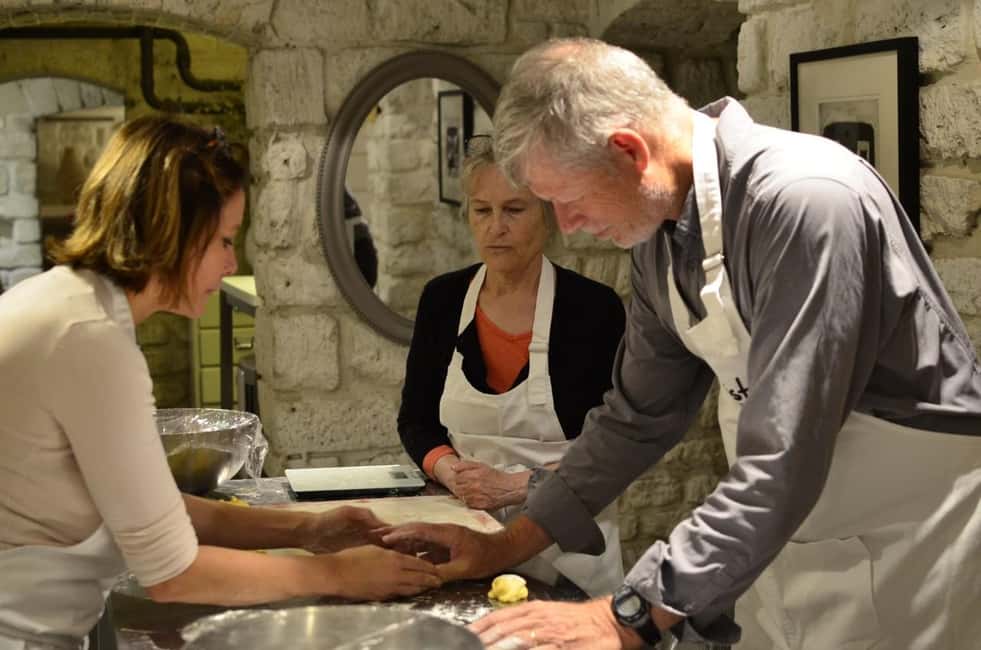
Once the dough is rested, it’s time to shape. And here’s the fun part: each bread shape teaches a different skill. You’re not just rolling dough into a loaf and calling it done.
For baguette, the critical skill is tension. You’ll learn how to handle the dough so it stays structured and can expand properly. It’s a hands-on lesson in restraint—how tight you shape, when you stop, and how you avoid degassing too aggressively.
For brioche, the technique shifts. Instead of tension-heavy shaping, you’ll roll and form, learning a more enriched-bread approach. Brioche is softer and richer in feel, so the handling is different. Even without deep chemistry, you can sense the difference in dough behavior as you work.
One review specifically mentions that in the four hours, the class made baguettes, brioche, and ciabatta from scratch. If your class covers those same items, you’ll get a nice range: crisp, airy shapes alongside richer, tender ones.
Proofing and “Signing” Your Bread: Looks and Results
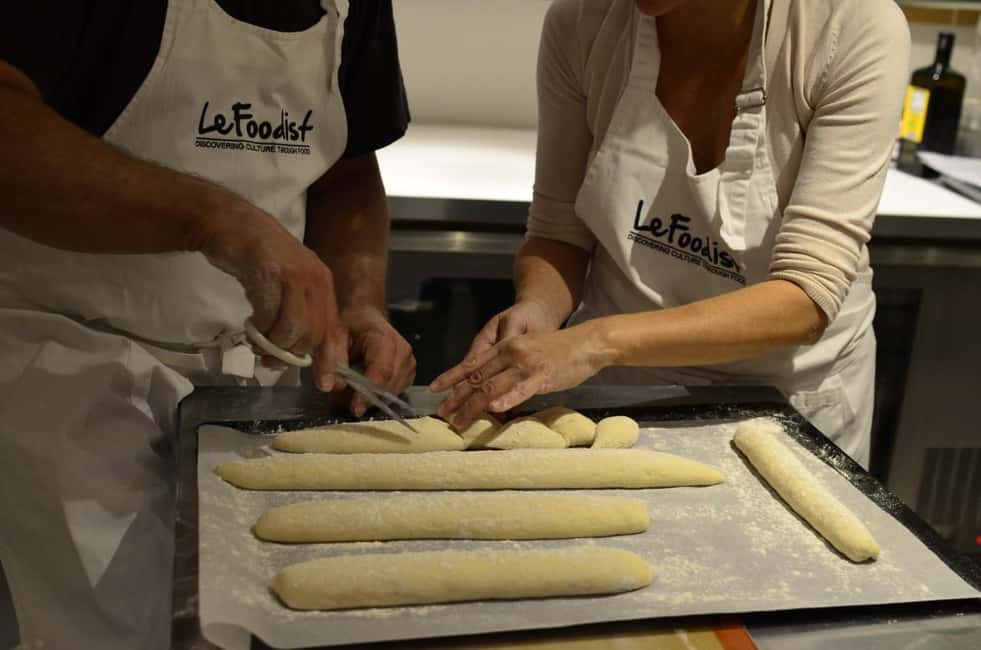
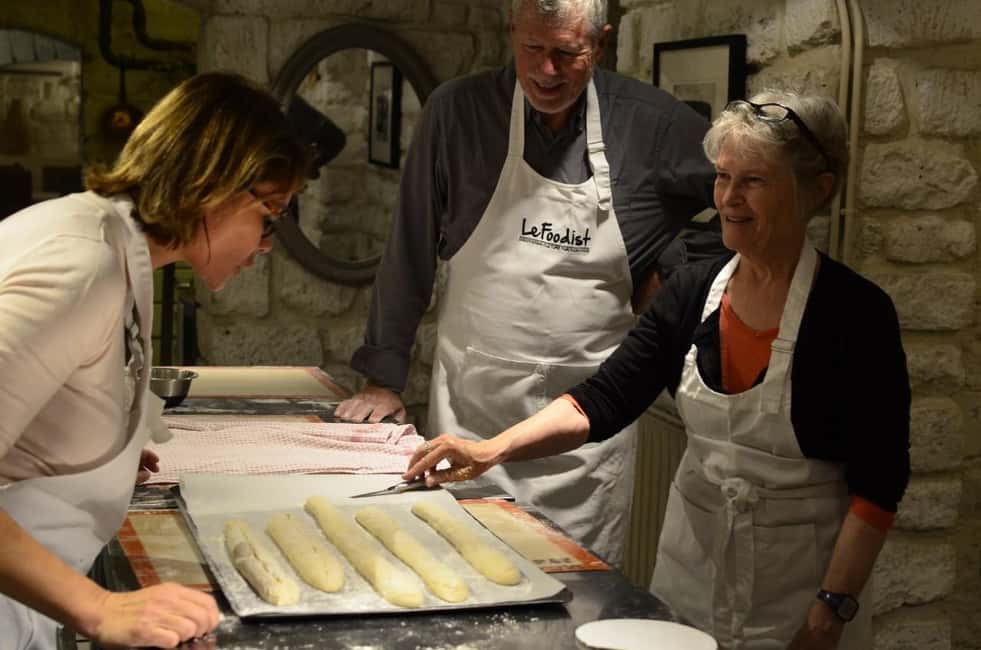
After shaping, you’ll proof again and then the class includes a step that many home bakers skip: signing, meaning scoring the dough so it opens in the oven the way it should.
This moment is described as aesthetically important, but it’s also critical to baking results. I’d say this is one of those lessons that instantly upgrades your bread. Scoring is not random decoration. It influences expansion and helps control where the loaf blooms.
Your instructor will guide you through it. Even if your first attempt isn’t picture-perfect, the guidance helps you understand what makes a good score: the depth, the speed, and the confidence to execute. You’ll feel how scoring becomes easier once you stop overthinking.
If you care about presentation, you’ll appreciate it. But even if you only care about flavor, this is still a practical step you want to learn correctly.






Baking in a Real Oven: Temperature, Time, Humidity
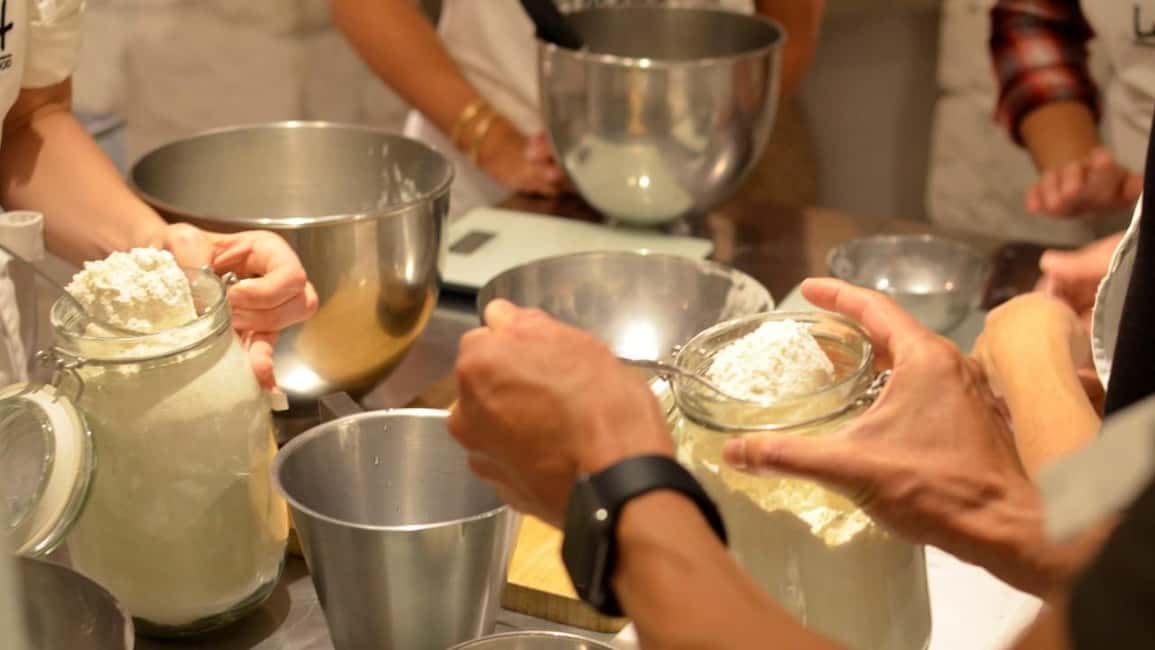
Finally, the oven. This is where bread baking stops being theoretical. The class explains that temperature, time, and humidity all impact the final results.
That last one—humidity—matters more than most people realize. Steam and moisture in the oven environment influence crust development and how the dough expands. You may not be able to control everything at home the same way a professional class setup does, but the point here is learning to respect the process rather than chasing a single “bake for X minutes” rule.
During baking, your goal shifts from technique to anticipation. You’ll taste the payoff soon, and you’ll also compare what you made to what you expected. That feedback loop is one of the best reasons to take a class instead of only reading recipes.
Taste Your Bread Like a Parisian: Cheese, Jam, and Pain Perdu Ideas
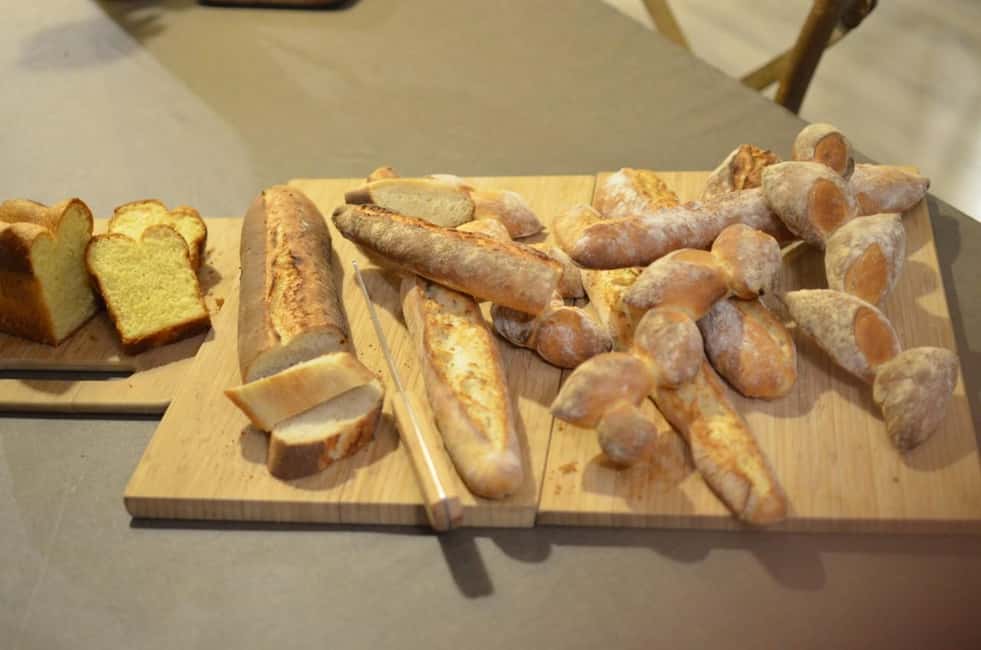
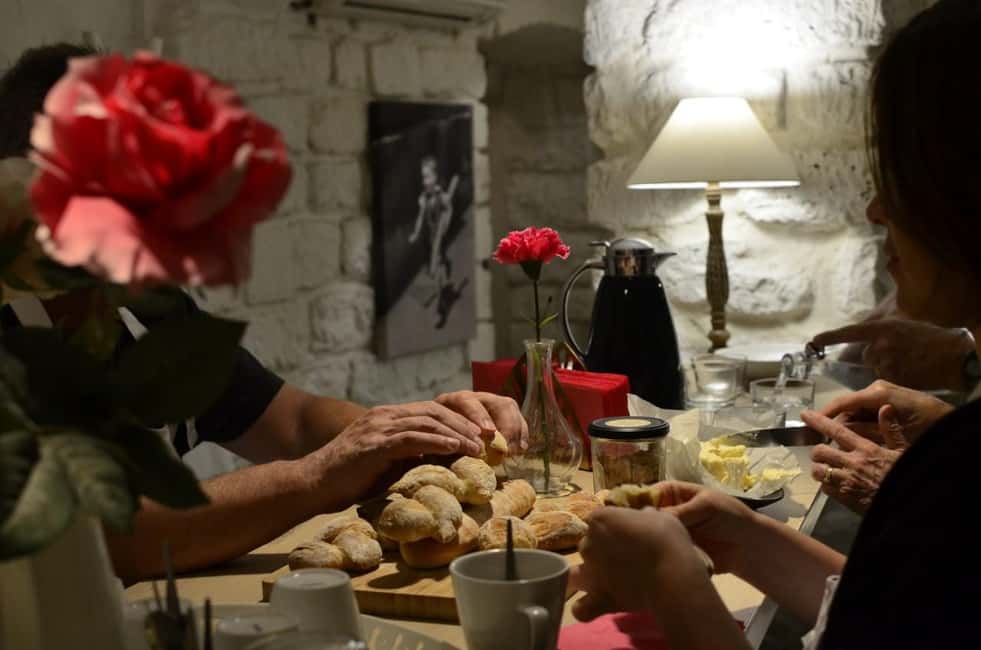
When it’s time to eat, you’ll taste your breads with different pairings. The class includes ideas like French cheese and jam. That pairing makes sense because your bread’s crust and crumb can handle sweet and salty flavors.
Some classes also include a cooking-style tasting idea using bread such as Pain Perdu. That’s a clever way to show that what you bake can be repurposed, not just eaten once. And it’s a reminder that French home cooks treat bread as flexible. A loaf isn’t just for today; it can become tomorrow’s meal too.
One review mentions they sat together at the end with butter, cheese, and wine. Even if your exact pairing lineup differs, the structure is the same: you finish by eating what you worked for.
This is one of the better parts of the experience because it anchors everything you learned. You don’t just watch bread become bread. You eat the results with context.
Price and Value: Is $175 for 4 Hours Worth It?
At $175 per person for a 4-hour small-group class, this isn’t a budget activity. But for what you get, I think it can be good value—especially if you like learning skills you can reuse.
Here’s why the price can make sense:
- You’re paying for instruction in real bread technique, not just watching someone else work.
- The class is limited to 8 participants, which tends to keep feedback more personal.
- In a 4-hour window, you don’t just bake one item. You work through multiple bread types (baguette, brioche, and ciabatta are specifically mentioned).
- You leave with a bag full of your creations, so you’re not paying just for knowledge—you’re also taking home food you made.
That said, it’s worth matching expectations. If you’re hoping for a super-technical, long, hyper-detailed class where you personally perform every micro-step solo and then watch every bake stage with total focus, you might feel constrained by the pace and the pair-work structure.
If you want a fun, skill-building session with real results and a take-home win, the math often works out in your favor.
Who This Bread Class Suits Best (and Who Might Want Something Else)
This class is a strong fit if:
- You like hands-on cooking classes and want to learn foundational bread method.
- You’re excited about classic French breads and want the technique behind baguette shapes.
- You enjoy structured learning: measure, mix, proof, shape, score, bake, then taste.
It may not be the best fit if:
- You want lots of time standing back and observing every stage in slow motion.
- You’re picky about precise identification of which bake belongs to which pair (one review called this out as an area that could be clearer).
Also, if you’re traveling solo, you’ll likely still enjoy it. You’re in a small group, and you share the end-of-class tasting as part of the experience. That helps the class feel social rather than like a kitchen lab you pass through.
Should You Book the Paris Baguette and French Breads Class?
If you want a practical Paris experience that teaches a skill you can actually repeat, I’d lean toward booking. You get real bread technique, you work through multiple classic styles, and you finish by eating what you made. The small group size also helps it feel less rushed than bigger classes.
I’d especially recommend it if baguettes and enriched breads like brioche are on your must-try list. The class doesn’t just show you what bread looks like. It teaches you why the dough behaves the way it does and why shaping and scoring matter.
So here’s the simple question to ask yourself: do you want to come home with bread-making confidence, not just a souvenir taste? If yes, this is an easy choice.
FAQ
How long is the bread class in Paris?
The class runs for 4 hours.
What is the group size?
It is a small group limited to 8 participants.
What language is the instruction?
The instructor speaks English.
What kinds of breads will I make?
The class focuses on baguette and French breads. One review specifically mentions making baguettes, brioche, and ciabatta from scratch.
Is there an option to reserve without paying right away?
Yes, it offers a reserve now & pay later option.
What is the cancellation policy?
You can cancel up to 24 hours in advance for a full refund.