REVIEW · PARIS
Notre-Dame Cathedral Exterior & Latin Quarter Guided Tour
Book on GetYourGuide →Operated by CONNECTING FRANCE · Bookable on GetYourGuide
Paris teaches itself in 2 hours. This Latin Quarter to Notre-Dame guided walk connects street-level Paris with big landmarks, from the Fontaine Saint-Michel to the cathedral façade. I love how the route mixes famous names (Panthéon, Notre-Dame) with satisfying stops you might otherwise skip, like St. Séverin and the Cluny Roman Baths. I also love the guides—when I see names like Benjamin, Pierre, or Pilou attached to a tour, it signals high energy and strong Q&A.
One thing to plan for: the tour runs fast-paced. You’ll cover a lot of ground and get plenty of background, so if you prefer slow sightseeing and long lingering, build in time for your own follow-up wandering afterward.
In This Review
- Key things I’d pin to your map
- Where This Tour Really Works: Latin Quarter First, Notre-Dame Second
- Meeting at Place Saint-André des Arts (and Why You Should Skip the Taxi Anxiety)
- Stop 1: Fontaine Saint-Michel, a 19th-Century Start That Sets the Mood
- La Sorbonne and the Latin Quarter Side Streets: Books, Cafés, and Ideas
- St. Séverin Church: Gothic Craft You Can Actually See Up Close
- Cluny Roman Baths: Lutetia’s Bones Under Paris Streets
- Panthéon: Neoclassical Power and the Church-to-Monument Story
- A Quiet Church Beside Notre-Dame: St. Julien le Pauvre’s Contrast
- Notre-Dame Exterior Finale: Sculptures, Gargoyles, and the 2019 Fire
- Optional Add-On: The 1-Hour Seine Boat Cruise With 11-Language Audio
- Price and Value: What $43 Buys You in Real Terms
- Who Should Book This Tour (and Who Might Prefer Something Else)
- Should You Book It?
- FAQ
- How long is the walking tour?
- Is Notre-Dame interior included?
- How big is the group?
- What language is the tour guide?
- Is it suitable for people with mobility impairments?
- Where does the tour start and end?
Key things I’d pin to your map
- Place Saint-André-des-Arts start: easy to find, and you’ll launch into the Left Bank immediately
- Fontaine Saint-Michel: a 19th-century showdown scene with Archangel Michael imagery
- St. Séverin Church: Gothic architecture that many first-timers miss
- Cluny Roman Baths: real reminders of Roman-era Lutetia in the middle of medieval Paris
- Panthéon up the hill: French icons and the church-to-monument story
- Notre-Dame exterior: sculptural details and the 2019 fire told from street level
Where This Tour Really Works: Latin Quarter First, Notre-Dame Second
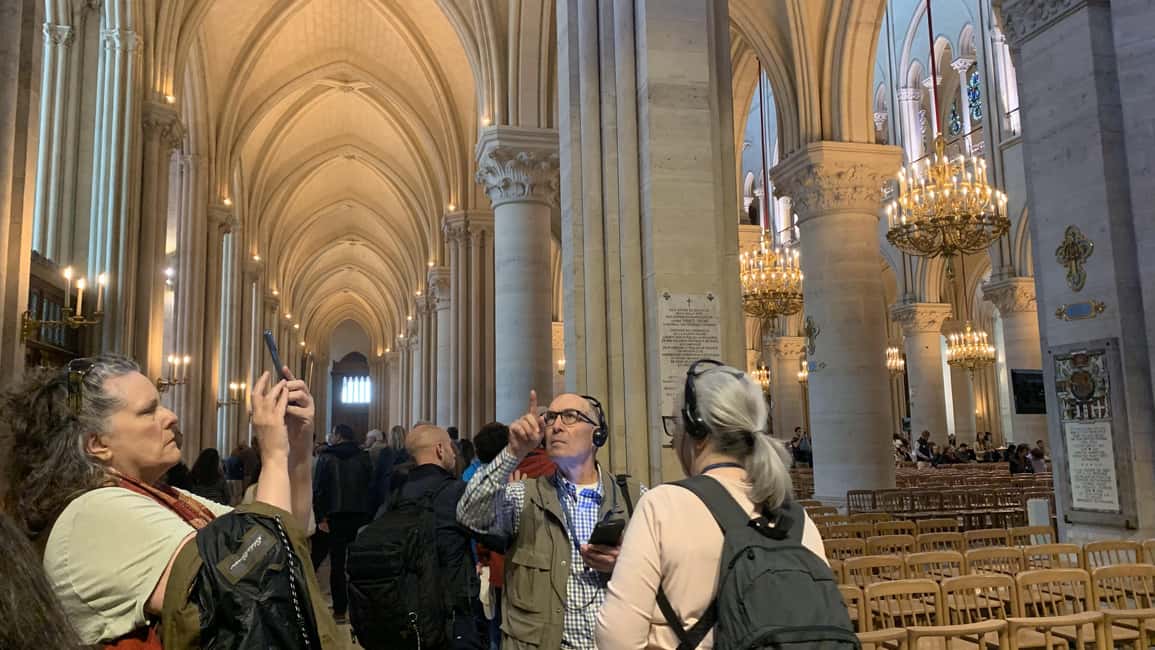
I like the logic of this tour. You don’t start at Notre-Dame and then rush somewhere else. You begin in the Latin Quarter area—around Place Saint-André des Arts—and that matters, because the Left Bank sets the tone for how Paris actually feels day to day.
The guide keeps things moving for about 2 hours, covering multiple eras in one walk: Roman remains, medieval churches, and French Revolutionary-era symbolism. You end up at Notre-Dame from a distance where you can focus on the façade, sculptures, and gargoyles without needing museum tickets or waiting lines.
There’s also a practical upside to the small group size. This tour is semi-private or private with a maximum of 11 people. That usually means you get a real guide rhythm—enough time for questions, but still a schedule that fits a short Paris visit.
You can also read our reviews of more guided tours in Paris

Meeting at Place Saint-André des Arts (and Why You Should Skip the Taxi Anxiety)
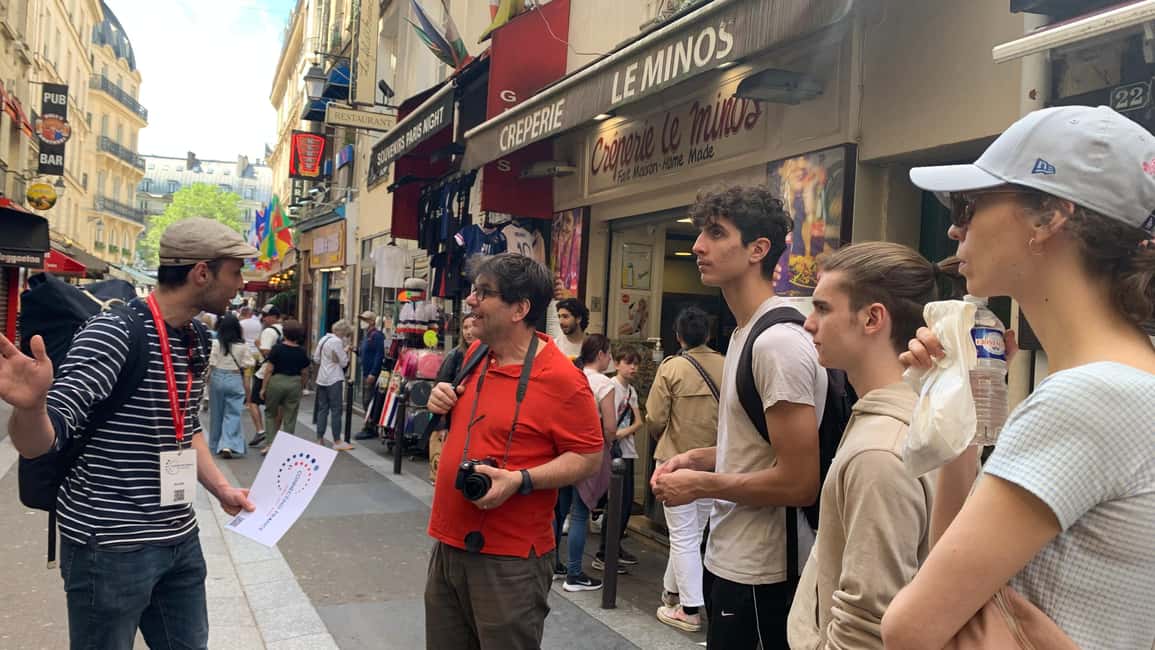
The meeting point is Place Saint-André des Arts, right in front of Café G. Your guide will be standing in front of the cafe with a sign that says Connecting France.
Here’s the small but useful tip: for this area, avoid Uber or taxi if you can. Traffic can stall you, and you don’t want to miss the start. Instead, plan to arrive a few minutes early on foot or via the nearest metro stop.
Also, expect to walk. The tour is described as flat-walking, but it still isn’t designed for mobility impairments. If that’s your situation, you’ll likely want a private tour option so the pace and route can be handled better.
Wear comfortable shoes, rain or shine. You’re walking Paris outdoors, and the route depends on cobblestones and city streets more than indoor warmth.
Stop 1: Fontaine Saint-Michel, a 19th-Century Start That Sets the Mood
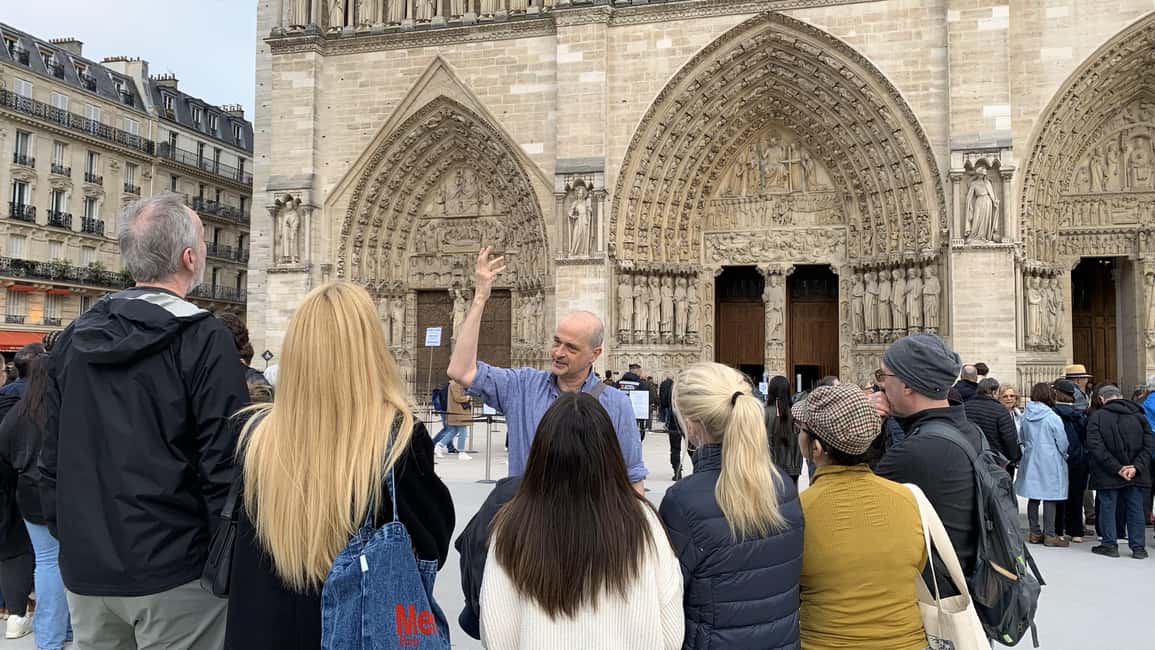
Your tour kicks off near the Fontaine Saint-Michel, a dramatic fountain built in the 1800s. The key detail here is the statue of Archangel Michael—Michael defeating the Devil. Even if you’re not a symbolism person, it’s a strong image to start with because it tells you you’re about to hear stories, not just see buildings.
This opening also helps you with orientation. You’re in an area where the streets funnel you toward the historic core, and a guide can use the fountain as a narrative anchor: why this spot matters, how people moved through the city, and how legends and power show up in stone and water.
If you like atmosphere, this first stop does its job. It’s not just a photo point; it’s a theme for the entire walk.
La Sorbonne and the Latin Quarter Side Streets: Books, Cafés, and Ideas
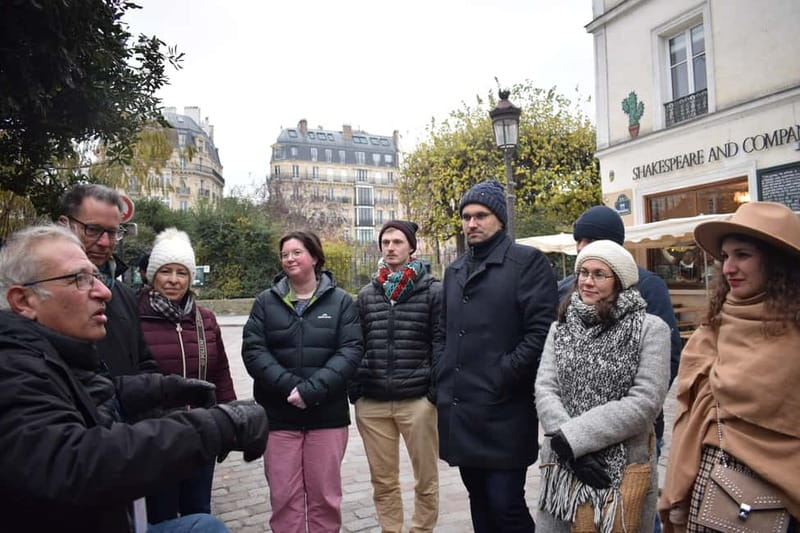
From the start, the walk leans into the Latin Quarter’s feel—small, lively, and cobblestoned streets lined with bookshops, cafés, and hidden courtyards.
La Sorbonne appears along the way, which gives you a modern academic anchor in the midst of older layers. The guide’s job is to connect the dots: students and thinkers in the area weren’t accidental. This neighborhood became an intellectual and artistic hub for centuries, and the streets reflect that.
What I like about this part is that it’s not just “look at the school.” The tour frames these streets as a place where ideas were made visible—through institutions, publishing, and daily life.
It’s also a smart stretch of walking time. It’s easier to pay attention to stories when you’re not staring at a single wall of stone for 45 minutes. You get movement, context, and small glimpses as you go.
St. Séverin Church: Gothic Craft You Can Actually See Up Close
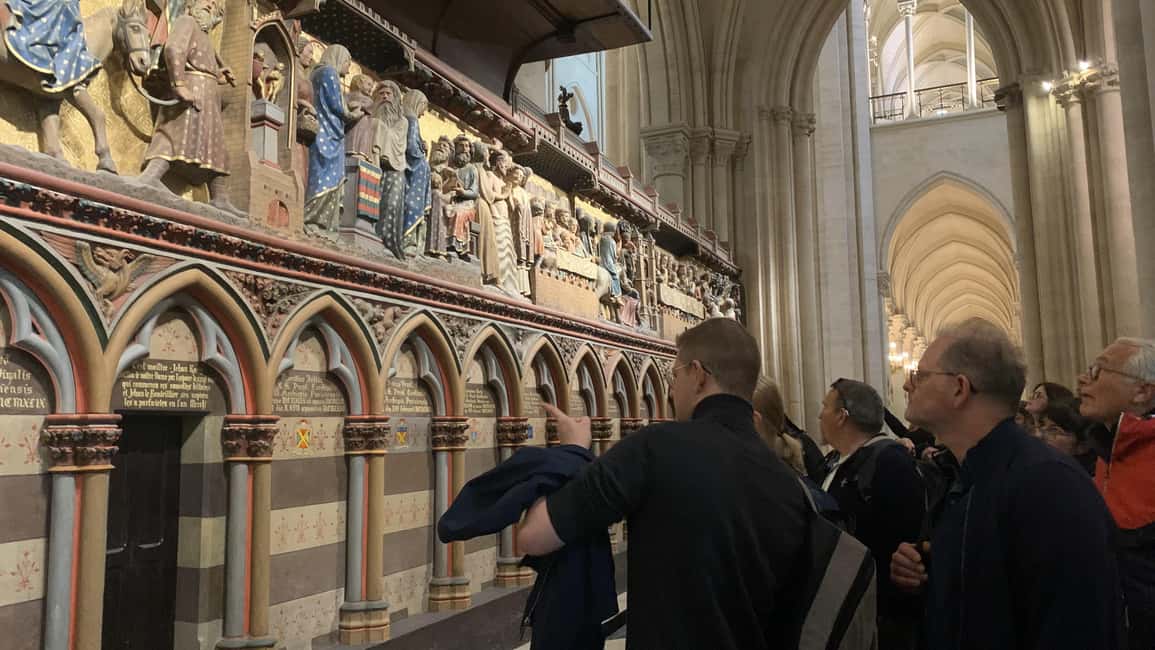
Next comes St. Séverin Church, described as a masterpiece of Gothic architecture and one of the more enchanting lesser-known stops. If you’ve only studied Gothic churches from postcards, you’ll probably appreciate this one for its hands-on detail.
Two features matter here: the medieval stained-glass windows and the double ambulatory. That double ambulatory is a technical design choice, but the guide translates it into human terms—how the church works, how space is shaped, and why it feels so “right” for the flow of worship.
This is also where the tour’s academic tone can show up in a good way. If you enjoy architecture terms and the why-behind-the-what, St. Séverin gives you something concrete to listen for. If you’re mostly there for quick sights, you still get something worth caring about.




Cluny Roman Baths: Lutetia’s Bones Under Paris Streets
Then you step back in time to the Cluny Roman Baths, remnants of the ancient Roman city of Lutetia. This stop is a reality check: you’re seeing evidence of a city that existed long before today’s skyline, and the guide explains how baths shaped daily life.
What makes this stop valuable is the contrast. Roman baths in Paris can feel like a hidden puzzle. You’re surrounded by medieval streets and later monuments, but your feet land near Roman foundations and traces of an everyday routine from centuries earlier.
You’ll also pass the Cluny Museum area in connection with the ruins, which gives context for what you’re looking at—without requiring you to enter museums during this particular outing.
If you love “how did people live here?” history, this is the moment where the tour earns its ticket price.
Panthéon: Neoclassical Power and the Church-to-Monument Story
As the route goes uphill, you reach the Panthéon, a neoclassical mausoleum where French icons are laid to rest. The guide ties the place to names like Voltaire, Rousseau, Victor Hugo, and Marie Curie, which helps you see the monument as more than a building.
The big story here is transformation: it was originally built as a church, then later reshaped into a national monument to French excellence. That church-to-monument arc is exactly the kind of “Paris timeline in one stop” idea that makes walking tours click.
From street level, you may not get the same access as a full visit inside, but the exterior setting and the symbolism still come through. It’s a pause that gives your brain a new label for what you’re seeing—this isn’t just about religion or architecture, it’s about what France wanted to remember.
A Quiet Church Beside Notre-Dame: St. Julien le Pauvre’s Contrast
Right near Notre-Dame, you get another contrast stop: St. Julien le Pauvre, an old church dating back to the 12th century. It’s described as having a Byzantine-style feel and provides a different visual language than the more famous cathedral beside it.
Why does this matter? Because it helps you understand Notre-Dame as part of a cluster, not a lonely masterpiece. When you notice surrounding churches and eras, Notre-Dame stops feeling like an isolated icon and starts feeling like a chapter in a bigger medieval story.
Even if your photos are mostly for Notre-Dame, this contrast spot makes your mental map more accurate.
Notre-Dame Exterior Finale: Sculptures, Gargoyles, and the 2019 Fire
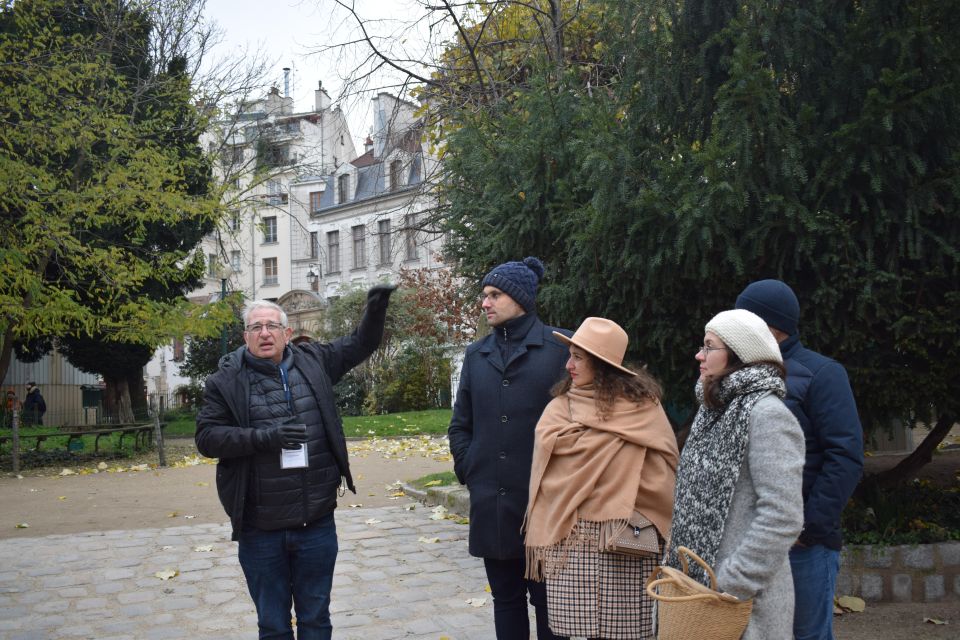
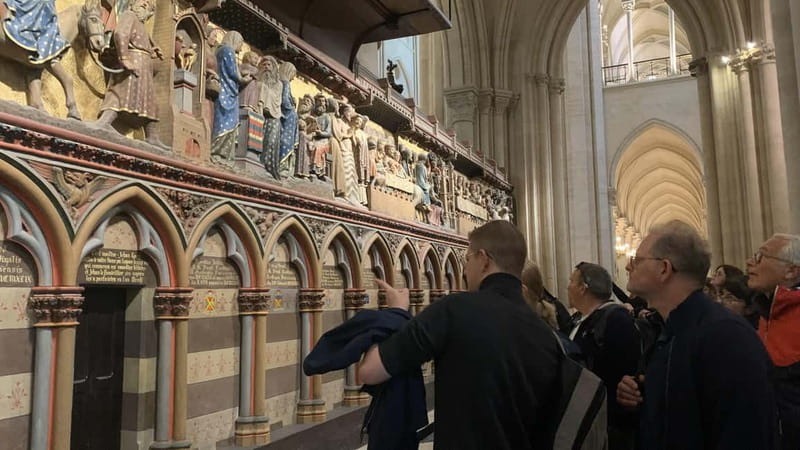
The tour culminates at Notre-Dame Cathedral with exterior viewing. Interior access for guided tours is noted as restricted, so you’re focusing on what you can actually appreciate from outside: the façade, sculptures, and gargoyles.
The guide also recounts Notre-Dame’s dramatic history, including the tragedy of the 2019 fire. Listening to that story while standing near the remaining details makes the history feel present, not distant.
This finale works especially well because the tour has already built your context. You’ve moved from Roman to Gothic to Enlightenment-era commemoration. So when you stand before Notre-Dame, you don’t just see a famous building—you understand why it became the kind of symbol it is.
Optional Add-On: The 1-Hour Seine Boat Cruise With 11-Language Audio
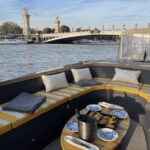
If you want a “Paris in one line” moment after walking, there’s an optional 1-hour Seine River boat cruise. The route focuses on panoramic views of major landmarks, including views of the Eiffel Tower and Notre-Dame, plus areas around Île de la Cité.
The audio is available in 11 languages, and the boat passes under some of the most famous bridges of the Seine. The description also points out a long list of sights you’ll see from the water: Les Invalides (where Napoleon rests), Musée d’Orsay, Hôtel de Ville, Louvre Museum, Place de la Concorde, and Grand Palais.
This is a smart companion to the walking tour because it changes your vantage point. From the street, Notre-Dame dominates your field of view. From the river, it’s one part of a broader Paris panorama. If you hate museum lines or you’re tired from cobblestones, the cruise can feel like a reset button.
Price and Value: What $43 Buys You in Real Terms
At $43 per person, you’re paying for time with a professional guide and a curated walk that hits multiple landmarks in about 2 hours. What you’re not paying for is entrances, food, or Notre-Dame interior access—those are not included.
So how do you judge value? I look at three things:
- Site variety per hour: Roman baths, Gothic church architecture, a national monument, and Notre-Dame exterior all fit into a short walking window.
- Small-group feel: max 11 persons helps the guide handle questions without turning the tour into a lecture for a crowd.
- Guide quality signal: the repeated mention of guides such as Benjamin, Pierre, and Pilou suggests the storytelling and engagement matter here, not just the route.
If you’re the type who enjoys context—why something was built, how it changed, what a design element means—this price feels reasonable. If you only want quick sightseeing and zero narrative, you might find the pace heavy.
Who Should Book This Tour (and Who Might Prefer Something Else)
This tour is a great match if you:
- want a high-density Left Bank experience in a short visit window
- like architecture and “how the city layers over time” stories
- enjoy asking questions and getting direct answers from your guide
- want an efficient way to see Notre-Dame’s façade without committing to an interior plan
You might look at other options if you:
- prefer very slow sightseeing and lots of free time at each stop
- need accessibility accommodations beyond flat walking
Also, if your schedule is tight, the optional Seine cruise can turn a rushed day into a calmer one by adding a viewpoint shift without more walking.
Should You Book It?
Yes, I think you should book this tour if you want Paris history you can walk through. It’s built around the Latin Quarter’s personality and ends with Notre-Dame in a way that respects what’s accessible. With the small group size and guides called out for energy and clear explanations, you get more than a checklist of landmarks—you get a sense of how the pieces connect.
If you’re mainly photo-only and short on attention for details, consider skipping the tour and doing self-guided wandering instead. But if you like stories, the 2-hour structure is exactly long enough to feel informed and still have time to roam afterward.
FAQ
How long is the walking tour?
The guided Latin Quarter and Notre-Dame exterior walk lasts about 2 hours.
Is Notre-Dame interior included?
No. The tour focuses on Notre-Dame from the outside, and entry to the cathedral interior is not included.
How big is the group?
The tour is semi-private or private, with a maximum group size of 11 people.
What language is the tour guide?
The live tour guide offers English.
Is it suitable for people with mobility impairments?
The tour is described as flat-walking but not suitable for people with mobility impairments. A private tour may be a better option.
Where does the tour start and end?
It starts at Place Saint-André des Arts in front of Café G, and it ends back at the same meeting point.