REVIEW · PARIS
Mysteries of Père Lachaise
Book on GetYourGuide →Operated by Cultival · Bookable on GetYourGuide
Graves here feel like scenes. Père Lachaise is the kind of Paris stop where you can go from famous names to strange tomb stories fast, and a 90-minute guided walk keeps it sharp and easy to follow. I especially like the humour and the way the guide turns cemetery facts into memorable mini-stories.
One thing to consider: this tour is French-only, and the route can mix in more general history/politics alongside the gothic mysteries.
In This Review
- Key things I’d circle before you go
- Why Père Lachaise Mysteries Works as a 90-Minute Story Walk
- Meeting at the Main Entrance: How to Start Smoothly
- The Cemetery’s Famous Name Problem (and Why You’ll Still Enjoy It)
- Abelard and Héloïse: Love, Reunion, and Alexander the Black
- Countess Demidoff: The Vampire Woman with a Strange Will
- Robertson and the Grand Master of Illusions
- The Count of Lavalette: Adventure Written in Stone
- Alan Kardec and Spiritualism: Communicating with the Dead
- How to Enjoy the Walking Part Without Getting Beat Up
- Price and Value: Is $17 Worth It?
- Who This Tour Fits Best (and Who Might Want a Different Plan)
- Should You Book Mysteries of Père Lachaise?
- FAQ
- Is the tour guided?
- What language is the tour in?
- How long is the tour?
- Where do I meet for the tour?
- How much does it cost?
- Is the tour accessible for people using a wheelchair or pushchair?
Key things I’d circle before you go
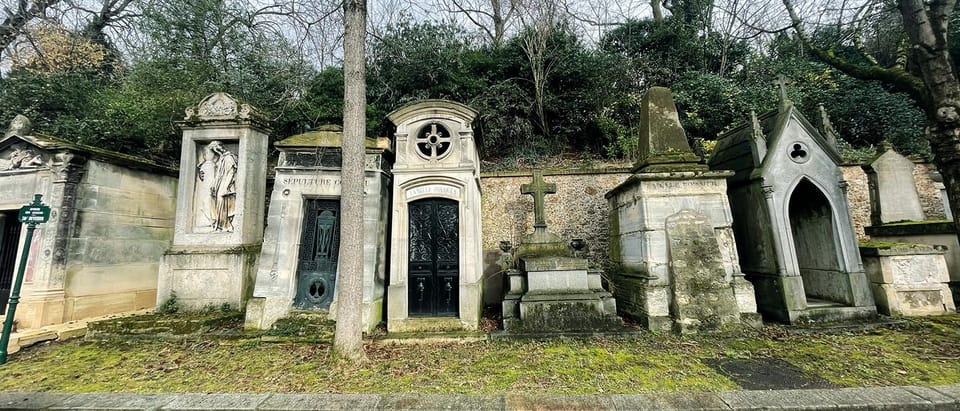
- A story-first route through a cemetery famous for both big names and odd myths
- French-only guiding, so your enjoyment depends on how comfortable you are in French
- Macabre themes like spiritualism and superstition, told in real locations
- Specific tomb stops tied to Abelard and Héloïse, Demidoff, Robertson, Lavalette, and Allan Kardec
- Good walking shoes matter because cobblestones, slopes, and uneven ground are part of the experience
Why Père Lachaise Mysteries Works as a 90-Minute Story Walk
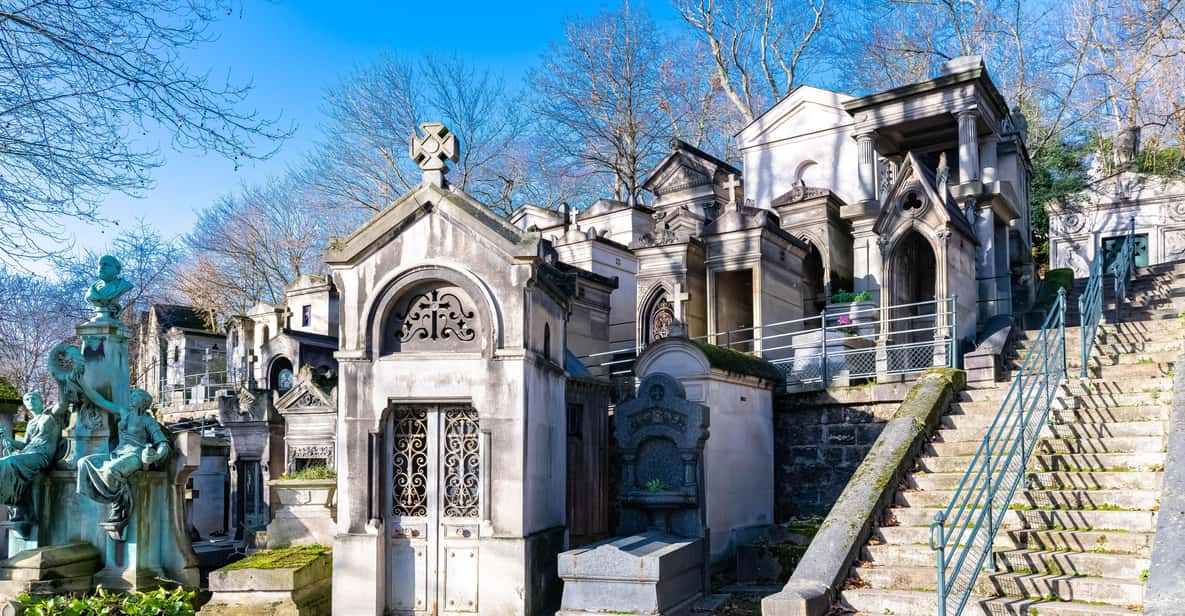
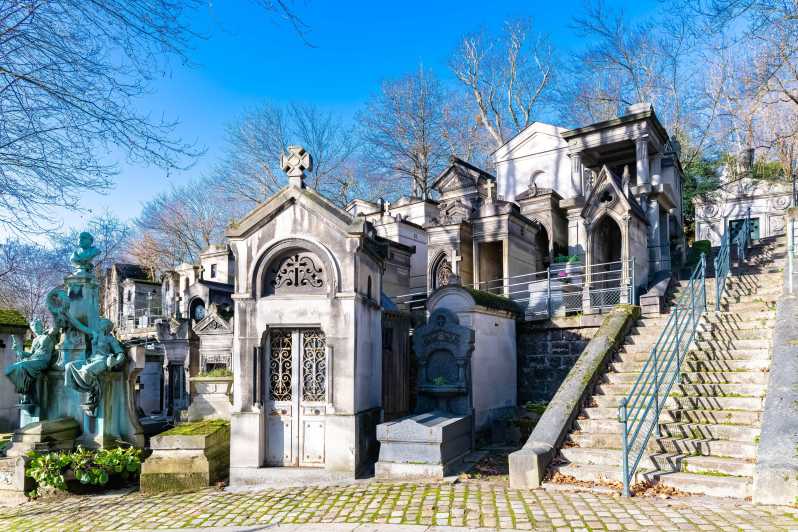
Père Lachaise is Paris at its most atmospheric. It’s an old cemetery, yes, but it also reads like a catalogue of human drama: love, ambition, faith, tricks, and fear—all pressed into stone and set along winding paths.
What makes the Mysteries of Père Lachaise experience work is the tight time frame. Ninety minutes is long enough to get oriented and hit the key “mystery” stops, without turning into a slog. You’re not wandering alone, guessing what to look for. You’re moving with a guide who can explain why a tomb matters and why certain legends stuck.
And while the cemetery includes household-name graves like Balzac, Oscar Wilde, Proust, Baron Haussmann, Edith Piaf, and Jim Morrison, this tour isn’t only about celebrity memorials. It leans into the eerie side: the gothic taste of earlier eras, the appetite for the supernatural, and the idea that a grave can still feel like a plot twist.
You can also read our reviews of more tours and experiences in Paris.


Meeting at the Main Entrance: How to Start Smoothly
Plan to meet at the main entrance on boulevard de Ménilmontant, opposite rue de la Roquette, in the 20th arrondissement. The simplest metro options are:
- Père Lachaise (Line 3)
- Philippe Auguste (Line 2)
You can also use buses 61 or 69.
Why this matters: the cemetery is big, and the paths are not designed for rapid “I’ll just find it” moments. If you start right at the main entrance, you’ll feel the tour settle in immediately instead of spending your first ten minutes looking for the group.
Tip: give yourself a couple of extra minutes. Even with a meeting point, you’ll still want a minute to scan the entrance area so you don’t arrive flustered.
The Cemetery’s Famous Name Problem (and Why You’ll Still Enjoy It)
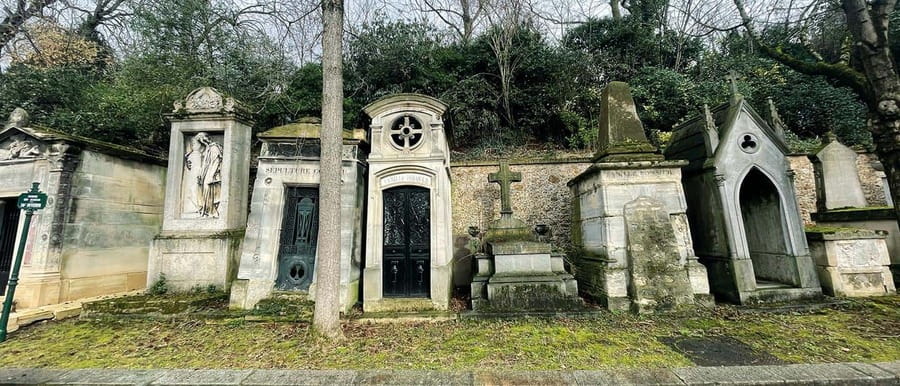
Let’s be honest: the big-name graves are a magnet. You might spot the familiar names and wonder if the tour will turn into a celebrity walk. Here’s the balance: the cemetery’s fame helps set the stage, but the tour’s real engine is the “why” behind the tomb stories—especially the weirder ones.
You’ll hear about how Père Lachaise became a kind of stage for romantic-era imagination. Earlier generations were into the dramatic mood of the gothic, and the cemetery fit perfectly with that taste for the macabre. That context makes the unusual tombs feel less random and more meaningful.
So if you’ve ever felt museum tours can sound like a list of dates, this style is the opposite. You’re supposed to be surprised. You’re supposed to follow a thread, not memorize a timeline.
Abelard and Héloïse: Love, Reunion, and Alexander the Black
One of the clearest “mystery” stops is the final resting place of Abelard and Héloïse. You’ll hear the story of ill-fated lovers who, in the cemetery mythology, end up reunited in eternity thanks to Alexander the Black, described here as a curator at the dawn of the 19th century.
Even if you already know the broad legend of Abelard and Héloïse, the cemetery setting changes the feel. The story isn’t delivered as a lecture. It’s presented as a living narrative anchored to the physical site. That’s the big win with this tour style: the stone is part of the meaning.
What to do on the stop: look at the tomb area and slow down for a moment. A lot of people rush through graves like they’re just landmarks. On this one, give yourself a few seconds to let the love-story mood land—because that’s exactly what the guide is aiming for.
Countess Demidoff: The Vampire Woman with a Strange Will
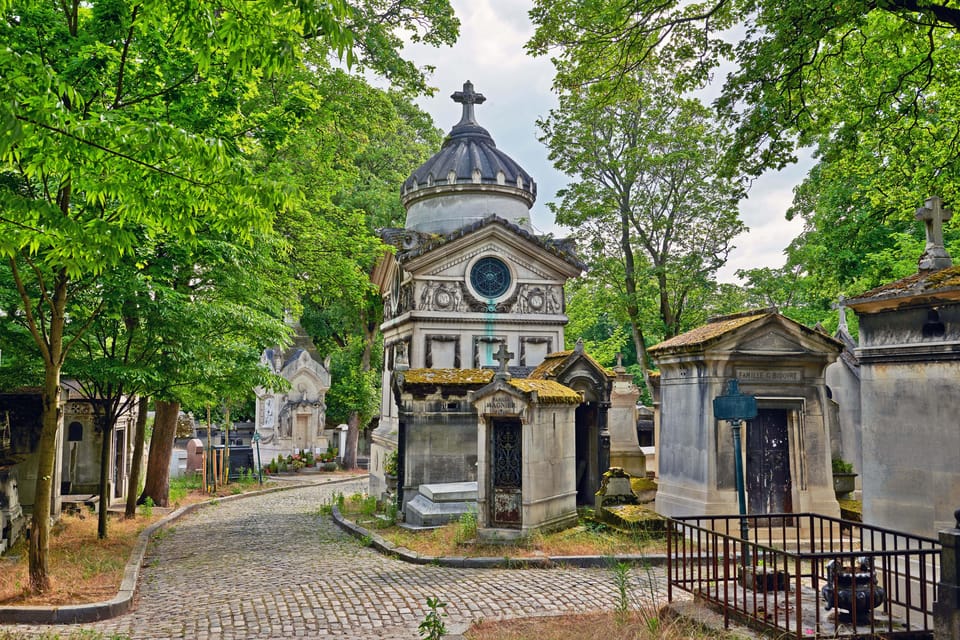
Next up is the stop for Countess Demidoff, described as the vampire woman with a strange will. That alone tells you the direction: this isn’t polite cemetery tourism. It’s myth-forward.
The value here isn’t just the shock factor. A legend like this shows you how people used to process fear and fascination. In a cemetery, the line between memorial and story can blur fast. The tomb becomes a prop in an ongoing cultural conversation—one that the guide helps you understand in a place where the setting does half the work.
Practical tip: if you’re the type who likes to ask questions, this is where you can. The tour’s best moments tend to come from dialogue, not just listening.



Robertson and the Grand Master of Illusions
You’ll also visit the final resting place of Robertson, called the Grand Master of illusions. The description leans into imagery like skulls and phantasmagorias, tied to the spirit of Time.
This is one of those stops where you’ll likely start thinking about performance and how it shows up in art and memorials. Graves can reflect what a person loved—what they built their identity around, what the public associated with them, and what kind of spectacle followed them even after death.
What makes it fun in a guided context: your guide can connect the symbolism to what you’re actually seeing. You’re not left interpreting alone.
If you’re into theatre, stage effects, or the culture of illusion, don’t rush this segment. Give yourself enough time to look at the decorative details the guide points out.
The Count of Lavalette: Adventure Written in Stone
Then there’s the Count of Lavalette. This stop is framed through his life of adventure—another clue that the tour focuses on personality-driven tomb stories rather than just dates and locations.
Even with limited details provided here, the payoff is the same: you’re learning how to read a cemetery like a collection of characters. A guided tour makes that easier, because someone else is doing the linking for you.
If you like a bit of drama in your travel plans, this is the middle stretch where the mood stays playful and slightly eerie. You’re moving from legend to legend, not getting stuck in one heavy tone.
Alan Kardec and Spiritualism: Communicating with the Dead
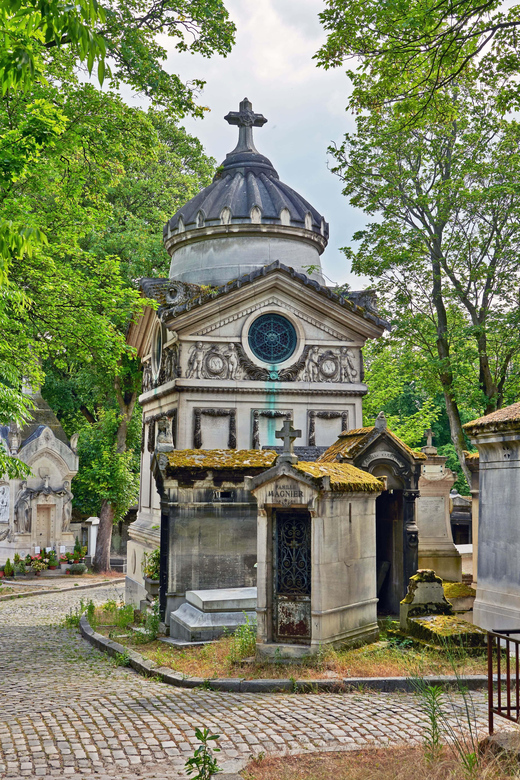
The tour includes a stop for Alan Kardec, presented as a spiritualist who communicated with the spirits of the dead somewhere in the afterlife.
This part matters because it connects directly to the cemetery’s darker, older romantic interests. The experience mentions things like revolving tables and the supernatural—so the tour isn’t only about monsters or theatrical myths. It also points toward an era when people tried to make sense of death through spiritual practice.
You’ll likely leave this stop thinking about why people are drawn to séances and other belief systems, especially when grief is involved. Whether you personally believe in spiritualism or not, the cemetery setting turns it into a window on how humans cope.
How to Enjoy the Walking Part Without Getting Beat Up
This is a walking tour. And it’s not the smooth, flat kind.
You’ll deal with cobbled paths/footpaths and slopes, so comfortable shoes are highly recommended. Plan your outfit accordingly—this isn’t the time for thin soles or shoes you don’t trust.
Two more ground-level notes:
- Père Lachaise is a place of meditation, so you can’t always count on access to every tomb.
- The tour is not accessible for people with reduced mobility or pushchairs, since the route includes cobbles, slopes, and uneven ground.
My advice: treat this like a cemetery hike-lite. You’ll enjoy it more when you’re not thinking about foot pain every five minutes.
Price and Value: Is $17 Worth It?
At $17 per person for a 90-minute live guided walk, you’re paying for two things: time-saving orientation and story-driven interpretation.
The cemetery is self-guided, sure. But if you just wander, you’ll likely miss the reason each unusual tomb matters. The tour’s value is that you get guided context—especially for the strange stops like Demidoff, Robertson, and Kardec—so you don’t have to guess what you’re looking at.
Two value signals from the tour’s track record:
- The guide style is often praised for being friendly and funny, not stiff.
- The guide is also described as professional and able to answer questions, which is a big part of turning a tour into a conversation.
The trade-off is the language: French-only. If you’re not comfortable following French storytelling, the price won’t feel like a bargain because you’ll be stuck catching fragments.
Who This Tour Fits Best (and Who Might Want a Different Plan)
This tour is a great match if you:
- enjoy gothic-style legends in an actual real-world setting
- want a short, focused cemetery experience (90 minutes, not hours)
- like guides who bring humour and answer questions
- can comfortably follow French commentary
You might look for another option if you:
- need an English-language tour
- want a purely political/history-heavy route (because the theme here is mysteries and unusual tomb stories)
- have mobility limitations that make cobbled slopes a problem
Should You Book Mysteries of Père Lachaise?
Yes, I’d book it if you want an eerie, well-paced cemetery walk with strong storytelling and a clear target theme. The main reason to choose it over wandering on your own is that the tour connects you to specific mystery tombs—Abelard and Héloïse, Countess Demidoff, Robertson, the Count of Lavalette, and Alan Kardec—and gives you the interpretive thread so the cemetery feels like a story, not a maze.
If you’re confident in French and you’re okay with uneven ground, this is a solid value for time and mood.
FAQ
Is the tour guided?
Yes. The tour includes a live guide.
What language is the tour in?
The tour is guided in French only.
How long is the tour?
It lasts 90 minutes.
Where do I meet for the tour?
Meet at the main entrance of Père Lachaise, on boulevard de Ménilmontant, opposite rue de la Roquette (75020 Paris).
How much does it cost?
The price is listed as $17 per person.
Is the tour accessible for people using a wheelchair or pushchair?
No. The tour is not accessible for people with reduced mobility or pushchairs because it takes place on cobbled paths and slopes.
If you tell me your French level and whether you prefer macabre legends or famous-author stops, I can help you decide if this is the right cemetery experience for your trip.