REVIEW · PARIS
Paris: Plein Air Sketching Course, Drawing & Watercolor
Book on GetYourGuide →Operated by Pauline Fraisse Art & Culture · Bookable on GetYourGuide
Sketch Paris the way locals walk. A 3-hour plein air course with Pauline Fraisse turns your watercolor and drawing skills into a real neighborhood experience, starting at a cafe at 9:30AM and moving through the area each week.
I love the teaching focus: you can work on composition, perspective, and figure drawing whether you’re brand-new or already sketching. I also like the small group size (3 to 6), plus instruction in French and English so you’re never stuck guessing what to do next.
One possible drawback to plan for: if it’s dangerously hot or the weather is rough, your class may shift indoors (including possible studio time), and that can change what you’ll need to pay for during the session.
In This Review
- Key highlights worth knowing
- Why plein air sketching in Paris beats another indoor art class
- How the 3-hour session really runs (9:30AM cafe start to neighborhood sketching)
- Pauline Fraisse: professional guidance in French and English
- What you’ll learn to draw: composition, perspective, and figure details
- Composition: framing what matters
- Perspective: making streets look like streets
- Figure drawing: proportions you can actually use
- Fast sketching techniques (ink vs pencil)
- Supplies and costs: what’s included, what you’ll likely pay for, and how to prep
- Art supplies: not included
- The recommended supplies list (from easiest to more “serious”)
- Extra budget items to remember
- Neighborhood changes week to week: how to think about where you’ll draw
- Who this plein air drawing class is best for
- Perfect fit if you:
- Consider it carefully if you:
- Age note
- Price and value: what $112 buys you in Paris
- Tips to make your first sketch session smoother
- Bring gear that works fast
- Dress for time outdoors
- Watch the big shapes first
- Don’t chase perfection
- Should you book this Paris plein air sketching course?
- FAQ
- FAQ
- How long is the Paris plein air sketching course?
- Where does the class take place?
- What time do I need to arrive?
- Who teaches the class?
- Is the class suitable for beginners?
- What languages are used during the workshop?
- Is the group size small?
- Are art supplies included in the price?
- What if the weather is too hot or bad?
- Can children join?
Key highlights worth knowing
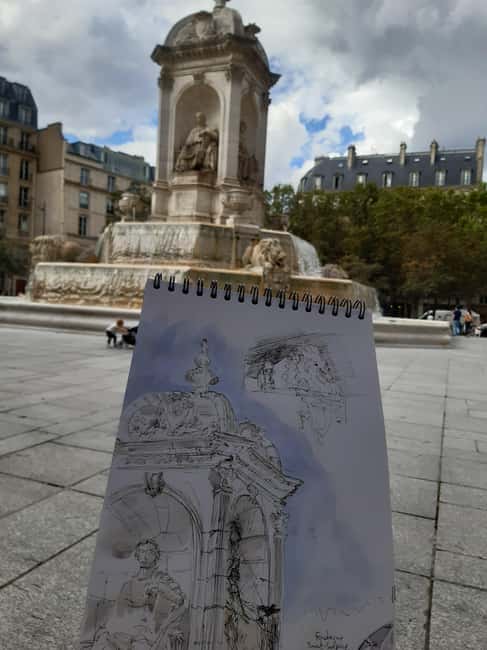
- Cafe-first start at 9:30AM: you begin drawing immediately, then head out to sketch nearby streets and spots
- Small group of 3–6: enough attention to improve, not so crowded that you feel rushed
- Bilingual instruction (French/English): exercises and tips land whether you speak one language or both
- Guidance for all levels: beginners learn the basics; experienced artists can refine composition and perspective
- Weather-flexible plan: heat or bad weather can mean an indoor/studio session instead
- Real supplies are optional extra: you’ll likely budget for paper + watercolor gear unless you bring your own
Why plein air sketching in Paris beats another indoor art class
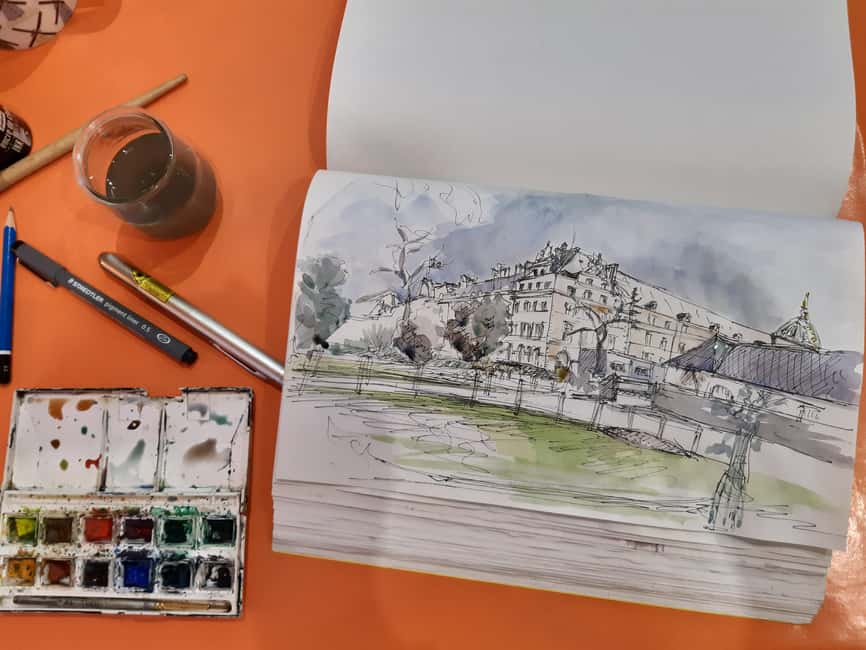
Paris drawing classes can feel like they’re happening in Paris, but plein air classes make the city part of the lesson. You’re not just copying buildings. You’re training your eye to notice angles, distance, light, and small visual tricks that make your page look convincing.
This course is designed for that exact moment when you’re standing in the neighborhood and you have to make decisions fast. You’ll start at a cafe, then move through the area to draw what’s in front of you. That flow matters because it teaches you how to handle shifting viewpoints: a street corner, a bridge line, a storefront, a figure sitting by the window. Even if you only complete small studies, you’ll leave with work that feels like Paris, not like an art worksheet.
And because it’s taught by Pauline Fraisse, it’s not just “go draw, good luck.” The focus stays practical—how to frame a scene, how to build perspective, and how to improve proportions and figure drawing over time. It’s also friendly toward both beginners and people who’ve been drawing for years.
You can also read our reviews of more tours and experiences in Paris.


How the 3-hour session really runs (9:30AM cafe start to neighborhood sketching)
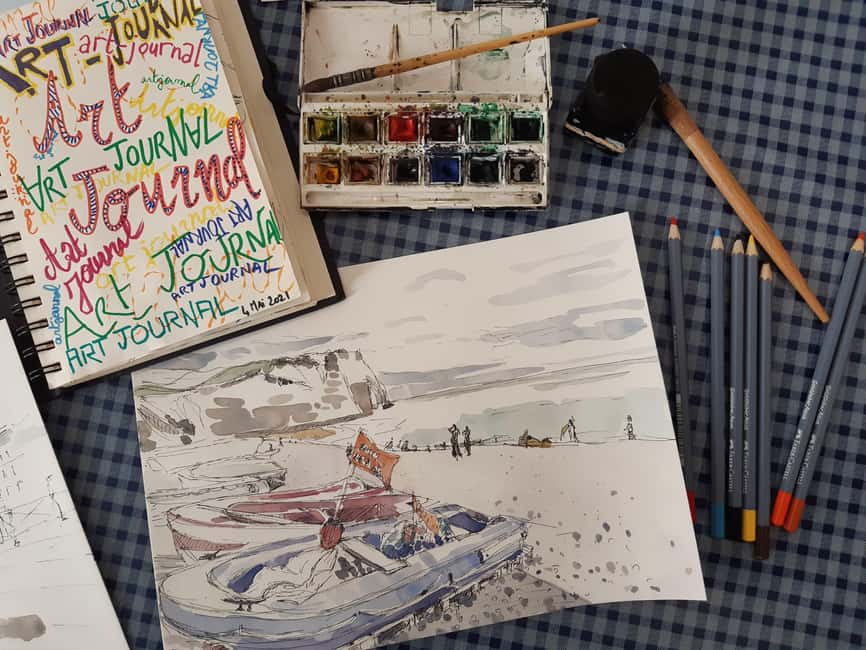
The class is 3 hours long, and the schedule is structured to keep you drawing the whole time.
Step one: meet at a cafe at 9:30AM.
You’ll get the exact meeting point by email a few days before your workshop. Pauline’s phone number is included in the materials, which is handy if you’re running late. In practice, this means you can show up, find her easily (she’ll be holding a sketchbook), and start right away.
Step two: draw at the cafe first.
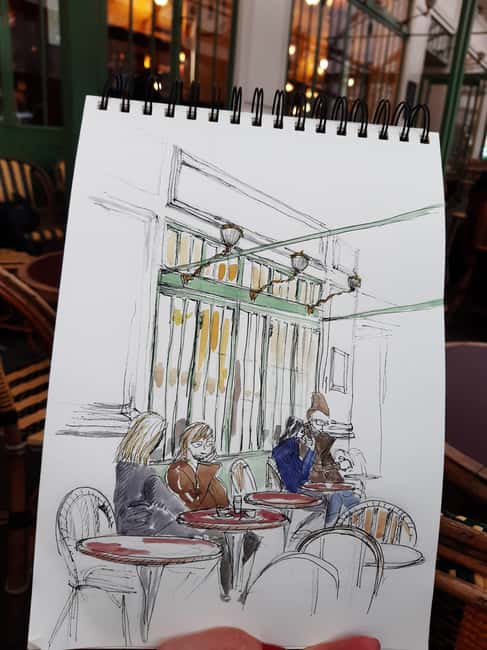
This is a smart warm-up. You can practice quick observation—edges, table and chair shapes, faces, signage, reflections—without dealing with street traffic the second you arrive. It also helps you get comfortable with the tools you brought (or planned to use).
Step three: move into the neighborhood to keep sketching.
After the first drawing session, the group heads out to sketch around the neighborhood. If weather is cold or unpleasant, you might continue at another cafe or switch to an indoor drawing setup. The goal stays the same: make progress on your page while you’re actually in the city.
Weather and heat can change the plan.
If conditions are extreme—high heat or very bad weather—the class is likely transferred to the studio. That’s not a failure of the plan. It’s part of how the course stays teachable and comfortable.
One practical note: the class includes walking plus sitting on benches, the floor, or standing. Wear shoes you’d be happy to have on for a few hours, not just for a museum visit.
Pauline Fraisse: professional guidance in French and English
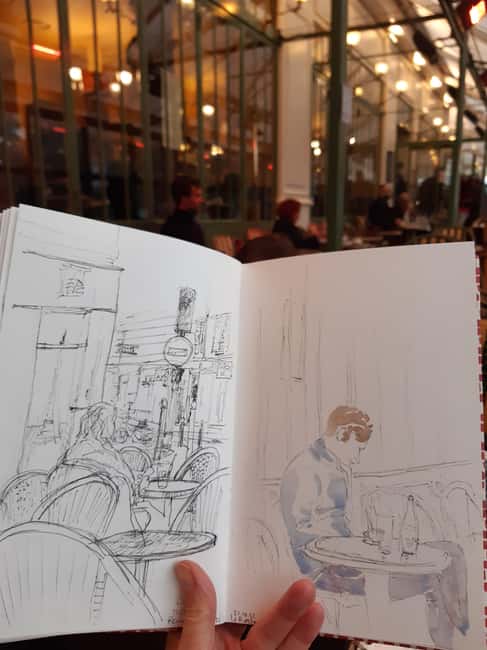
Pauline Fraisse is the instructor, and the class runs as a small-group workshop (limited to 6). That size is a big deal. In a group that small, you’re more likely to get targeted guidance—especially if you’re a beginner who needs reassurance on basic steps.
What I like about the teaching setup:
- It works for mixed skill levels. You’re not separated into beginner vs advanced tracks. Instead, exercises are offered in a way that people can approach at their own level.
- Bilingual instruction keeps you included. If half the group is English-speaking and half is French-speaking, you can still follow along without feeling lost.
- You get help with core drawing problems. The course content includes composition and perspective, plus figure drawing technique improvement for those who want it.
If you’ve taken art classes before and they mostly feel lecture-based, this will likely feel more like guided practice. You sketch, you get corrected, you adjust, and you try again while you’re still in the same visual setting.
What you’ll learn to draw: composition, perspective, and figure details
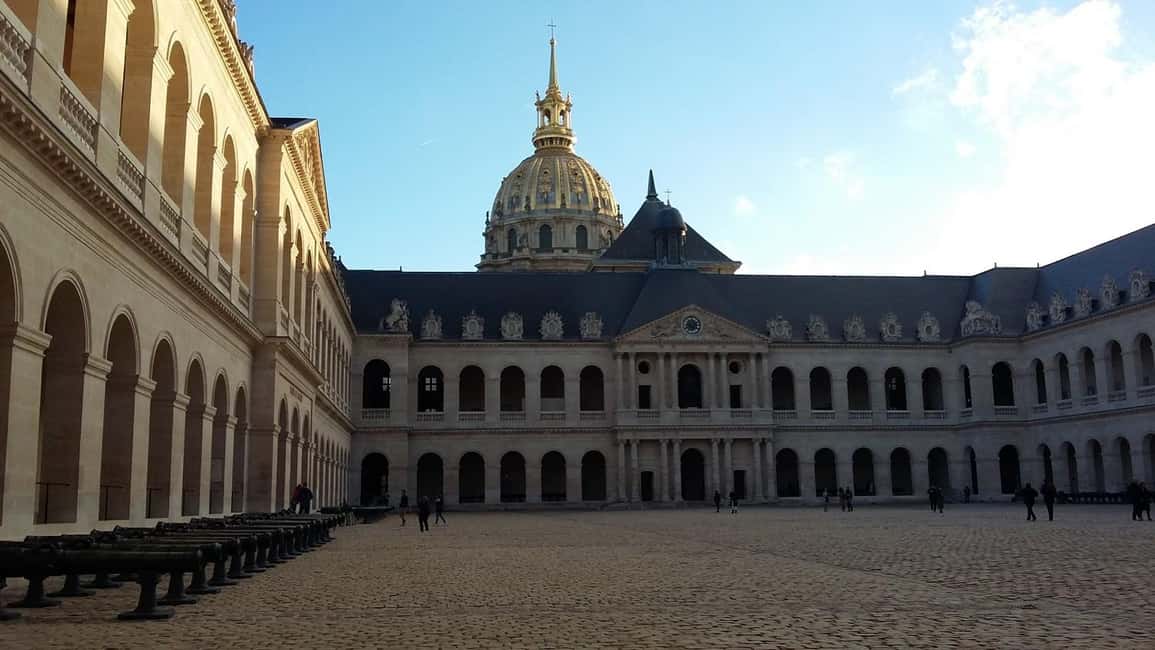
This course is built around plein air drawing and watercolor. The improvements you can expect are the ones that actually show up on your page:
Composition: framing what matters
In Paris, there’s a lot competing for attention. Composition training helps you pick a focal point and arrange it so the drawing reads clearly. During the class, you’ll work on how to plan your page before details swallow your time.

Perspective: making streets look like streets
Perspective is where most drawings start to wobble—lines don’t converge the way your eye expects, corners don’t feel aligned, and distance looks flat. The course specifically targets perspective and related skills, so you can understand what’s going wrong and fix it while you’re drawing.
Figure drawing: proportions you can actually use
If you want to improve figure drawing technique, this class supports that goal. Even if you don’t become an illustrator by the end of three hours, you’ll get practical practice on proportion and how to simplify what you see into something believable.
Fast sketching techniques (ink vs pencil)
One of the most useful things about plein air classes is they push you toward faster mark-making. Some students are encouraged to use a waterproof black pen approach rather than relying only on pencil. That kind of exercise trains confidence: you commit to the sketch and keep moving instead of getting stuck perfecting every line.
If you’re new, don’t worry about copying everything perfectly. The lesson is about learning how to see—and how to build a sketch in layers.
Supplies and costs: what’s included, what you’ll likely pay for, and how to prep
Teaching is included. Everything else is your responsibility, unless you bring it or purchase it ahead of time.
Art supplies: not included
The class does not include art supplies, but you have options:
- You can order supplies on Pauline’s website up to 5 working days before class.
- There’s also a list of art supply stores in Paris in the FAQs.
- You can bring simple gear or more advanced tools, depending on what you want to practice.
The recommended supplies list (from easiest to more “serious”)
Bring what you have, but consider these items:
- A paper sketchbook (A4/standard photocopy size is recommended)
- Watercolor box
- Small water jar with lid
- Watercolor brush
- Rag or kitchen paper
- Pencil(s) + pencil sharpener
- A water-resistant black pen (example given: Pigma Micron)
- Optional: nib holder + nib + India ink, felt pens, color pencils, glue stick
Also pack smart comfort items:
- Sunglasses, hat, sunscreen
- Warm layers in winter
- Comfortable walking shoes
- Water bottle
Extra budget items to remember
Plan a cafe budget, because you’ll likely be drawing at cafes at some point. If the session includes an indoor option with museum stops, museum ticket costs may apply too. Drinks and snacks aren’t included.
If you’re trying to estimate your total spend, think in layers:
- Base price: $112 per person (teaching included)
- Possible add-ons: supplies (if you don’t bring your own)
- Daily costs: cafe spending, and museum tickets if the plan moves indoors
Neighborhood changes week to week: how to think about where you’ll draw
This class takes place in a different Paris neighborhood each week. That means you’re not locked into one single “tourist view.” Instead, you get variety, which helps your brain learn more than one visual problem.
Since the meeting point is emailed after booking, you can arrive with a simple plan:
- Bring the supplies you want to use
- Dress for the weather you’ll face at 9:30AM
- Keep your expectations flexible (the neighborhood and even the indoor/outdoor setup can change with conditions)
If you want to repeat the experience more than once, this format actually makes sense. Each time can train a different kind of scene: wide street lines one day, tighter interior light the next.
Who this plein air drawing class is best for
This is a great choice if you want a guided art experience without a steep learning curve.
Perfect fit if you:
- Are a beginner who wants structure (not chaos)
- Want to improve composition and perspective
- Like the idea of watercolor plus drawing outdoors
- Prefer a small group format where you can ask questions
- Travel with someone who might have different skill levels (the class is built to handle mixed comfort zones)
Consider it carefully if you:
- Hate walking, standing, or sitting on benches/floor
- Don’t want to deal with weather changes (the plan can move indoors)
- Want everything included (supplies and cafe/museum costs are not included)
Age note
Children and teenagers under 18 can join if an accompanying adult attends. The course is not suitable for children under 7.
Price and value: what $112 buys you in Paris
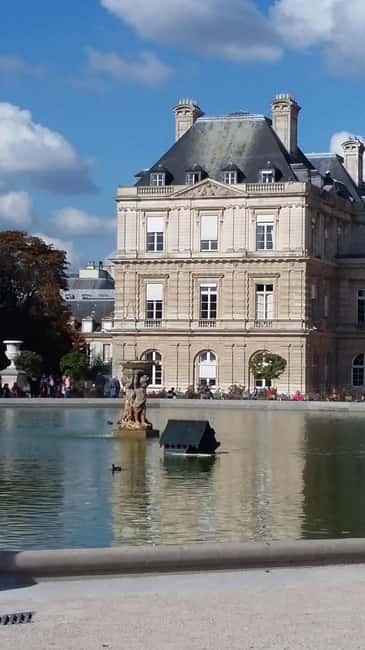
At $112 for 3 hours, this sits in the “quality instruction” category rather than “buy a souvenir workshop” category. The value comes from a few key points:
- Professional teaching from Pauline Fraisse
- Small group size (max 6), which increases attention
- A practical curriculum focus on the drawing skills people usually struggle with
- A format that teaches through real observation in the city, not through abstract instruction
Where the value can shift for you is in the add-on costs:
- If you already have the supplies, your out-of-pocket cost stays closer to the base price
- If you need to buy watercolor gear and a waterproof pen, your total rises
- If weather pushes you indoors, you may spend on cafe and possibly museum tickets
Still, even with a few add-ons, you’re paying for guided skill-building in one of the best learning settings in Paris: where the subject matter is right in front of you.
Tips to make your first sketch session smoother
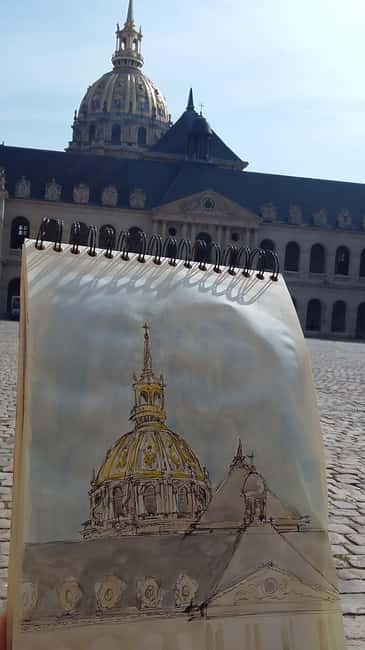
A few practical tricks can turn this into a confidence builder, not a struggle.
Bring gear that works fast
You’ll get more out of a simple setup you can use immediately than a complicated kit you don’t know how to manage outdoors. In particular:
- Make sure your watercolor water jar has a lid (you’ll thank yourself later)
- Bring a rag or paper to control water load and keep your page clean
- Use a waterproof black pen if you plan to layer watercolor over line work
Dress for time outdoors
The class starts at 9:30AM, and you’ll be outside unless conditions are extreme. Comfortable walking shoes matter. For winter, bring warm clothes. For summer heat, bring sun protection.
Watch the big shapes first
When you start, ignore tiny details. Look for the big geometry: the angle of a roofline, the curve of a street corner, the general silhouette of people near you. Then add details only after the structure looks right.
Don’t chase perfection
Plein air sketching rewards momentum. If the instructor encourages ink or faster sketching, it’s for a reason: you learn by doing, not by waiting for the perfect line.
Should you book this Paris plein air sketching course?
I think you should book if you want an art class that feels like Paris in real time. The combination of small-group instruction, a professional teacher, and a focus on composition, perspective, and figures makes it a smart pick for both beginners and improving artists.
Skip it (or at least go in with eyes open) if you’re very sensitive to weather plan changes, or if you don’t want any extra spending beyond the ticket price—because supplies, cafe costs, and possible indoor/museum costs are on you.
If you’re deciding between drawing in a studio and drawing outdoors, this is one of the better compromises: you get structure and guidance, but the city is the classroom.
FAQ
FAQ
How long is the Paris plein air sketching course?
The course lasts 3 hours.
Where does the class take place?
It takes place in a different neighborhood in Paris each week, and the exact meeting point is emailed to you.
What time do I need to arrive?
The meeting point is at 9:30AM at a cafe.
Who teaches the class?
The class is taught by Pauline Fraisse.
Is the class suitable for beginners?
Yes. The course welcomes beginners and also people who are already confirmed artists.
What languages are used during the workshop?
The workshop is taught in French and English.
Is the group size small?
Yes. The class is limited to 3 to 6 participants.
Are art supplies included in the price?
No. Art supplies are not included, though you can order supplies from Pauline’s website up to 5 working days before class.
What if the weather is too hot or bad?
In case of high heat or extremely bad weather, the class is likely to be transferred to the studio.
Can children join?
Children and teenagers under 18 can join if an accompanying adult attends. The class is not suitable for children under 7.