REVIEW · PARIS
The Paris “Rive Gauche” tour in a vintage Citroën 2CV
Book on GetYourGuide →Operated by Hubert a Paris · Bookable on GetYourGuide
A vintage 2CV makes the Left Bank feel personal. I love the sunroof view over Paris monuments and the way the art-history guide Clément brings the sights into focus as you move. One thing to consider: this tour runs in all weather, so you’ll want layers and footwear that handle pavements and sudden sprinkles.
I also like the rhythm here: short sightseeing windows, then real stops for photos, plus helpful local ideas for what to do next. The main drawback is practical, not scenic—pickup timing matters a lot for a car-based tour, so be ready at the start point and keep your phone handy.
In This Review
- Key points before you go
- Why a 2CV turns Paris into a moving postcard
- Starting at Place des Victoires: quick orientation, then off you go
- Left Bank streets: Saint-Germain and the Latin Quarter at a calmer pace
- Landmark photo stops where the timing actually helps
- Eiffel to Invalides: seeing the city’s power centers
- Church stop payoff: Saint-Sulpice and the Latin Quarter vibe
- Notre-Dame area: quick viewing with a guided lens
- What the guide really does for you (Clément, the art-history angle)
- The route and timing: how the 2 hours actually feel
- Weather and comfort: cobbles, sunroof, and layers
- Price and value: is $106 worth it?
- Who should book this 2CV Rive Gauche tour
- Should you book it?
- FAQ
- Where does the tour start?
- What kind of vehicle is used?
- How long is the tour?
- Is the tour wheelchair accessible?
- What’s included in the price?
- Is food included?
- Do I need to tip?
- What stops and sights are included?
- Is there a sunroof?
- What’s the weather like?
Key points before you go
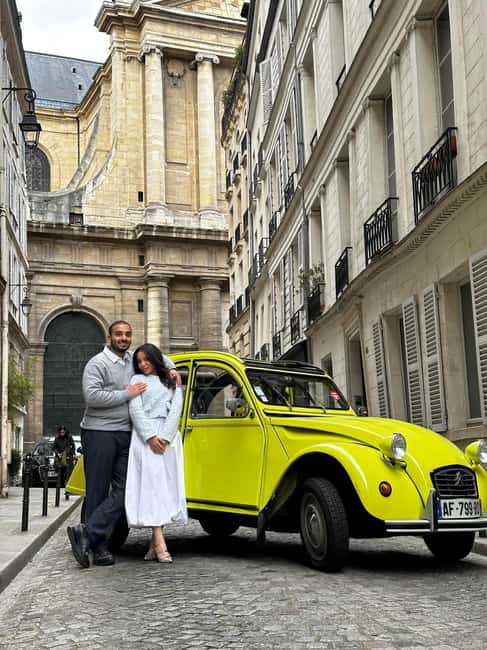
- Vintage Citroën 2CV with a sunroof for better sightlines and classic Paris vibes
- Left Bank emphasis with quieter streets in Saint-Germain and the Latin Quarter
- Photo stops at major landmarks, with the guide helping with angles and shots
- Art-history style guiding from Clément, focused on what you’re seeing
- Restaurant and museum recommendations so you can plan like a local
- Private group for a more custom pace, plus water bottles during the ride
Why a 2CV turns Paris into a moving postcard
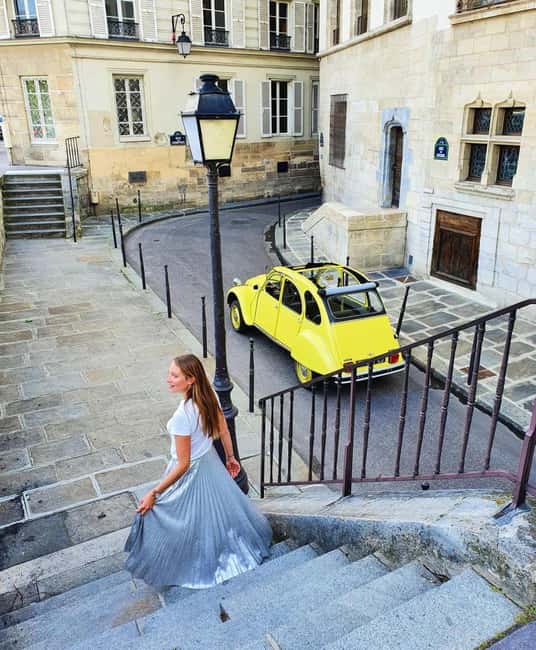
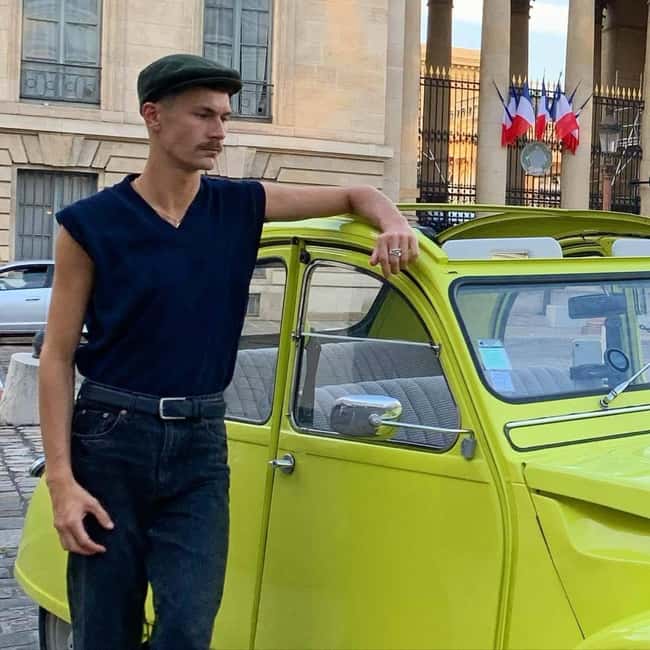
This is the kind of tour where the transport isn’t just logistics—it’s part of the story. A vintage Citroën 2CV gives you that distinctly French, slightly old-school feel, and the sunroof matters more than you might think. Open the sky into the frame and suddenly the monuments look less like distant postcards and more like scenery you can actually read.
What I like most is how the car changes your perspective. From the road, you see the city’s shape—rooflines, facades, street geometry, and the way buildings sit right up to the sidewalks. In a normal walking tour you miss that in-between detail. In this car, you get movement plus context, and the experience stays light enough to enjoy for a full 2 hours.
The other smart touch: French music plays in the background. It’s not there to distract you. It’s there to keep the mood right while you’re switching between landmark views and quick conversation with your guide.
You can also read our reviews of more tours and experiences in Paris.


Starting at Place des Victoires: quick orientation, then off you go
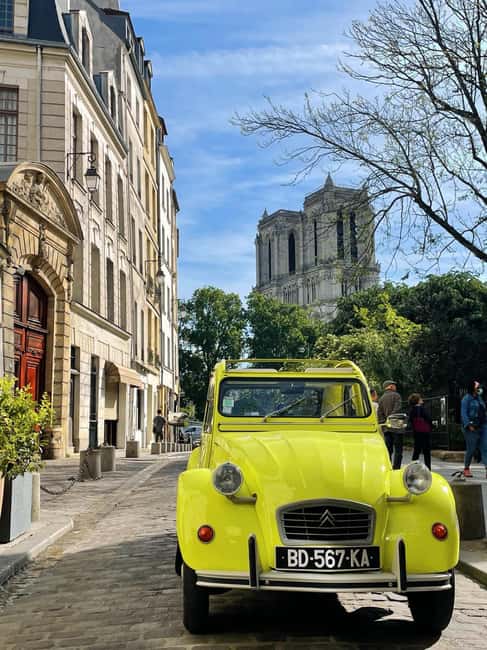
The tour starts at Place des Victoires, and it’s a good choice. You’re not starting in a random alley; you’re starting in a square that helps you get your bearings fast—north-south orientation, major sightlines, and that sense of central Paris.
From there, you head toward the Left Bank landmarks and cross into the kind of streets that usually get bypassed by people speed-walking for the next big photo. The driver and guide move with the flow of the city, and you get those classic “wait, look at that” moments when a street opens up to show an elegant facade or an overlooked corner.
If you’re the type who wants to understand where you are, early orientation helps. If you’re just here for photos and atmosphere, it still works, because you’ll be seeing recognizable landmarks soon enough to feel grounded.
Left Bank streets: Saint-Germain and the Latin Quarter at a calmer pace
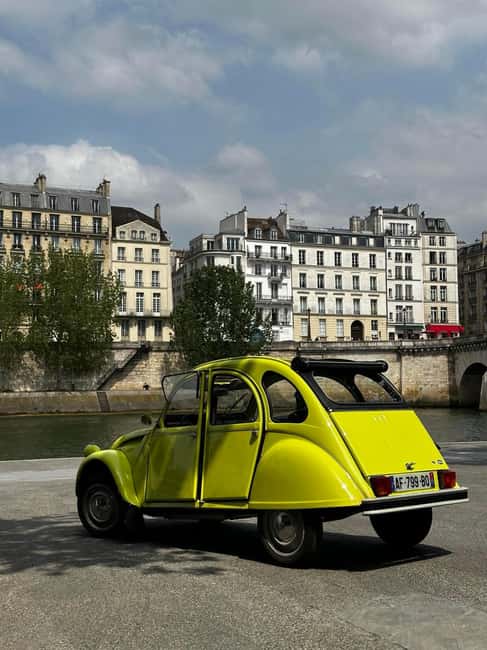
The main theme here is the Rive Gauche, and the emphasis is on the historic and preserved character of the Left Bank. You’ll pass through areas like Saint-Germain and the Latin Quarter, where the vibe is more literary and local—less frantic, more layered.
This tour gives you a practical way to experience that character without doing a full-day walking circuit. You get guided context in short bursts, then you’re back in the car to cover ground. It’s an efficient mix: enough time to learn what you’re looking at, without wearing down before you even reach dinner.
You also get a change in street texture. The route includes historic cobbled streets, which is exactly the kind of “Paris detail” you can’t fake with a map view. Yes, cobbles can be bumpy, but that’s also part of the charm here—this is not a smooth, sanitized shuttle ride.
Landmark photo stops where the timing actually helps
One of the smartest parts of this tour is how it handles photos. You’re not stuck at one monument for too long, and you’re not rushed through everything. The guide builds in dedicated photo stops so you can actually compose a shot without sprinting.
You’ll see and pause for major Paris markers along the route, including:
- Place Vendôme (photo stop): a classic, symmetrical-feeling Paris moment that photographs well from a few angles.
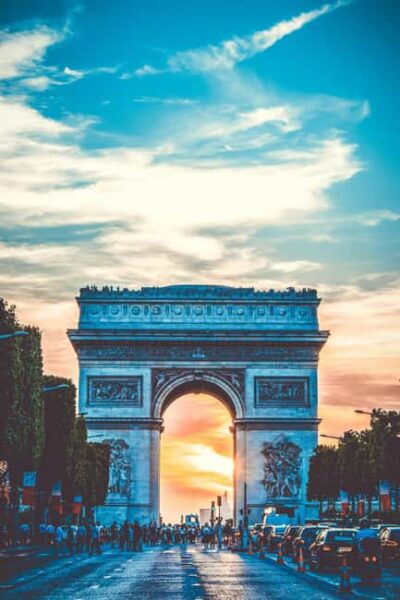
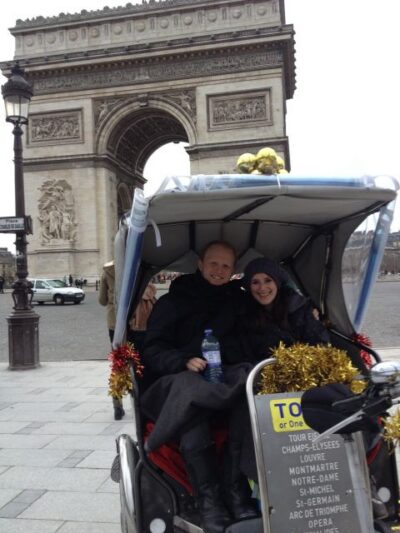
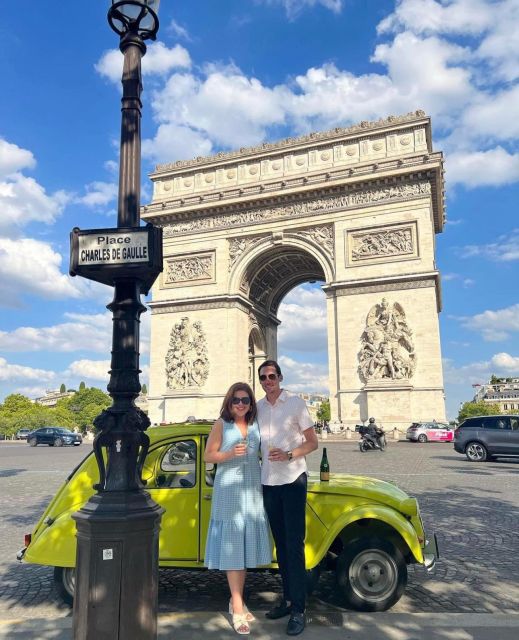
- Arc de Triomphe (photo stop): great for capturing the scale of the city, plus it’s a strong “I’m in Paris” visual even if you’ve seen it in books.
- Eiffel Tower (photo stop): the key advantage isn’t just the tower—it’s the ability to frame it with nearby architecture while you’re moving through the city’s layers.
The guide also takes photos of you. That sounds like a small perk until you realize it changes how you experience the ride. Instead of constantly handing your camera to strangers or losing time fiddling with settings, you get to focus on the view—and you still leave with good images.
Practical note: in a rooftop car, the best photos come when you’re ready to shoot quickly. If you’re bringing a phone, I’d set it to the camera mode you use most often before you get out.
Eiffel to Invalides: seeing the city’s power centers
Even with a Left Bank focus, Paris is a network, not a set of isolated neighborhoods. This tour threads you past some of the city’s big civic and monumental zones, including Invalides and the area around the Eiffel Tower.
At Invalides, you get a short guided moment. Even if you don’t go deep inside on this specific tour, it’s valuable because you’re learning what you’re looking at while your view is still fresh. That makes your later independent visit more meaningful. You’ll know what mattered and why, instead of just seeing a large impressive complex.
The pace here also helps. A quick guided stop beats a long, tiring one—especially when your transport is part of the experience. You get context without losing the overall momentum of the route.

Church stop payoff: Saint-Sulpice and the Latin Quarter vibe
You’ll also visit Saint-Sulpice, with a short stop designed for viewing. Churches in Paris can be intimidating at first—so many details, so many layers, so many styles. A guided “look-and-understand” window cuts through that.
Then the tour shifts into the Latin Quarter with another guided segment. This is where the tour’s Left Bank identity becomes more than a label. The Latin Quarter works best when you can connect streets to stories—students, salons, old print culture, and long-time Paris rhythms. Even in a brief visit, the guide’s explanations help you notice details you’d otherwise miss.
The shortness is intentional. Two hours has to cover a lot, and the best strategy is to give you enough guided meaning to unlock what you’ll see later, when you explore on your own.
Notre-Dame area: quick viewing with a guided lens
You end up at Notre-Dame Cathedral for a short visit. The time here is brief, but it’s not aimless. When a guide frames what you’re seeing—style, context, and what to look for—the stop becomes more than a photo moment.
Even if you’ve seen Notre-Dame from far away, a close-up stop gives you scale and material presence. Stonework feels different when you can actually stand near it and see how the architecture breaks the light.
If you care about architecture details, this is a good moment to slow down. Use the stop to notice the parts you’d never zoom in on later.
What the guide really does for you (Clément, the art-history angle)
This tour leans on an art history guide, and that’s the difference between a drive-by sightseeing loop and something you can use later. The guide, Clément, is repeatedly described as friendly and clearly effective at turning monuments into explanations you remember.
In practical terms, here’s what that means for your trip:
- You’ll get a running sense of why each landmark matters, not just where it is.
- You’ll understand what to look for when you pass similar buildings later that day.
- You’ll get photo suggestions that match the sightlines from the car and the timing of stops.
One detail that stood out in the feedback: the guide doesn’t just point and talk. He helps with photo positioning and builds in good moments to shoot. That alone is worth a lot if you’re traveling with a group photo problem.
And don’t skip the “what next” part. The guide shares best addresses for museums, restaurants, and bars. That turns the tour into a mini planning session—so you don’t waste time later guessing where to go.
The route and timing: how the 2 hours actually feel
This tour is designed to be manageable in real life. Duration is 2 hours, and the stop lengths stay short enough that you don’t get “monument fatigue.” You’ll move between quick viewing windows and guided bits where the guide can focus your attention.
The mix also matters: some moments are photo stops, some are guided looks, and some are short visits. That keeps you from feeling like you’re either stuck watching without learning or learning without seeing.
If you’re the kind of visitor who likes structure, you’ll probably enjoy the clear rhythm. If you’re the kind who prefers free roaming, you might wish you had extra time in one or two places—but that’s the tradeoff for fitting this much into two hours and doing it by classic car.
Weather and comfort: cobbles, sunroof, and layers
This experience is explicitly set to run in good or bad weather, so you should plan for change. If it’s rainy, the sunroof may be less of a “fresh air” feature and more of a “keep your jacket close” feature.
Comfort tips that help in this setup:
- Wear shoes that handle pavé and won’t make you dread the next stop.
- Bring a light layer you can put on quickly.
- Expect short outdoor viewing periods, not long sheltered waits.
The upside? Even in gray skies, Paris architecture still reads well—stone textures and lines show up more clearly. You just need to be dressed for it.
Price and value: is $106 worth it?
At $106 per person for a 2-hour private-group tour, the value depends on what you want most: speed, access, or guidance.
Here’s how I’d judge it:
- You’re paying for a vintage 2CV, which instantly adds a memorable factor and changes sightlines.
- You’re paying for a guide with an art-history approach plus photo help, which reduces the “travel friction” of managing photos and figuring out what to look at.
- You’re also getting planning help for later, because the guide offers restaurant and museum recommendations.
Where the cost makes the most sense is if you’re prioritizing a high-impact overview and you’d rather have guidance and photos than spend your time mapping and organizing. If you already know you want to do a full day of museum deep dives, you might see this as a fun orientation stop. If you want a classic Paris experience with context in a short window, this price can feel fair.
Who should book this 2CV Rive Gauche tour
This tour fits best if you:
- Want a Left Bank-focused Paris experience without committing to hours of walking
- Care about architecture and would like a guide who can explain what you’re seeing
- Prefer a smoother, seated way to cover landmarks like Place Vendôme, Arc de Triomphe, and the Eiffel Tower area in one outing
- Want the guide’s help planning your next moves with museum and restaurant recommendations
It may be less ideal if you’re the type who wants maximum time at a single monument. This ride is about coverage and context, not prolonged entry into every site.
Should you book it?
If you want Paris with a little drama and a lot of guidance, I’d say yes—especially because the combo of sunroof car views, a structured photo stop rhythm, and an art-history guide like Clément can make a short visit feel surprisingly complete.
Just go in with two realistic expectations: you’ll be outside for brief viewing windows, and timing matters for a car-based pickup. If that fits your style, this is one of those tours that helps you leave Paris with better photos and clearer mental notes of what you saw.
FAQ
Where does the tour start?
The tour begins at Place des Victoires.
What kind of vehicle is used?
You ride in a vintage Citroën 2CV.
How long is the tour?
The tour lasts 2 hours.
Is the tour wheelchair accessible?
Yes, it is wheelchair accessible.
What’s included in the price?
You get bottled water provided during the tour.
Is food included?
No, food is not included.
Do I need to tip?
Tips are not included.
What stops and sights are included?
You’ll pass or visit landmarks such as Place Vendôme, Arc de Triomphe, the Eiffel Tower (photo stop), Invalides (guided), Saint-Sulpice (visit), the Latin Quarter (guided), and Notre-Dame (visit).
Is there a sunroof?
Yes, the car has a sunroof so you can admire architecture from the vehicle.
What’s the weather like?
The visit is described as running in both good and bad weather, so plan for outdoor time and varying conditions.