REVIEW · PARIS
Small-Group Canadian Normandy D-Day Juno Beach from Paris
Book on GetYourGuide →Operated by Blue Fox Travel · Bookable on GetYourGuide
Most days feel long. This one has purpose.
This small-group Canadian Normandy D-Day trip turns Juno Beach into a real place, not a photo in a textbook, with a shore walk on the same sand and a guided stop at the Juno Beach Center. I also like that you travel with an English-speaking driver-guide in a comfortable minibus, so you’re not stuck piecing the story together on your own. The main consideration: it’s a long day—depart 7:00 AM and get back around 8:00 PM—so you’ll want to plan for fatigue, weather, and the fact that food isn’t included.
A small group (max 8) is great for listening, questions, and keeping the pace human. But it also means the schedule can feel tight if you’re the type who needs lots of browsing time in museums or slow wandering. If you’re easily chilled, pack for wind—Normandy weather can bite even outside summer.
In This Review
- Key highlights worth getting excited about
- The big idea: why Juno Beach needs a guide
- Leaving Paris early and arriving with momentum
- The road trip portion you’ll actually appreciate
- Juno Beach Center: get the story before you walk
- Walking Juno Beach: the part you can’t fake
- Canadian Cemetery in Beny-sur-Mer: quiet respect, no shortcuts
- Hell’s Corner: the furthest push inland
- Abbey d’Ardenne: Nazi command center context
- What I think is best value in the package price
- Who should book this tour (and who might prefer something else)
- Quick practical tips before your 7:00 AM start
- Should you book this Canadian Normandy D-Day tour from Paris?
- FAQ
- How long is the tour?
- What time does the tour depart from Paris?
- When do we return to Paris?
- What group size should I expect?
- What’s included in the price?
- Is food included?
- Where do I meet the tour?
Key highlights worth getting excited about
- Small-group size (max 8) keeps the day personal and question-friendly.
- Comfortable minibus + English-speaking guide helps the history click fast.
- Juno Beach Center gives you context before you walk the shoreline.
- Canadian Cemetery in Beny-sur-Mer is a deeply moving stop, outdoors and quiet.
- Juno Beach shoreline walk puts your feet where Canadian troops landed on June 6, 1944.
- Hell’s Corner + Abbey d’Ardenne connects the front-line moment to what came next.
The big idea: why Juno Beach needs a guide
D-Day sounds like one day. In reality, it’s a sequence of decisions, terrain problems, and brutal odds played out over hours and then days. What makes this tour work is that you don’t just “see Normandy.” You see how the Canadian landings fit into the bigger Allied operation—why the coast was so dangerous, how the Germans fortified the shoreline with bunkers, and what “winning” looked like when progress was measured in painfully small steps.
On June 6, 1944, more than 14,000 Canadian soldiers landed or parachuted into France. This is one of those stories where the facts are sobering, and the physical setting is doing half the teaching. Standing at the shore, you start to understand why the landing was so difficult without anyone having to exaggerate.
You can also read our reviews of more tours and experiences in Paris.


Leaving Paris early and arriving with momentum
You depart every day at 7:00 AM, year-round, in a small group—max 8 people. That early start matters. Normandy sites can get busy, and you’ll feel the day more if you reach the coast before the crowds fully kick in.
Logistics are straightforward: meet at Café Dada Ternes and be there at least 15 minutes early. The driver-guide arrives about 10 minutes before departure with a grey minibus. Once you’re rolling, the day becomes simple: sit back, listen, and let the guide handle the historical map of what you’re seeing.
From practical experience, the long drive is easier when you’ve got an organized plan. And here, the guide typically starts building context on the road—so by the time you reach the coast, you’re not hearing “random facts.” You’re hearing a narrative that matches what’s outside your window.
The road trip portion you’ll actually appreciate
The minibus ride isn’t just transit. It’s part of the experience, because your guide can connect geography to events—coastal placement, advances inland, and what “furthest” really means when you’re measuring distances around Caen.
A comfortable vehicle helps, because you’re going to sit for hours. One caution from past groups: on very hot days, people have reported AC that wasn’t ideal. Bring a light layer either way. And if sound quality matters to you, remember you’ll be listening through a microphone system—so being positioned near the front can help you catch every detail.
Juno Beach Center: get the story before you walk
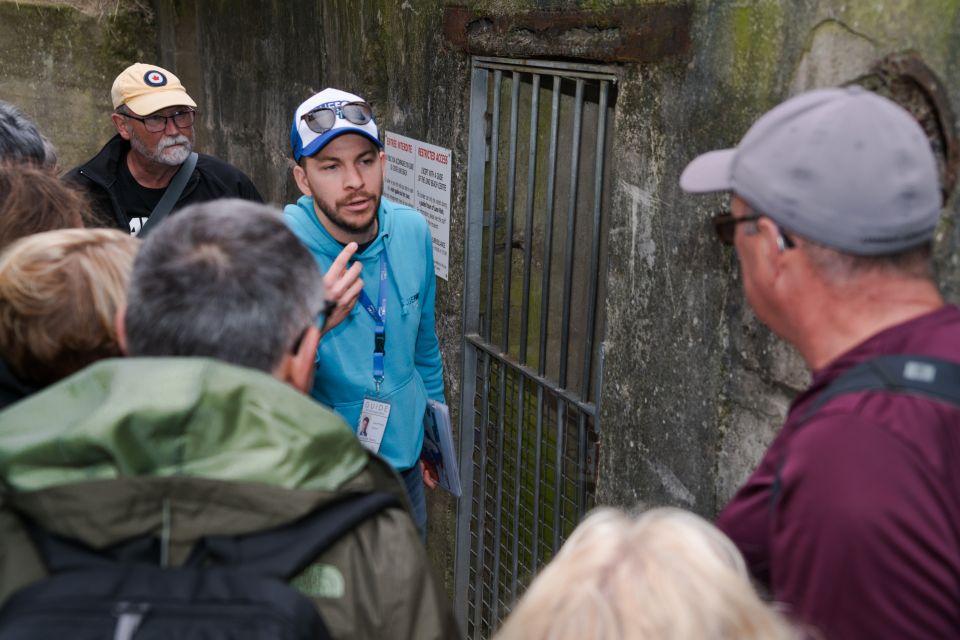
The first big “real learning” stop is Juno Beach Center, described as the most comprehensive museum focused on the Canadian landings in Normandy. The value here is timing. You’ll absorb names, units, the sequence of action, and the logic behind what you’ll see next.
This isn’t just museum time where you try to read everything silently. The goal is to leave with a clearer mental picture so that when you step out onto the beach, you’re not searching for context—you’re recognizing it.
A couple details to plan around:
- You’ll want a jacket or layer even indoors if you run cold.
- Budget time to look slowly. If you rush, you’ll miss the “why this matters” pieces that connect the artifacts to the battlefield.
Walking Juno Beach: the part you can’t fake
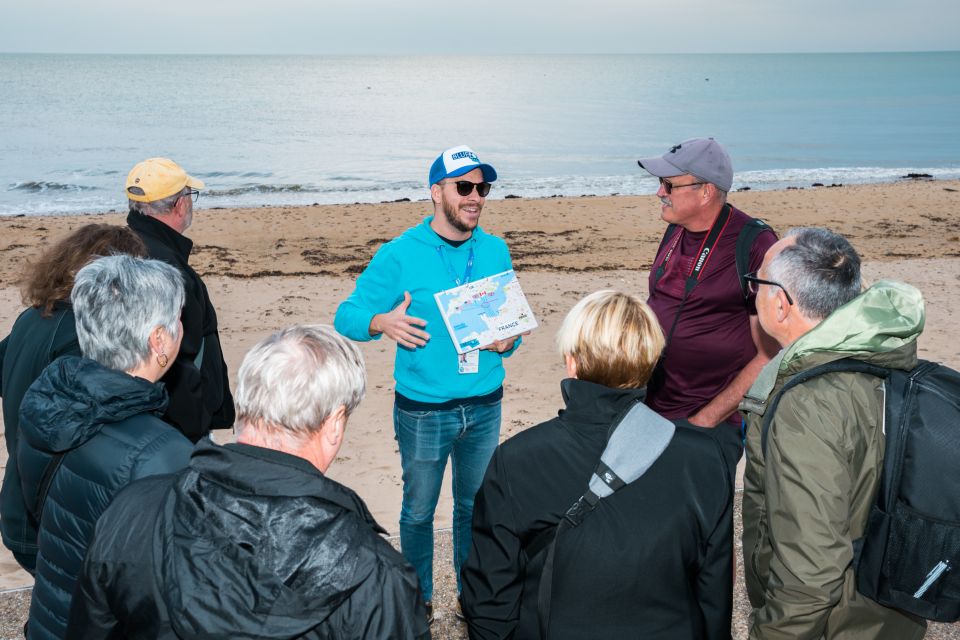
Then comes the moment people remember: a walk along Juno Beach. Not a bus stop view. Not a quick photo-and-go. You’re on the sand, taking in the shoreline where Canadian troops landed on June 6, 1944.
Walking here can feel strange in the best way. The beach looks almost peaceful now, but the guide’s descriptions pull the tension back into place. You’ll likely find yourself pausing more often than you expected—because your brain wants to match “what happened” to “what’s in front of me.”
This stop is also where you’ll see why a guided experience pays off. The beach isn’t a single point. It’s a stretch of coastline with movement, defenses, and consequences. With a guide’s explanations, you start to understand the invasion as geography, not just dates.
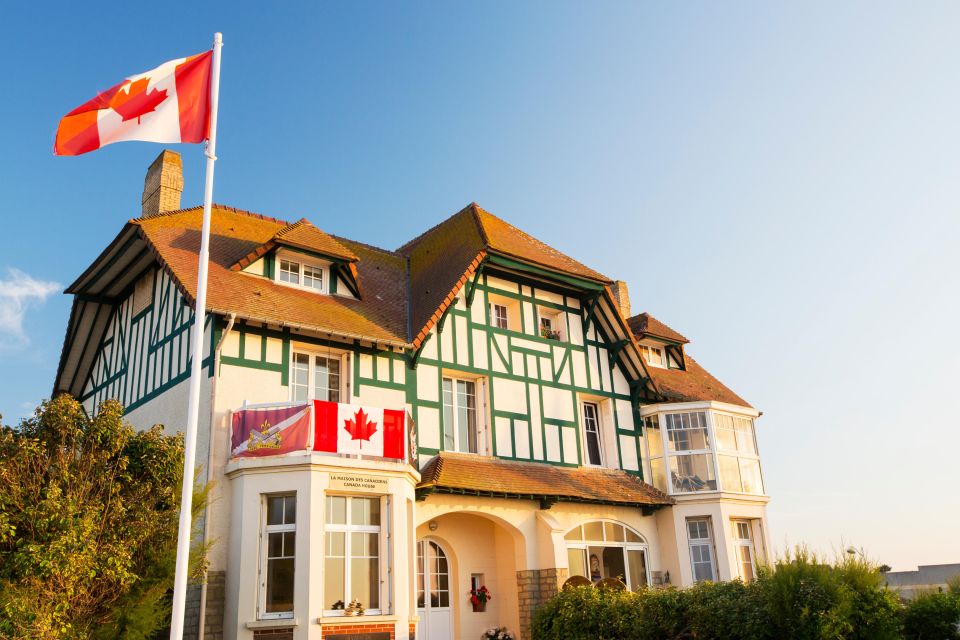
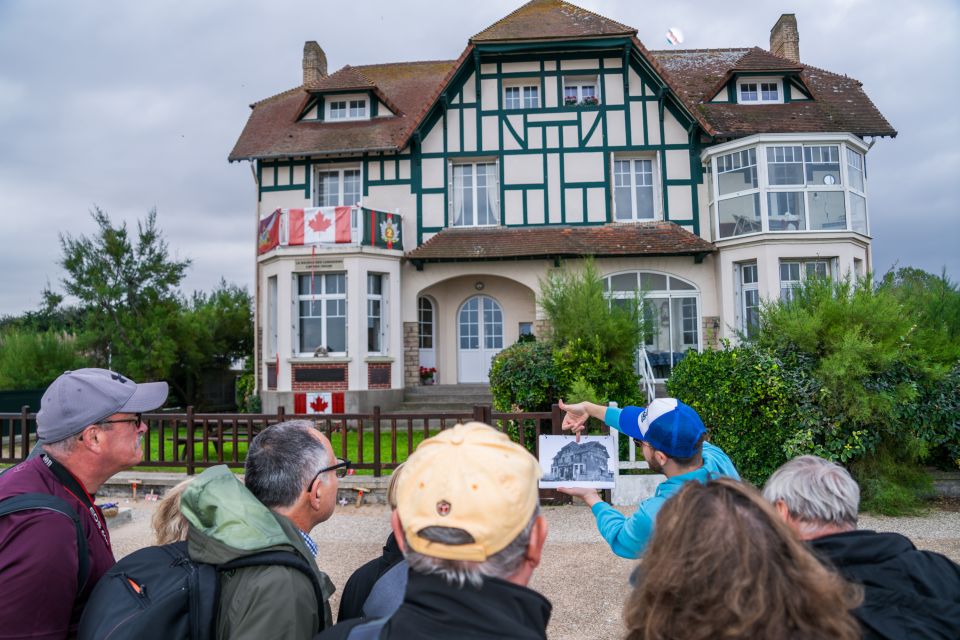
If you’re curious about Canada-specific sites on the grounds, the day may include time around Canadian-focused areas such as Canada House—depending on access and scheduling. Your guide will steer this based on what fits into the plan.



Canadian Cemetery in Beny-sur-Mer: quiet respect, no shortcuts
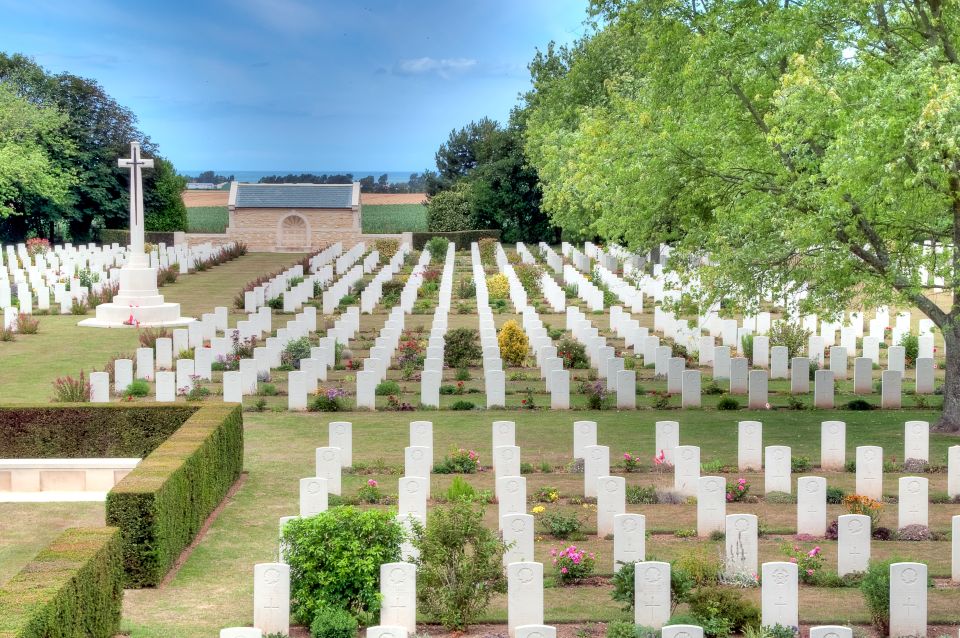
After the shoreline, you visit the Canadian Cemetery in Beny-sur-Mer. This is one of those stops where the lesson is partly in the layout, partly in the scale, and partly in the silence.
Walking through a cemetery like this changes your sense of time. You stop thinking in terms of “tour duration” and start thinking in terms of loss and aftermath. The guide’s role matters here, too, because it keeps the visit respectful and grounded in specific context rather than turning it into something generic.
Practical tip: dress for the outdoors. This is the kind of place where the weather becomes part of the experience—wind and cold can catch you even if the day looks mild at breakfast.
Hell’s Corner: the furthest push inland
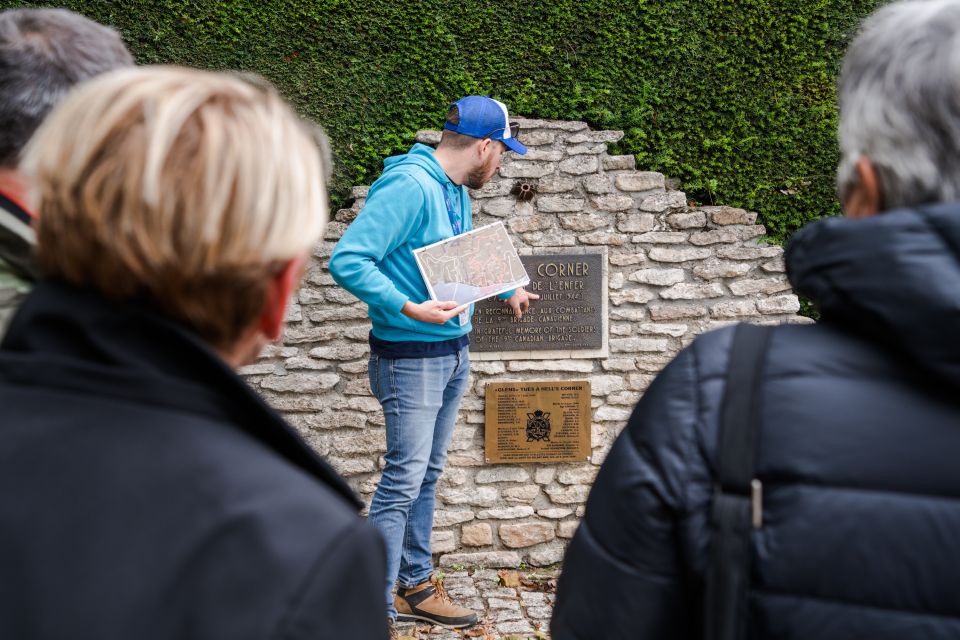
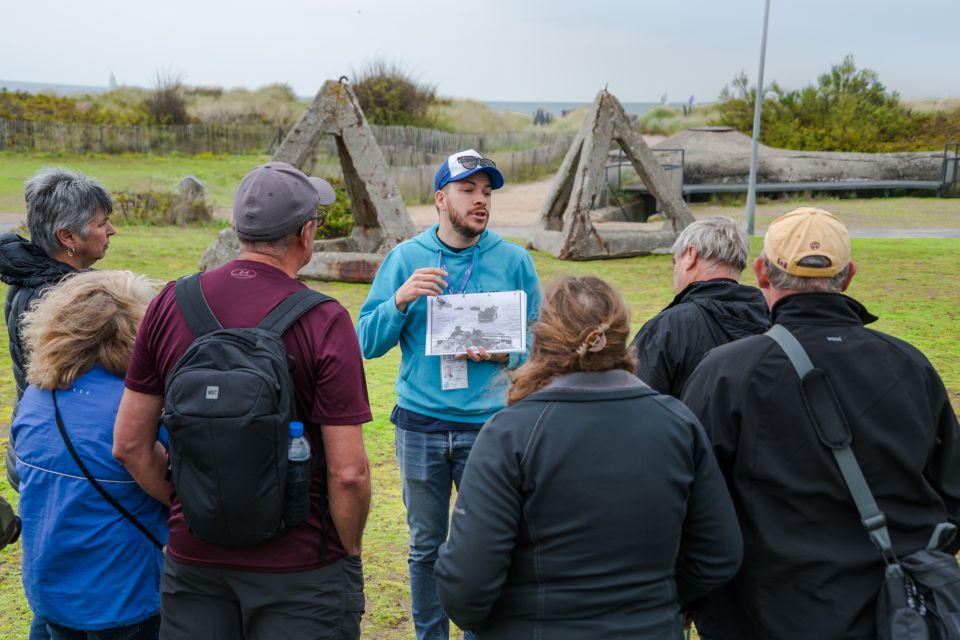
Next up is Hell’s Corner, described as the furthest inland advance taken by Canadian troops on D-Day, about 5 miles from Caen. This is a stop that rewards attention.
If the beach is about the first contact, Hell’s Corner is about what happened once troops managed to get off the landing zones and kept pushing through danger. It helps you connect the dots between “getting ashore” and “advancing under fire.”
As you look around, the key is to listen to the guide’s explanation of positioning and movement. Without that, it’s easy to treat the site like a viewpoint. With it, you start understanding how small distances could represent huge differences in control, cover, and survival.
Abbey d’Ardenne: Nazi command center context
You’ll also see Abbey d’Ardenne, identified as a Nazi HQ point. This part of the tour balances the Canadian story with the broader picture of command and fortification.
I like this stop because it prevents the day from becoming one-sided. It’s not about switching the emotional focus; it’s about understanding how resistance was organized and why the battlefield felt so controlled in many places.
Again, a guide helps. The buildings and locations don’t come with English captions. Someone has to connect the physical site to the human decisions made there.
What I think is best value in the package price
At $283 per person for a 13-hour day from Paris, the price looks steep until you break down what’s included.
Here’s what you’re paying for in practical terms:
- Round-trip transportation in a comfortable minibus
- English-speaking driver-guide for the full day’s context
- Entrance fees for the included sites
- A plan that moves efficiently without you handling navigation
What’s not included is food, so you should expect to budget lunch and possibly snacks. For many people, that’s the easiest cost add-on to forget—so it’s worth planning ahead.
In terms of value, this tour makes sense if you want history you can’t easily “DIY” without spending hours researching and hopping between sites with timed entry. If you’re the type who hates logistics and loves a clear narrative, this package is doing real work for you.
Who should book this tour (and who might prefer something else)
This tour fits especially well if:
- You’re Canadian (or just want a Canadian lens on D-Day)
- You care about understanding the story behind the sites, not just viewing them
- You want a small group where listening and questions feel natural
- You’d rather sit in a vehicle with a guide explaining than drive yourself across the region
It may not be ideal if:
- You hate long days and early starts
- You need lots of free time to browse without a schedule
- You’re sensitive to wind/cold and don’t want to dress for outdoor walking and cemetery time
If you do book, pack like it’s November, even in spring. A warm jacket and hat have been called out as helpful by people who visited in colder months.
Quick practical tips before your 7:00 AM start
A few small things can make the day smoother:
- Bring a warm layer. Normandy weather can stay cold and windy.
- If you rely on your phone for photos/maps, bring a charging option. People have had a charger need on this trip.
- Plan for no included food. Eat before you go if you like early breakfasts, and bring snacks if you think you’ll get hungry.
- Wear shoes that can handle sand and walking on uneven ground.
And mentally: go in knowing the tone is serious. This isn’t a “happy beaches” day. It’s a respectful, factual remembrance day with a tour guide translating the battlefield into human terms.
Should you book this Canadian Normandy D-Day tour from Paris?
I’d book it if you want a focused Canadian view of D-Day with strong guidance, efficient site coverage, and time in the places that matter most for the story: Juno Beach Center, the Juno Beach walk, the Canadian Cemetery, and the inland context of Hell’s Corner and Abbey d’Ardenne.
Skip it if you want a purely self-paced trip or if you’re hoping meals and long breaks are built in. Also, if you get cranky after early starts, consider that this is a full-day commitment with a return to Paris around 8:00 PM.
If your goal is to leave Normandy with understanding (and not just photos), this one delivers.
FAQ
How long is the tour?
The tour runs for 13 hours.
What time does the tour depart from Paris?
It departs at 7:00 AM.
When do we return to Paris?
You’ll return to Paris at around 8:00 PM, depending on traffic.
What group size should I expect?
It’s a small-group tour with a maximum of 8 participants.
What’s included in the price?
The price includes an English-speaking guide, transportation by minibus, and entrance fees.
Is food included?
No. Food is not included.
Where do I meet the tour?
Meet at Café Dada Ternes, and be there at least 15 minutes before the official departure time.