REVIEW · PARIS
Private Exquisite Red & White Burgundy Wines Trip from Paris
Book on GetYourGuide →Operated by Clewel Travel · Bookable on GetYourGuide
A 14-hour Burgundy wine marathon is worth it. You’ll go from Paris to Chablis and then down to Beaune and Pommard for four domaines, with 20 glasses to taste along the way. It’s not just wine-sniffing. You get guided structure in the cellars, plus enough variety to start noticing what changes between villages and levels of quality.
I especially like the way the tastings are spaced out into guided, taught moments—then topped off with a self-guided stop where you can take your time. The second thing I like: you have an English-speaking driver who keeps the schedule moving, because this is a long day. The main drawback is also the obvious one: you’ll be in a car for hours, and lunch isn’t included, so you’ll need to budget time and money for food in Beaune.
In This Review
- Key things that make this trip work
- A long day from Paris to Chablis, Beaune, and Pommard
- Road time and timing: making the 14.5-hour schedule work
- Jean-Marc Brocard in Chablis: cave visit, 5 tastings, and cheese
- Maison Chablis Régnard: Premier Cru and Grand Cru tasting with cellars
- Beaune lunch break plus Hospices of Beaune
- Caves Patriarche Père et Fils: self-guided tunnels under the city
- Château de Pommard and the Route des Grands Crus lesson
- What 20 glasses across Grand Cru and 1-er Cru teaches you
- Price and value: why $690 can make sense for a private day
- Who should book this Burgundy wine trip
- Final call: book or skip
- FAQ
- How many wine tastings and glasses are included?
- Which areas of Burgundy does the trip cover?
- Are Grand Cru and 1-er Cru wines included?
- What is the total length of the tour?
- Is lunch included?
- What vehicle do you use for the private group?
- Is the driver English-speaking and is pickup/drop-off included?
Key things that make this trip work
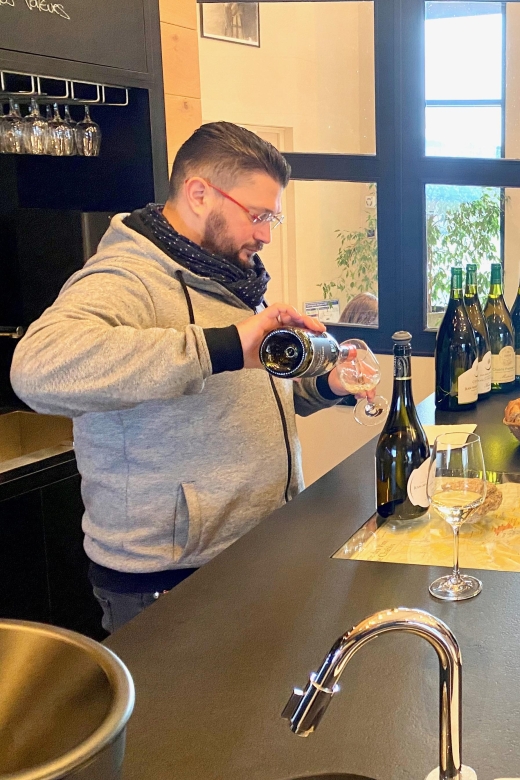
- Four domaines, 20 total glasses across Chablis to Pommard, with a mix of wine levels like 1-er Cru and Grand Cru
- Cave time, not just pouring time: guided cellar visits at multiple stops
- Sommelier-led tastings at the big moments, plus a self-guided cave/tasting in Beaune
- Pinot Noir and Chardonnay focus—Burgundy’s two stars—connected to terroir and subregions
- A real schedule for a private day: hotel pick-up and drop-off with an English driver
- Sunday flexibility: Brocard closes on Sundays, so the Chablis visit changes (food market option appears)
A long day from Paris to Chablis, Beaune, and Pommard
This is a full Burgundy day built around one simple idea: you learn faster when you taste in order. You start with Chablis first (about 2.5 hours from Paris), then move into Beaune, and finish with Château de Pommard. The pacing matters because Chablis and Côte de Beaune wines don’t taste like they come from the same place—even though they’re both Burgundy.
Plan for the day as a “workout,” not a stroll. The total duration is about 870 minutes (roughly 14.5 hours), so you’ll want a good breakfast and comfortable shoes. You’re also tasting multiple wines per stop, which means your palate will be busy from morning into evening.
One more practical note I like: you get bottled water. It sounds basic, but in a long tasting day, it helps you stay sharp rather than dry and foggy.
You can also read our reviews of more private tours in Paris

Road time and timing: making the 14.5-hour schedule work
The route is straightforward: Paris to Chablis first (around 190 km on the highway), then Chablis to Beaune (about 130 km), and finally Beaune back to Paris (around 312 km, usually 3.5–4 hours). There’s a rest area stop on the road, which is smart on a day like this.
Your pick-up is from your hotel or Airbnb address, with timing listed as around 07:30, and the drop-off is back in Paris by about 21:30. That lines up with what makes this tour feel “managed” instead of chaotic: you aren’t driving yourself, and the schedule doesn’t drift.
If you want to enjoy this day, do two small things:
- Go in hydrated and not hungry. You’ll have a lunch break in Beaune, but lunch itself is not included.
- Expect that windows and timing won’t be flexible. This trip is built around entrance times and guided tours, so arrive ready to go.
Jean-Marc Brocard in Chablis: cave visit, 5 tastings, and cheese
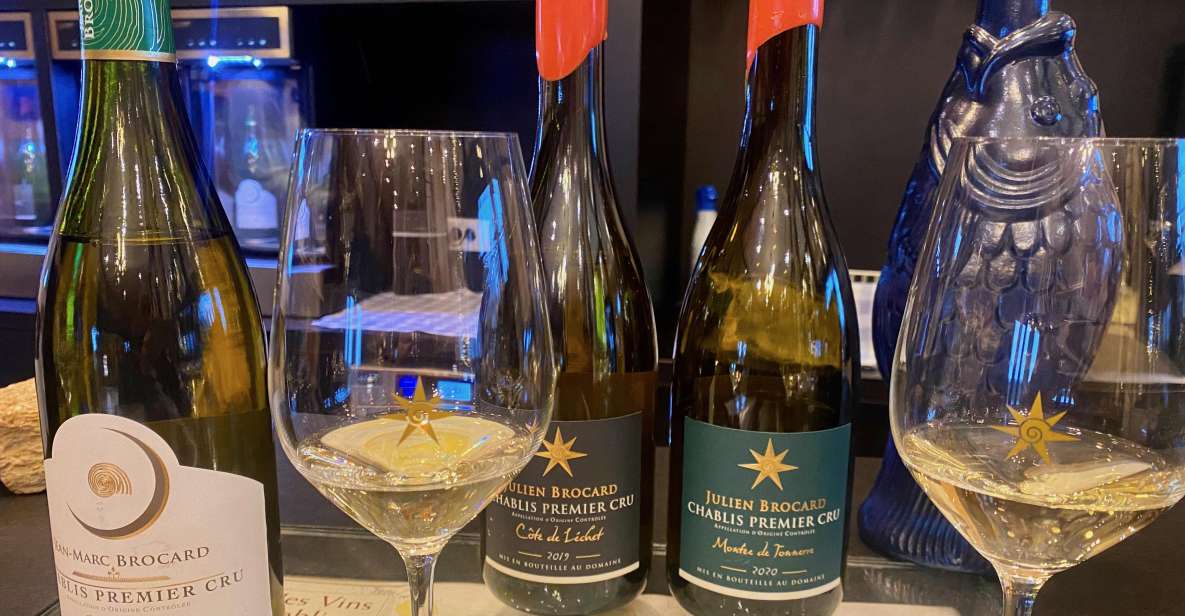
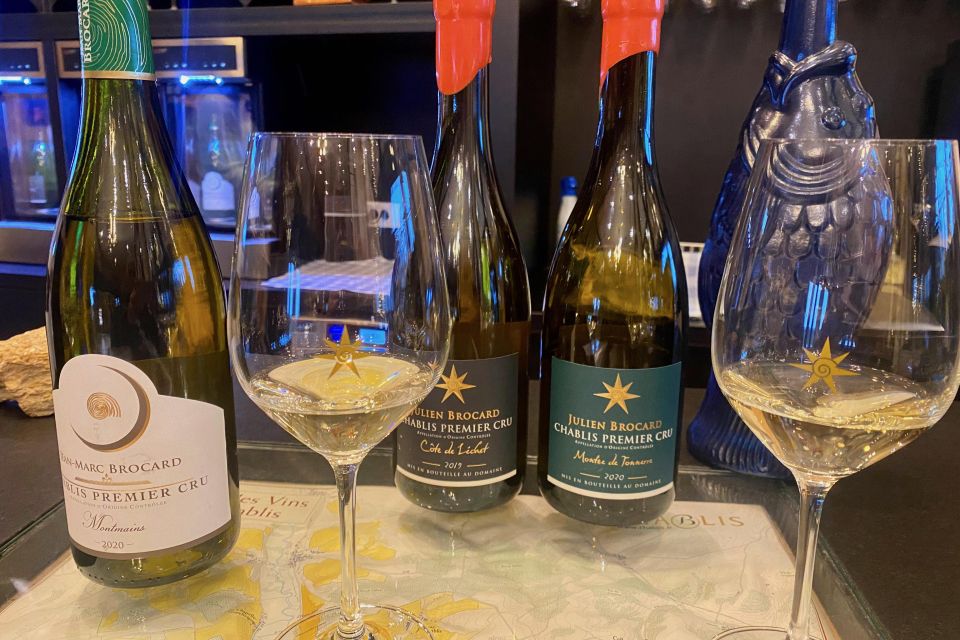
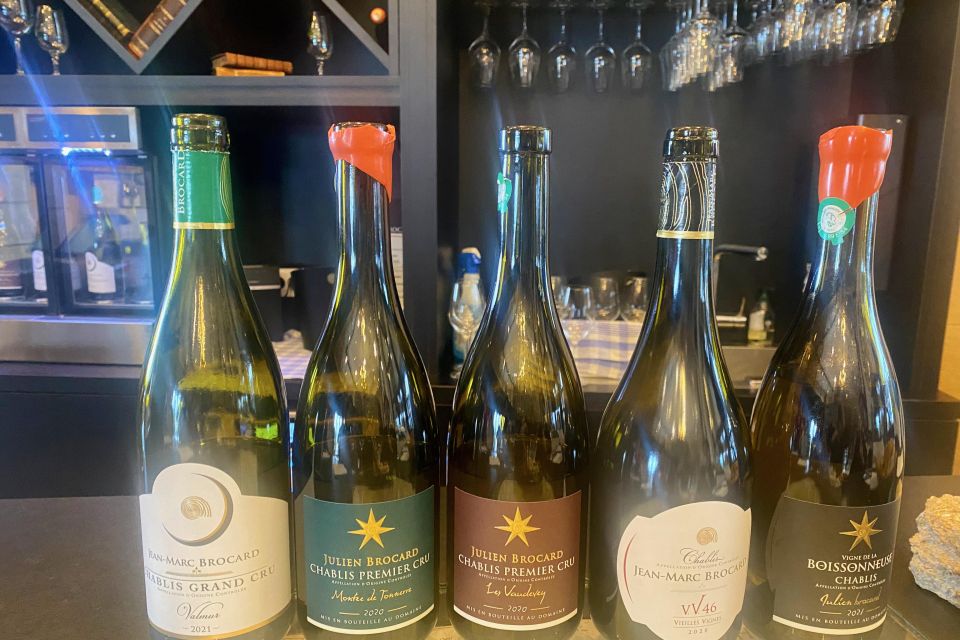
Your first domain visit is Jean-Marc Brocard in the Chablis area. The experience includes a guided visit and a wine tasting of five wines, paired with a cheese plate. It also includes a cave visit, which is where Chablis starts to make sense.
This tasting is designed to teach the classification differences you’ll hear about all day:
- Chablis
- Chablis 1-er Cru
- Chablis Grand Cru
So yes, you’re tasting, but you’re also getting the logic of why those labels exist. You’ll get explanations about winemaking in Chablis and how these categories connect to quality and site.
Practical tip: pay attention to the sommelier’s ordering. Tasting can be more confusing than helpful if you jump around. Here, the point is to taste in a sequence that mirrors the way vineyards and styles relate.
One consideration: Brocard is closed on Sundays. If you book for a Sunday, the Chablis stop changes, and there’s a unique option to visit a local food market in Chablis instead.
Maison Chablis Régnard: Premier Cru and Grand Cru tasting with cellars
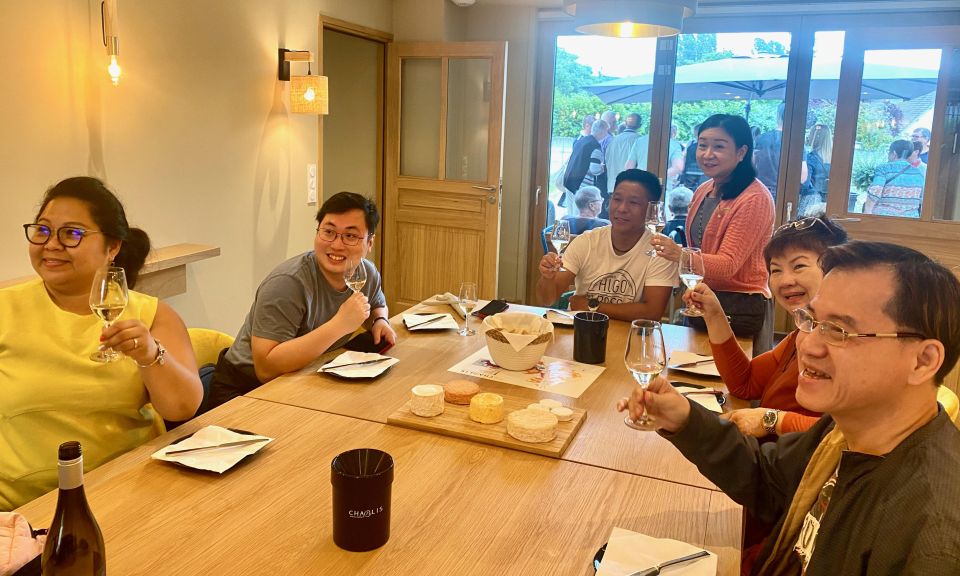
Next up is Maison Chablis Régnard, guided, with another set of five wine tastings. This one is especially good if you like learning through visuals. You’ll see and visit the cellars, and you’ll taste with the support of the sommelier.
Maison Chablis Régnard is founded in 1860, and that age isn’t just a trivia note. It helps frame why the house matters in Chablis, and why their tastings focus on traditional structure and clear explanations. You’ll learn in detail about the classification of Chablis wines and compare the steps from lighter categories to top-tier Grand Cru.
The tasting includes ranges such as:
- Petit Chablis
- Chablis Village
- 1-er Cru
- Grand Cru
Even if you’re not a wine nerd yet, this is a friendly way to build your ear for differences. You’ll also have time for questions, because this stop is guided through the winemaking process and what changes across the bottle.
A quick reality check: tasting five wines in about an hour sounds fast because it is fast. The win is that you’re not doing it alone. The sommelier is there to keep you oriented.
Beaune lunch break plus Hospices of Beaune
After Chablis, you head to Beaune in about 1.5 hours. Then there’s a 1-hour lunch break with drop-off in the city center. Lunch and drinks are not included, so you’ll choose a restaurant or café on your own.
What’s nice here is that Beaune is not just a backdrop. The tour drops you close to Hôtel-Dieu de Beaune (Hospices of Beaune), known as one of the best-preserved Renaissance buildings in Europe. Even if you only have 20–30 minutes to look, it helps you get your bearings. It also makes the day feel less like a conveyor belt between cellars.
If you’re trying to keep your tasting palate from fading, I’d keep lunch moderate—something not too heavy, and definitely not alcohol-heavy. You want to feel ready for Pommard later.
You can also read our reviews of more wine tours in Paris


Caves Patriarche Père et Fils: self-guided tunnels under the city
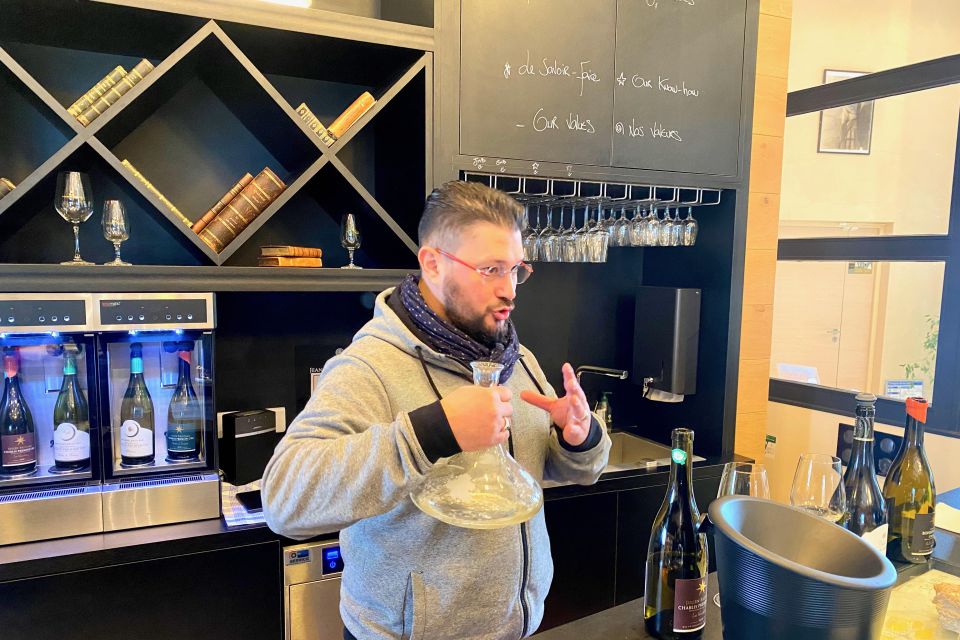
This is the switch-up stop: Patriarche Père et Fils. You’ll have a self-guided visit of the cellars and a wine tasting, also with five wines.
Here’s what makes the location memorable. The Caves Patriarche sit under Beaune, made of about 5 kilometers of tunnels running beneath the city. The place has a history tied to a former convent, and it’s noted as being founded in 1780.
Why I like this portion of the day: it gives you breathing room after two guided stops. A self-guided cellar is a chance to go at your own pace—look longer at something that catches your eye, pause between pours, and compare what you remember from Chablis without someone talking over it.
A practical consideration: because it’s self-guided, you’ll get the most out of it if you bring basic curiosity. Don’t stress if you can’t match every historical detail. Focus on how the wines relate to what you learned earlier.
Château de Pommard and the Route des Grands Crus lesson
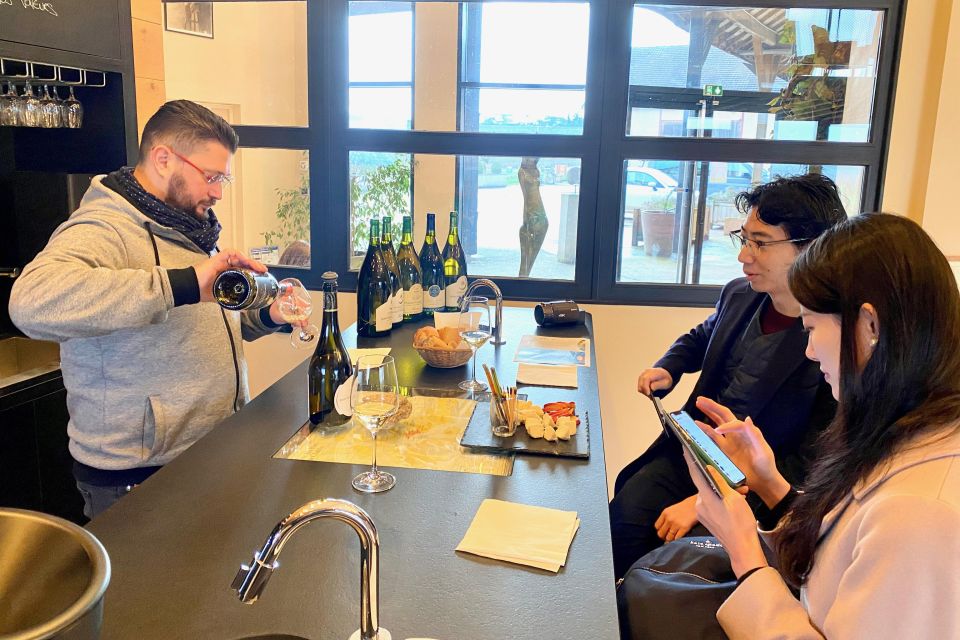
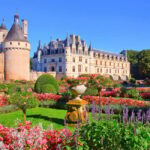
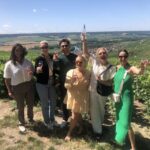
Your final tasting stop is Château de Pommard, just close to Beaune and surrounded by vineyards. This segment is guided again, with a wine tasting of five wines—and it includes a selection from Château de Pommard plus Famille Carabello-Baum with La Route des Grands Crus.
This is where the trip shifts from Chablis-style learning to a broader Burgundy view. You’ll connect the two signature grapes of Burgundy—Pinot Noir and Chardonnay—to village and terroir differences across the region. You’ll also hear about Burgundy’s five subregions and how that ties into specialties, plus the idea behind the famous Route des Grands Crus.
If you’re hoping this tour will make you understand what Grand Cru really means in real life, this stop helps. It takes the classification you’ve been tasting all day and connects it to geography and grape expression, not just label hierarchy.
One last practical note: by the end of the day, your palate will be tired. That doesn’t mean you won’t enjoy it. It means you should slow down mentally. Compare what you like and why, instead of trying to rank everything perfectly.
What 20 glasses across Grand Cru and 1-er Cru teaches you
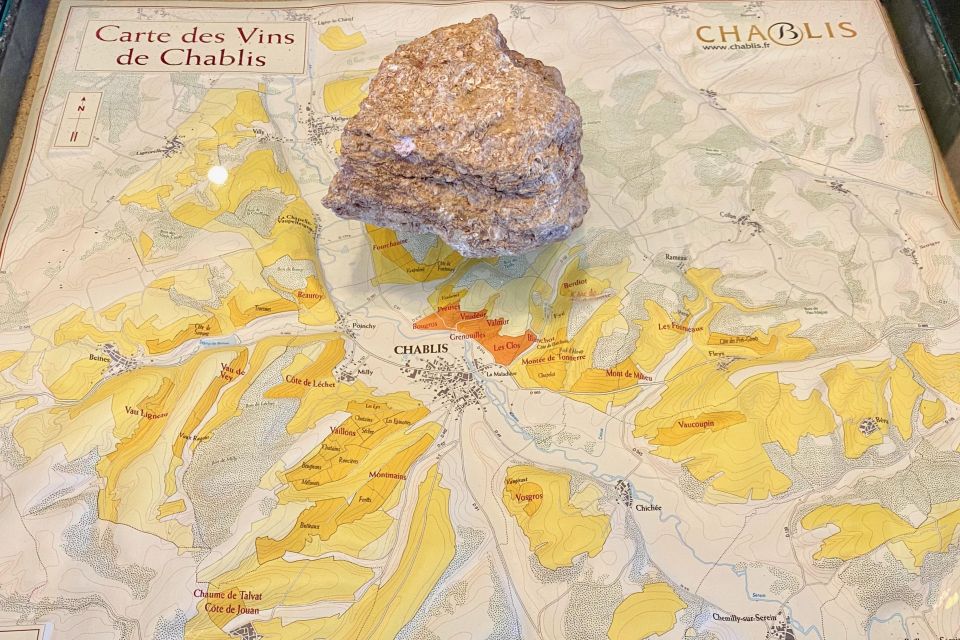
This tour is built for pattern recognition. You taste the real “ladder” of wine quality—Chablis categories in the morning and Burgundy structure as you go south.
You’ll go from categories like Petit Chablis and Chablis Village up through 1-er Cru and Grand Cru, then finish with a Pommard-focused lesson tied to Pinot Noir and Chardonnay. The goal isn’t to turn you into a sommelier by dinner. It’s to train your sense of how terroir and classification affect style.
A nice feature for value is that the day is pretty consistent in output: each of the four tasting stops gives you five wines, and the total comes to 20 glasses. That consistency matters on a private tour. You know what you’re buying—time plus a defined tasting structure.
Also, you’ll be in a car. That means you’ll want to taste with intention:
- Take a moment after each pour to remember what changed (aroma, acidity, weight, finish).
- Don’t try to memorize every label name. Instead, remember the direction: lighter/leaner to richer/more complex, and what wine level tends to bring.
Price and value: why $690 can make sense for a private day
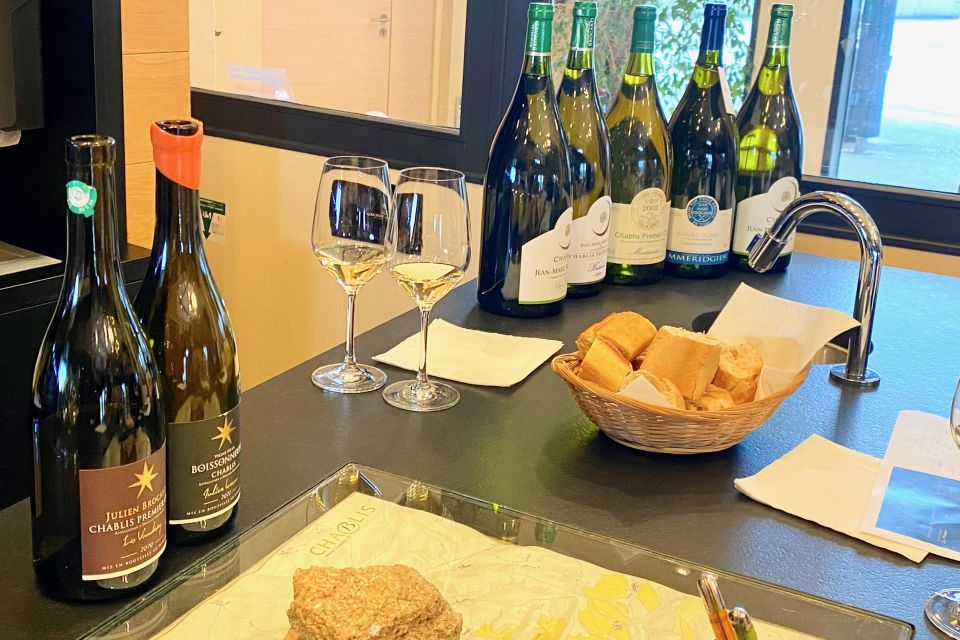
At $690 per person, this isn’t a cheap throw-in experience. The value comes from three big things you’re getting together:
First, you’re paying for private transport. You’re picked up from your door in Paris and driven a long circuit: roughly 190 km to Chablis, then 130 km to Beaune, then back about 312 km to Paris. That’s a lot of paid driving time, plus the inconvenience is handled for you.
Second, the tastings are built-in and structured. You get 20 glasses spread across four domain visits, including both guided and self-guided formats. Some stops include a cheese plate, and the day includes bottled water.
Third, you get “skip-the-line” style time savings at sites where applicable. On a day this packed, that can matter more than you’d think.
The one cost you should plan for is lunch in Beaune. Meals and drinks are not included, and you’ll have to choose what to eat during the 1-hour lunch window.
If your goal is just one winery and a relaxed lunch, this may feel intense. If your goal is learning by tasting across multiple levels and villages, the math starts to work.
Who should book this Burgundy wine trip
This is a great match if you:
- Want to taste Grand Cru and 1-er Cru styles in a single day
- Prefer having the structure of guides and a sommelier at key stops
- Like private tours and want an English-speaking driver keeping the day on track
- Can handle a long schedule with minimal downtime
It’s especially suited to adults who enjoy pairing wine with explanation and want the day to feel educational rather than purely scenic.
If you’re traveling with children, note that it’s not suitable for children under 6. And if you need wheelchair access, it’s listed as not suitable for wheelchair users.
Final call: book or skip
Book this if you want a focused, high-output Burgundy day: Chablis first, Beaune in the middle, Pommard at the end, with guided learning and a total of 20 glasses. I like that you don’t leave the learning to chance. The sommelier-led stops are there when you need the context, and the self-guided cave visit gives you room to slow down.
Skip it if you hate long drives or if you want a lighter pace with no tasting intensity. This is a schedule you feel in your feet and your head, and you’ll enjoy it most if you go in expecting a full-on tasting day.
One more confidence boost: the day is run with punctual, polite driving, and the timing is handled well. That matters a lot when you’re committing to a 07:30-ish start and a late return.
FAQ
How many wine tastings and glasses are included?
You’ll have wine tastings at four places, totaling 20 glasses (five wines per tasting stop).
Which areas of Burgundy does the trip cover?
The route runs through Chablis, then Beaune, and finishes at Château de Pommard.
Are Grand Cru and 1-er Cru wines included?
Yes. The tastings include Grand Cru and 1-er Cru wines, along with other Chablis categories like Petit Chablis and Chablis Village.
What is the total length of the tour?
The duration is 870 minutes (about 14.5 hours).
Is lunch included?
No. There’s a lunch break in Beaune, but meals and drinks are not included.
What vehicle do you use for the private group?
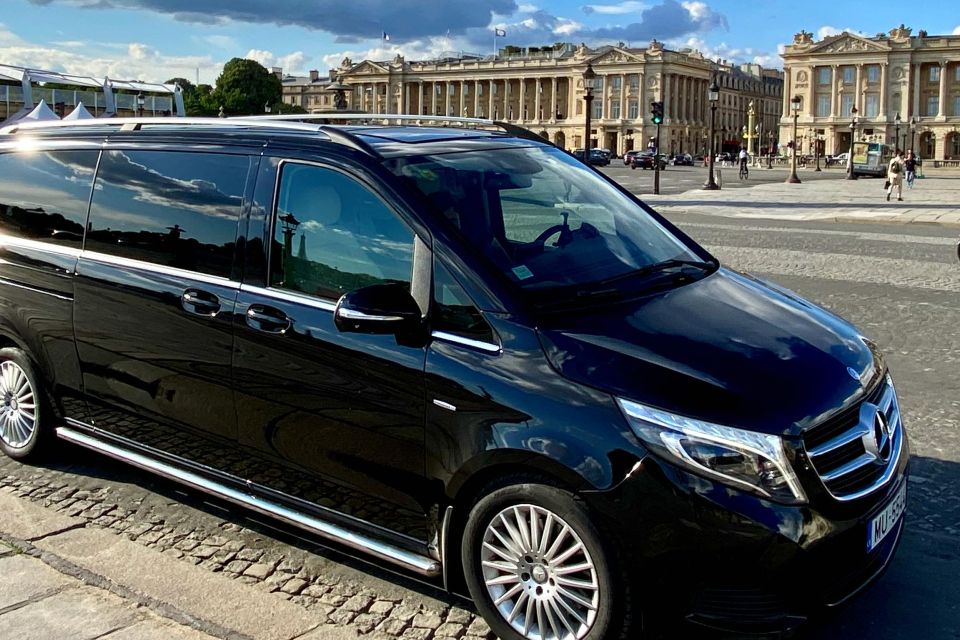
For 2–3 people, you use a Mercedes E220 business class vehicle. For 3–7 people, it’s a Mercedes minivan.
Is the driver English-speaking and is pickup/drop-off included?
Yes. The driver is listed as English, and hotel pick-up and drop-off are included from your address in Paris.