REVIEW · PARIS
Paris Louvre : Private Treasure Hunt for Families or groups
Book on GetYourGuide →Operated by LES OUVREUSES Paris · Bookable on GetYourGuide
A Louvre mystery turns art viewing into a game. This private family treasure hunt gives you a clear path through the museum with a guide, a booklet, and a storyline that keeps kids listening. I especially like that you get Louvre entry tickets included, so you don’t waste precious minutes hunting for the right line.
The second thing I really like is the way the clues are tied to famous works you’d want to see anyway, from La Joconde (Mona Lisa) to the Winged Victory of Samothrace. The main drawback to think about: success depends on smooth ticketing and the guide’s pacing for your group, and if there’s a hiccup or the puzzles feel too hard for your kids, the whole tone can change fast.
In This Review
- Key highlights you’ll care about
- Why a private Louvre treasure hunt works for families
- Price and what $648 per group really buys
- Meeting at Place du Carrousel and walking in with tickets
- The 2-hour mission: poison vial, coded clues, and booklet-led detective work
- La Joconde (Mona Lisa): the clue stop that sets the tone
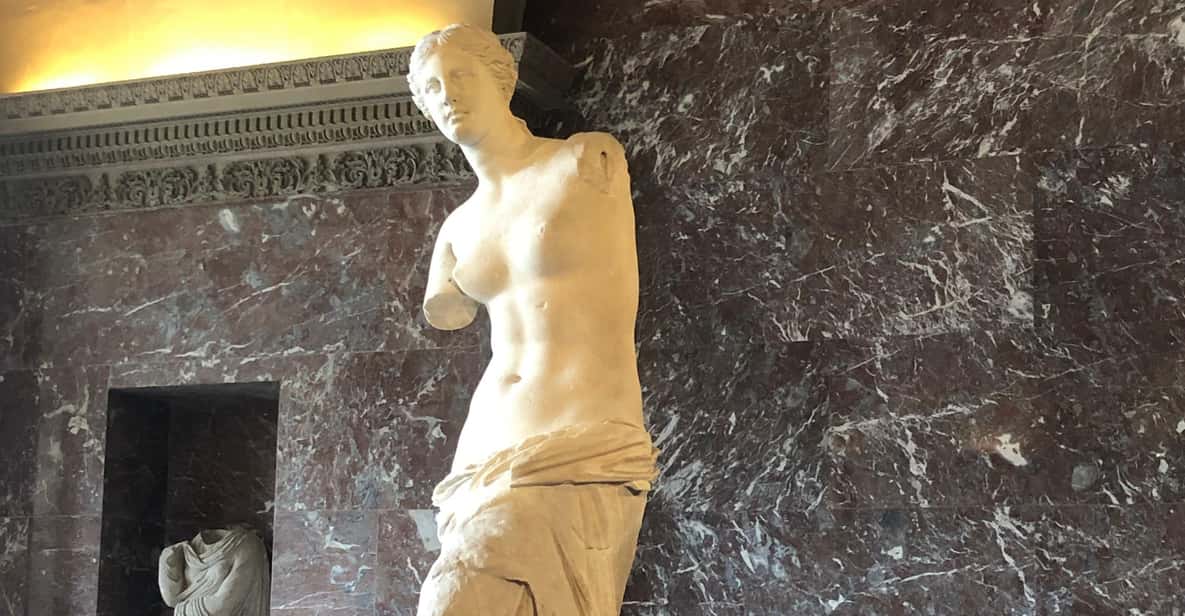
- Venus de Milo: a short 15-minute stop that keeps energy up
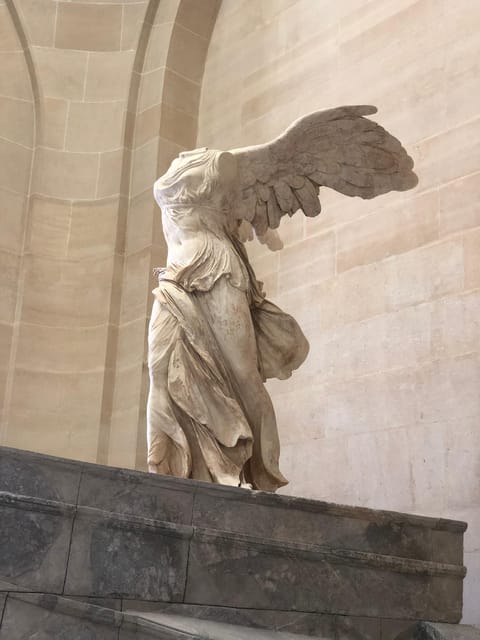
- Winged Victory of Samothrace (Nike): where the clue chain starts to click
- Guides are the difference: Hugo and Lisa as real examples
- Who this tour fits best (and who might struggle)
- Practical tips for a smooth Louvre hunt
- Should you book the Paris Louvre private treasure hunt?
- FAQ
- Where do we meet for the Louvre private treasure hunt?
- How long is the tour?
- Is this tour private?
- Are Louvre museum entry tickets included?
- What languages are available?
- What is the main mission during the treasure hunt?
- Are foods and drinks included?
- Is there any restriction on luggage or bags?
- Can I cancel for a full refund?
Key highlights you’ll care about
- Skip-the-line entry with included Louvre tickets so your tour starts inside, not in paperwork
- A mission with puzzles and coded clues that links the story to major artworks
- Guided stops at the biggest name sites most families come to see
- Private format for families or small groups, guided in French or English
- Light packing only since luggage or large bags aren’t allowed
Why a private Louvre treasure hunt works for families
The Louvre can feel like a maze if you show up with kids and no plan. This tour gives you the opposite of that. You’re not trying to “do everything.” You’re following a game. That matters, because kids don’t need the whole museum. They need a reason to focus for 2 hours.
I like that the tour is built around challenges at each artwork stop. The museum is still the museum, but the format nudges everyone to look carefully—at details, symbols, and patterns—rather than just “walking past” something famous. It also helps you manage energy. You have planned momentum, instead of the usual stop-and-start wandering.
At the same time, you should be honest with yourself about your kids’ attention span. This is a riddle-style hunt, not a sit-down lecture. If your child needs constant physical action, the museum floors and the riddle rhythm could feel like a mismatch.
You can also read our reviews of more private tours in Paris



Price and what $648 per group really buys
This experience is $648 per group (up to 5 people) for a 2-hour private tour. That’s not cheap, but here’s the practical way to think about it:
- If you fill the group of 5, you’re effectively paying about $130 per person for a guided private hunt.
- Your ticket cost is handled for you because Louvre entry tickets are included.
- You’re also paying for a guide who steers kids through major works without turning the day into a long, exhausting museum slog.
So the value isn’t just the guide—it’s the time saved and the structure. When you’re paying private-tour money, what you’re really buying is smoother pacing, fewer dead ends, and a plan that keeps kids engaged enough to enjoy the art.
If you’re traveling as a smaller group of 2 or 3, the per-person cost climbs, but the private format can still feel worth it if you want a personalized approach and minimal waiting.
Meeting at Place du Carrousel and walking in with tickets
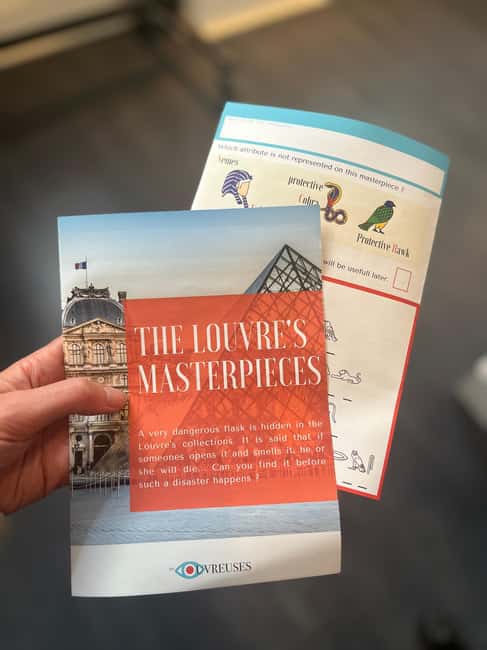
Your meeting point is 8 Pl. du Carrousel, and you meet your guide below the Louis XIV statue. Then you walk in right away using the included tickets. For families, that “right in” part is a big deal. Waiting around outside the museum with kids is how a good day turns into a cranky one.
A couple of practical notes:
- Build in a little buffer time to spot the right guide at the statue. The Louvre area is busy.
- Come with everyone having used the bathroom before you start. Once you’re inside, you’ll want the tour to stay on pace.
- No luggage or large bags are allowed. If you’re traveling light, you’re set. If not, you may need to plan storage in advance.
Also, the tour runs in French and English, so if your group prefers one language, you’ll want to confirm that when you book.
The 2-hour mission: poison vial, coded clues, and booklet-led detective work
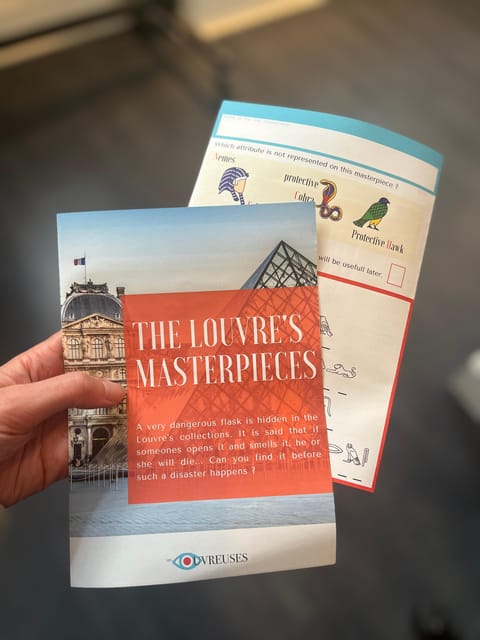
Here’s the hook that drives the whole experience: there’s a deadly vial hidden among the museum’s masterpieces, and the legend says whoever inhales it falls into an eternal sleep. Your job is to find the vial before tragedy strikes.
What you actually do is a sequence of clue stops:
- Your guide starts you with the mission briefing.
- You move from artwork to artwork where each stop includes a challenge.
- Clues appear in the context of what you’re looking at, including observation games and coded messages.
- You work backward, tracing a thread of information from clue points to the vial.
I like that this isn’t random scavenger-hunt fluff. It’s anchored to actual masterpieces you’d come to see anyway. The game format nudges everyone to look longer at fewer works, which is often the difference between a museum day that feels like homework and one that feels like a story.
You also get a booklet. Even if kids don’t read every line, having a physical “detective packet” gives them something to hold onto during transitions. And if your group includes teens or adults who get impatient, the storyline gives you a shared reason to keep going.
La Joconde (Mona Lisa): the clue stop that sets the tone
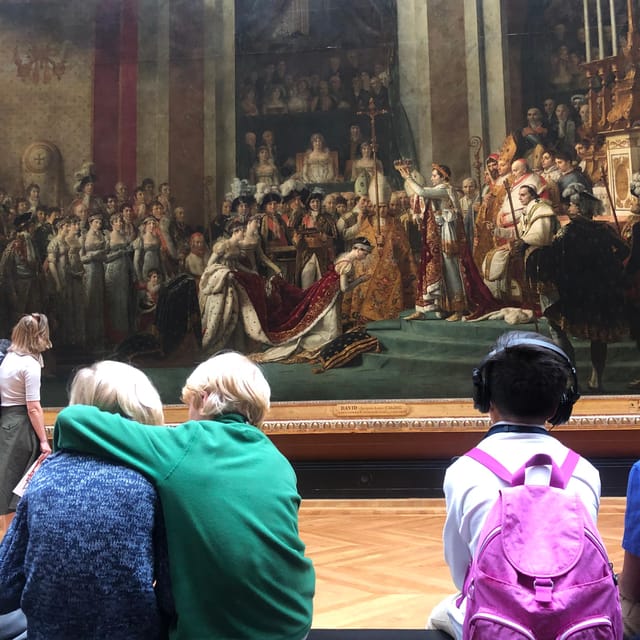
The itinerary includes a guided stop at La Joconde (Mona Lisa). This is usually where the museum energy peaks—because it’s famous, and everyone has an opinion about what they’re looking at.
The tour doesn’t treat it like a quick photo checkpoint. It treats it like a clue hub. You’re not just viewing; you’re solving, with the guide explaining how to use what you notice to move toward the mission.
What’s valuable here is the pacing choice. The Louvre can overwhelm you with scale. Starting with a top-name magnet like the Mona Lisa helps everyone get oriented and motivated. For kids, seeing a landmark they already know helps them buy into the game fast.
One possible drawback: the Mona Lisa area can be crowded. The tour format won’t magically remove crowds, but a guide-led flow can help you avoid wandering aimlessly while everyone is waiting for their turn.





Venus de Milo: a short 15-minute stop that keeps energy up
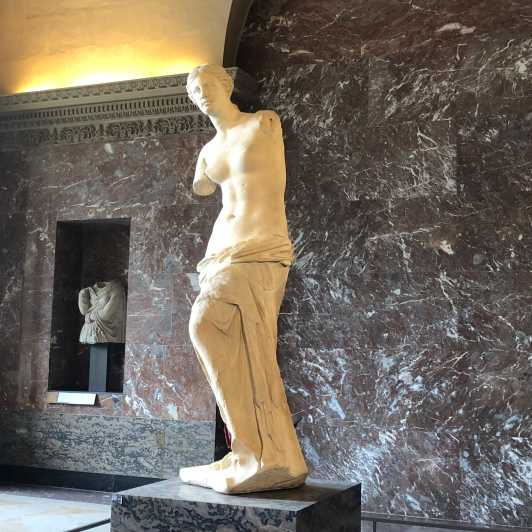
Next is Venus de Milo, with a 15-minute guided tour. That time slice is smart for a family outing. It’s long enough for your guide to give context and set up the related puzzle work, but short enough that kids typically don’t hit full attention fatigue.
This is also a practical reminder: even in a treasure hunt, you don’t need marathon museum time. A timed stop reduces the risk that everyone’s energy levels collapse halfway through the tour.
If your group contains younger children, the 15-minute structure can feel like a sweet spot: enough structure to stay with the story, without dragging.
Winged Victory of Samothrace (Nike): where the clue chain starts to click
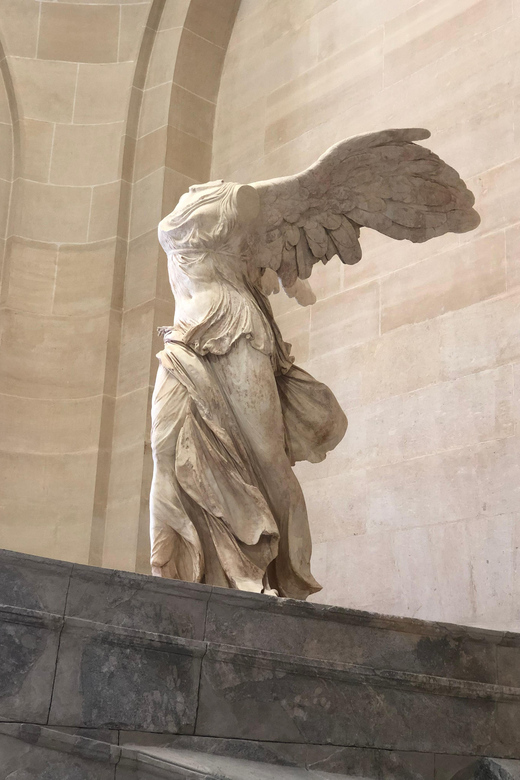
The itinerary then moves to the Victoire de Samothrace (Winged Victory of Samothrace). This is the kind of artwork that visually grabs you even when you’re not trying. The pose, the scale, the sense of motion—kids often understand it quickly because it feels dramatic, not abstract.
For the mission, this stop matters because it supports the larger goal: trace the thread back to the hidden vial. The guide ties the observation work from each artwork to the bigger coded-message logic. The museum becomes a puzzle board, and you’re not guessing blindly. You’re connecting steps.
I think this part of the tour is often where families start enjoying the method. Early stops can feel like you’re just following directions. Later stops are where you begin to feel like you’re actually solving something.
Guides are the difference: Hugo and Lisa as real examples
A big theme from the experience is that the guide’s job isn’t only to explain art—it’s to pitch the clues in a way kids will stick with.
I saw clear examples in the feedback:
- Hugo is described as patient and fully involved with the kids.
- Lisa is praised for keeping children engaged and making it a strong learning experience.
You should also take one caution from the same data. In one case, a booking issue led to a missing ticket, and the family ended up waiting in rainy Paris for the group to come back from another tour. That’s an operational failure, not a “museum problem,” and it’s exactly the kind of thing that can kill the mood for a day you planned around a timed start.
So when you book, think like this: you’re not just buying a topic. You’re buying execution. If you can confirm your group details and keep your head about timing, you’ll stack the odds in your favor.
Who this tour fits best (and who might struggle)
This is designed to keep the whole family engaged, and the results line up best when kids are ready for a detective-style activity.
Based on what worked:
- Kids around 6 and 9 tend to enjoy the format and stay attentive.
- A 3-year-old may not be into the riddle pace for the full 2 hours.
That doesn’t mean the tour is “bad” for younger kids—it means you should choose expectations carefully. If your youngest is likely to get bored or restless quickly, plan to bring a more patient co-pilot (someone who can keep them anchored to the booklet and guide prompts) or consider whether you want a shorter, more flexible plan.
Difficulty level is another factor. In one case, the scavenger hunt was described as a bit too difficult and less engaging than expected. If your kids are strong readers or love puzzles, great. If they’re only starting with puzzles and riddles, ask the guide beforehand (or during the initial meet-up) whether they can adapt the challenge level for your group.
Practical tips for a smooth Louvre hunt
A few things can make this go from merely fun to genuinely enjoyable:
- Bring snacks only if you have a plan for where to eat. The tour does not include foods and drinks, so you’ll need to plan around your own timing.
- Wear shoes you can walk in for museum distances. Two hours in the Louvre can feel longer when everyone is moving between highlights.
- Keep bags minimal. Since luggage or large bags aren’t allowed, you’ll want to avoid any “just in case” bulky packing.
- If you’re rain-dodging, dress for the weather at the meeting point. You’ll likely be outside briefly before you enter.
- Use the guide’s language flexibility. The tour can run in French or English, so choose the language that helps your child process clues fastest.
And here’s a small mindset shift that helps: treat the famous works as clue scenes, not museum trophies. When kids feel like they’re participating, not just watching, the whole day changes.
Should you book the Paris Louvre private treasure hunt?
If your priority is a Louvre visit that feels like a story—with built-in pacing, short guided segments, and activities tied to real masterpieces—this is an excellent fit. I especially like it for families who want to see the Mona Lisa and the Winged Victory of Samothrace without spending the day negotiating where to stand and what to do next.
I’d skip it, or at least think carefully, if:
- your kids are very young or easily bored by riddle-style tasks
- your group can’t handle a structured 2-hour format
- you’re traveling with a lot of luggage (because large bags aren’t allowed)
If you can travel light and you have at least one or two kids who enjoy puzzles, this tour can turn the Louvre from an overwhelming giant into a solvable mystery. And that’s the kind of value that sticks long after the photos fade.
FAQ
Where do we meet for the Louvre private treasure hunt?
You meet your guide at 8 Pl. du Carrousel, below the Louis XIV statue.
How long is the tour?
The tour lasts 2 hours.
Is this tour private?
Yes. It’s a private group tour.
Are Louvre museum entry tickets included?
Yes. Louvre Museum entry tickets are included, and you walk right in upon arrival.
What languages are available?
The live tour guide offers French and English.
What is the main mission during the treasure hunt?
You work to find a poisonous hidden vial before a tragedy occurs, using clues connected to famous artworks.
Are foods and drinks included?
No. Foods and drinks are not included.
Is there any restriction on luggage or bags?
Yes. Luggage or large bags are not allowed.
Can I cancel for a full refund?
You can cancel up to 24 hours in advance for a full refund.