REVIEW · PARIS
Paris: 2-Hour Passages Private City Tour in German
Book on GetYourGuide →Operated by HelpTourists · Bookable on GetYourGuide
Paris passages aren’t on every itinerary, and that’s exactly why this tour works. I like how the route keeps you focused on hidden covered passages rather than repeating the usual big sights, and I also appreciate the 19th-century context that makes each corridor feel like a real scene from the past. One thing to consider: this is a walking experience in central Paris, and you’ll want comfortable shoes since you’re covering multiple passage connections in just 2 hours.
In This Review
- What you’ll actually enjoy on the walk
- A quick heads-up on the vibe
- Key highlights
- Why Paris passages feel like a time machine
- German-speaking private tour: how the format changes everything
- The starting point at Le Peletier: get your bearings fast
- Passage Verdeau: the first covered streets that pull you in
- Passage Jouffroy: where looking slowly pays off
- Passage des Panoramas: the city starts to connect
- Grands Boulevards: where the passage story meets real Paris streets
- Palais-Royal quarter and the finish at Palais-Royal
- Price and value: is $94 for 2 hours fair?
- Who should book this passage tour
- Practical planning tips so your 2 hours feel smooth
- Should you book this Paris passages tour?
- FAQ
- What language is the tour in?
- How long is the tour?
- Is this tour private?
- Where does the tour start?
- How do I recognize the guide at the meeting point?
- Where does the tour finish?
- What’s included in the price?
- Are entrance fees included?
- Is hotel pickup included?
- What’s the cancellation policy?
- What days does the tour operate?
- Is reserve and pay later available?
- Is food included?
- Do I need to tip?
- Who runs the tour?
What you’ll actually enjoy on the walk
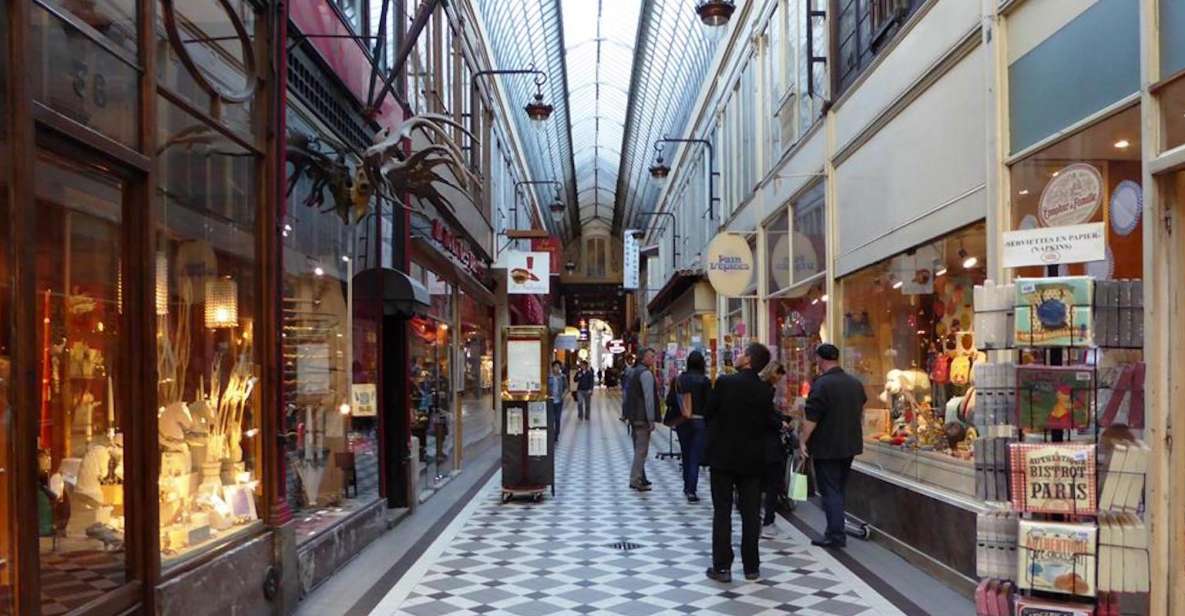
Two things stand out right away: the private German guide format (questions come up naturally), and the sense that you’re seeing “our” Paris through a local lens—especially with guides who know how to connect details to the bigger story. A small drawback is that you won’t get pickup from your hotel, so you’ll need to reach the meeting point yourself at Metro Le Peletier.
A quick heads-up on the vibe
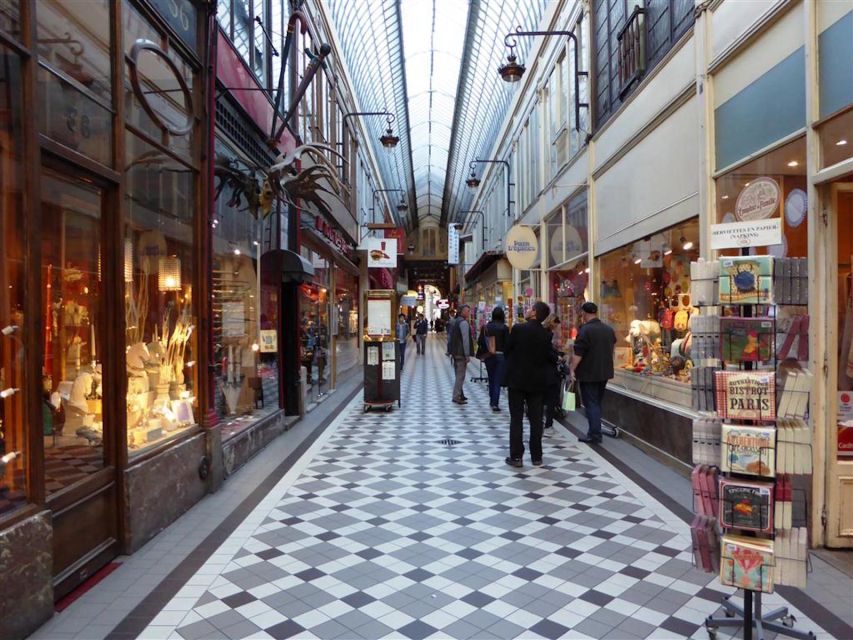
Expect an easy, friendly pace and an atmosphere built around explanation, not rushing. The passages themselves are the star, but the route also includes classic city streets and an ending in the Palais-Royal area, so you still get that sense of central Paris. If you’re expecting shopping-mall style arcades, you may need to recalibrate, because these passages started for practical reasons tied to the city as it was back then.
You can also read our reviews of more city tours in Paris



Key highlights
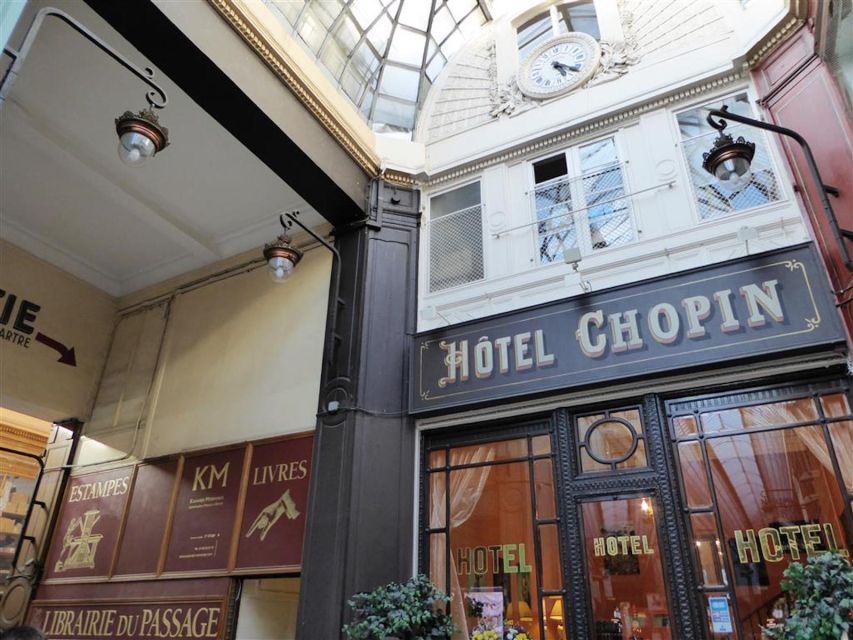
- Covered passages in the center of Paris that feel discovered, not scheduled
- 19th-century context explaining why these spaces appeared when they did
- Private tour in German with a guide who can follow your interests
- Passages like Passage Verdeau and Passage Jouffroy that reward slow looking
- A finish at Palais-Royal, putting you back in a prime neighborhood
- A guide sign with HelpTourists branding so you can find them fast
Why Paris passages feel like a time machine
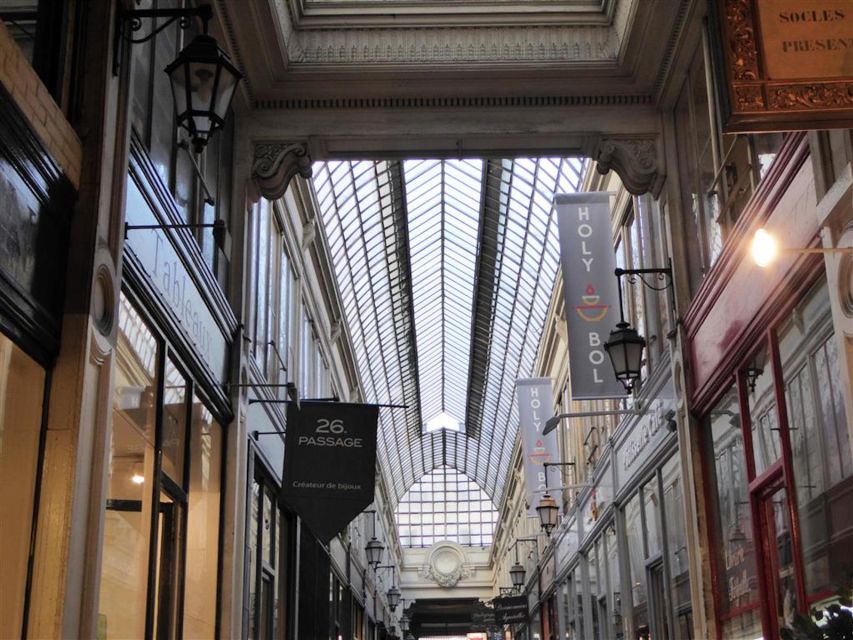
Paris is famous for its monuments, but the passages do a different job. They take you into the everyday Paris that tourists often skip: narrow, covered corridors tucked into the middle of the city. You can’t always locate them quickly on your own, because they’re not the obvious “go here, see that” kind of sight. The result is simple and satisfying: you feel like you’re uncovering Paris on purpose.
What I find especially appealing is the framing. These aren’t presented as generic charm or just pretty architecture. You get the explanation that the passages were a response to real conditions in the early 1800s, when Paris was dirty and far less comfortable than the postcard version. The tour also clarifies that they weren’t shopping arcades in the modern sense—more like an answer to how people adapted to their surroundings. In other words, it’s not only a photo stop; it’s a social and practical story you walk through.
If you like architecture and context, this is a great fit. You’ll look up at the structure, notice how the passage shapes movement, and then your guide connects that design to why people wanted spaces like this in the first place.
German-speaking private tour: how the format changes everything
This is a private group tour with a German-speaking guide. That matters more than you’d think for a subject like this, where details are easier to miss if you’re just wandering around. When you can ask a question in the language you’re comfortable with, you spend less time guessing and more time understanding.
The guides are described as German-speaking and focused on showing visitors their Paris—so the explanations aren’t detached or lecture-like. You get a real sense that the walk is curated with intention: the selection of passages, the order of streets, and the way the tour ends in the Palais-Royal quarter all help the story land.
One example from the guide experience is Solene, mentioned as friendly and strong on details and connections. That’s the kind of feedback that usually means you won’t just hear descriptions—you’ll hear links: why one passage relates to another, how the city’s layout shaped commerce, and why the spaces rose in popularity for a relatively short period compared with today.
The starting point at Le Peletier: get your bearings fast
You meet at Metro Le Peletier (Line 7). The key practical detail here is that you should look for your guide with a HelpTourists bag. That reduces the common stress of group tours—especially in a big station where it’s easy to wander around without the right person in sight.
From there, the route is designed to move you from the broader boulevard world into the passage network. You’re not staring at a map for long; you’re being guided into the pocket-sized spaces where Paris does its best “wait, where does this lead?” magic.
Since the total duration is 2 hours, each stretch has a purpose. You’re not meant to linger forever in one corridor; instead, you get a sequence of sights and context that stays sharp and manageable.
You can also read our reviews of more private tours in Paris






Passage Verdeau: the first covered streets that pull you in
Passage Verdeau is your first real taste of the passage world. This is the moment when the tour’s theme clicks: these aren’t random side streets. They’re built environments—covered walkways that change how Paris feels underfoot and overhead.
At this stage, I’d pay attention to how your route transitions from normal Paris street life into a smaller, more protected space. The “hidden” part becomes real once you’re inside, because you start noticing how the passage compresses the city. It feels like stepping into a pocket where time and movement work differently.
This is also where you’ll likely hear the tour’s core explanation about why passages appeared when they did. The guide’s job is to make you see beyond the aesthetics: you’re learning how people used architecture to solve problems of daily life. When you understand the why, the corridors stop being mere scenery and become evidence of how Paris adapted.
Passage Jouffroy: where looking slowly pays off
Passage Jouffroy is one of those places where slow looking turns into real understanding. Covered passages have a specific charm: they invite you to pause, look upward, and notice the way the space frames light and movement. But the tour keeps you from treating it like a decorative hallway.
You’ll get explanations that connect the structure and setting to the idea that these were forerunners to later commercial models—an early step toward the larger shopping culture Paris is known for today. The guide’s phrasing matters here. Instead of treating the passages as a museum artifact, the tour positions them as part of a chain of changing consumer life and street conditions.
This stop also tends to be where private-guide magic shines. If you’re curious about architectural details, the guide can point them out. If you’re more interested in how people lived, the guide can steer you that way. Either way, you’re not stuck reading signs or guessing.
Passage des Panoramas: the city starts to connect
Next comes Passage des Panoramas, and by now the tour has likely trained your eye. You start recognizing patterns: how these passages thread through the city, how they relate to nearby streets, and how their design affects what kind of people would use them.
This is a good moment to remember the tour’s stated theme. The early 19th-century Paris setting matters, because the passages weren’t created for nostalgia. They were created because conditions demanded solutions, and because covered walkways made daily movement and commerce more manageable than open, dirty streets.
If you want photos, this stop is a strong candidate. But even if you’re not a photo person, it’s still worth treating it like a “study stop.” Notice how the passage guides your attention and how it funnels you toward the next part of the route.
Grands Boulevards: where the passage story meets real Paris streets
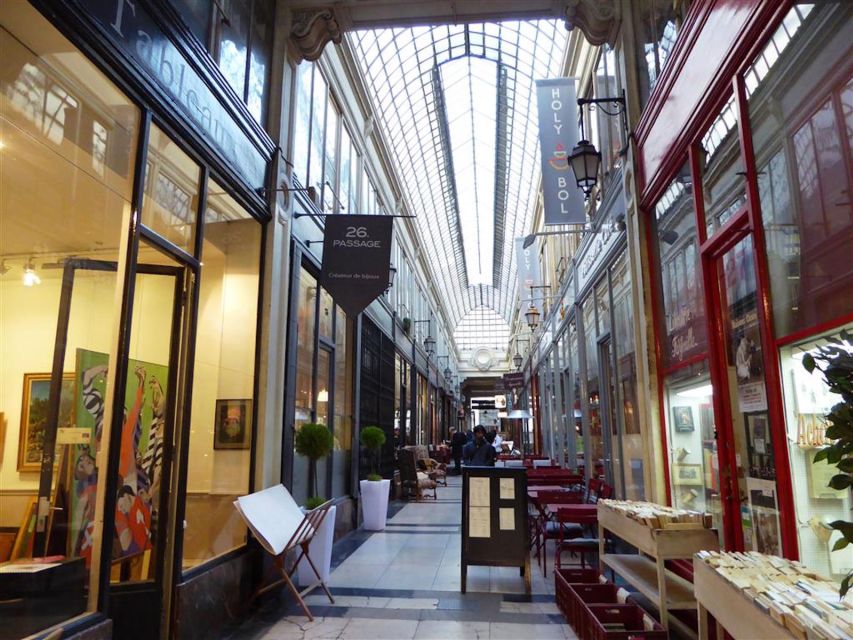
After the covered sections, you transition to Grands Boulevards. This isn’t a random detour. It’s part of the bigger explanation: passages didn’t exist in isolation. They connected into the city’s main arteries, and that connection helps explain why they could take off when they did.
For me, this street segment is about contrast. When you’ve just come from enclosed corridors, the open boulevard feels like a wider breath. It also helps you locate the passages in your mental map of central Paris. You’re learning the city’s logic, not just collecting sights.
In a 2-hour private tour, this is the kind of segment that can easily be rushed on group walks. Here, the balance seems designed to keep the story coherent: you get context first, then the passage-world makes more sense.
Palais-Royal quarter and the finish at Palais-Royal
The tour’s ending is placed in the Palais-Royal quarter, with the official finish at Palais-Royal. This is a smart choice for practical reasons and for emotional ones.
Practically, Palais-Royal is a central area where it’s easy to decide what to do next—whether you’re heading toward more classic Paris landmarks, looking for cafés, or browsing nearby streets. Emotionally, finishing here gives you that satisfying “back to the center” feeling. After moving through quieter corridors, you land in one of the most recognizable parts of the city.
This ending also reinforces the tour’s theme. You start in a transit-ready meeting point, move through hidden passages that feel tucked away, then return to a lively-but-refined area. It’s a tidy wrap that doesn’t leave you stranded in a hard-to-reach corner.
Price and value: is $94 for 2 hours fair?
At $94 per person for a 2-hour private German tour, this isn’t a budget bargain—but it also doesn’t look overpriced when you think about what you’re buying.
You’re paying for three things that are hard to replicate on your own:
- A guide who can locate and explain passages you might miss even if you know Paris
- Context about why these spaces existed in early 19th-century conditions
- A private format where you can move at a sensible pace and ask questions
If you’re traveling in a group and splitting cost, the “private” part can feel more reasonable fast. If you’re solo, it can still be worth it if you enjoy guided interpretation and want the story you’d otherwise miss while wandering.
The biggest value signal is the high rating (4.9) and consistent feedback around information, atmosphere, and the right length. A 2-hour slot is long enough to feel like you learned something, but short enough that it stays sharp and not exhausting.
Who should book this passage tour
I’d steer you toward this experience if you like:
- hidden details in big cities
- architecture you can actually understand, not just admire
- guided stories that explain why a place exists
- doing one or two “different” things that most people don’t think to schedule
It’s also a solid choice if you enjoy conversational history. The tour isn’t just about dates; it’s about everyday Paris—how the city’s conditions shaped spaces and how commerce evolved. Reviews highlight that people found it very informative and learned Paris from another side, which is exactly what this kind of tour aims to do.
If your travel style is strictly checklist sightseeing and you only want the top three monuments, you might find this more niche. But if you’re curious and observant, this walk rewards that attitude quickly.
Practical planning tips so your 2 hours feel smooth
A few smart habits help you get the most out of a short private tour:
- Bring comfortable walking shoes. You’re covering several passage and street segments in a concentrated time window.
- Plan to arrive a little early at Le Peletier so you can find the guide with the HelpTourists bag without stress.
- Come ready to look up and pay attention. Passages are about space and structure, not just street-level views.
- Don’t plan a long meal immediately afterward. The tour ends at Palais-Royal, so you can flex your next stop there.
Also note what isn’t included: no entrance fees, no food, and tips are not included. For a two-hour guided walk, that’s normal. It keeps the focus on the route and the explanations.
Should you book this Paris passages tour?
Book it if you want a quietly adventurous Paris experience that’s actually guided. This tour makes the passages understandable and turns “hidden streets” into a clear story about how early 19th-century Parisians adapted to their city.
Skip it only if you’re mainly interested in headline monuments or you don’t enjoy walking through smaller spaces where details matter. Otherwise, this is one of those smart Paris picks: short, focused, German-guided, and designed to help you see the city from a side most people never hunt for.
FAQ
What language is the tour in?
The tour is in German with a live German-speaking guide.
How long is the tour?
The tour lasts 2 hours.
Is this tour private?
Yes, it’s listed as a private group tour.
Where does the tour start?
You meet at Metro station Le Peletier (Line 7).
How do I recognize the guide at the meeting point?
Look for your guide with a HelpTourists bag.
Where does the tour finish?
It finishes at Palais-Royal.
What’s included in the price?
Included are the 2-hour private city tour and a German-speaking guide.
Are entrance fees included?
No, entrance fees are not included.
Is hotel pickup included?
No, pick-up from your hotel is not included.
What’s the cancellation policy?
You can cancel up to 24 hours in advance for a full refund.
What days does the tour operate?
The tour runs Monday to Saturday.
Is reserve and pay later available?
Yes, reserve now and pay later is offered.
Is food included?
No, food is not included.
Do I need to tip?
Tipping is not included in the tour price.
Who runs the tour?
The experience provider is HelpTourists.