REVIEW · PARIS
Discover the Marais (:) An Outdoor Detective Adventure
Book on GetYourGuide →Operated by From Paris with Fun · Bookable on GetYourGuide
Paris turns into a detective case. This Marais walking tour mixes detective riddles with classic sights, so you’re not just looking—you’re figuring things out as you go. I like that the route is built around real places (think Saint-Paul Saint-Louis and Place des Vosges), and I like that the game format keeps the pace fun. One catch: it’s designed for people who can read, so it may be tough for kids under 8 (and adults might end up helping).
You start near Saint-Paul Saint-Louis Church and work your way through the neighborhood’s big characters: the historic core, the old Jewish quarter vibe near Rue des Rosiers, and the Marais Gay area. The guide stays available if you get stuck, and the group moves together in a way that actually makes sense for puzzles—not a sprint.
Time-wise, expect about 2 to 2.5 hours, depending on how long your team takes. Comfortable shoes matter, and you should plan for some standing and walking while you read clues and solve the riddles.
In This Review
- Key points to know before you go
- The Marais meets a street-level mystery game
- Starting at Saint-Paul Saint-Louis Church and Métro Saint-Paul
- Place des Vosges: where clues meet one of Paris’ best-known squares
- Carnavalet Museum area and the hunt for what’s hidden in plain sight
- Rue des Rosiers and the Jewish quarter atmosphere
- Marais Gay area clues and the approach to Pompidou
- How the booklets work (and why reading skills matter)
- Group size, pace, and what your shoes should handle
- Price and value: $35 for a guided puzzle-walk
- Who this Marais detective tour suits best
- Should you book this Marais detective walk?
- FAQ
- Where does the tour start?
- How long is the Marais detective walk?
- What does the price include?
- Is it available in English?
- Is there an option to do it without a guide?
- Do I need to bring snacks or drinks?
- What should I bring?
- What age is the tour best for?
- Where do you end the tour?
Key points to know before you go
- Saint-Paul Saint-Louis start: your “case file” begins right in front of the church, near Métro Saint-Paul
- Booklets do the heavy lifting: cultural/history pages plus a riddle at each main stop
- Small groups keep it friendly: the guide adjusts pace for slower teams, including families
- Rue des Rosiers includes a breather: you get some free time, not just nonstop puzzle pressure
- A real end point near Pompidou: you finish around Georges Pompidou Museum (with one listed drop-off near Fontaine Stravinsky)
- Riddles can be challenging: at least one reviewer said some puzzles were quite difficult—in a good way
The Marais meets a street-level mystery game
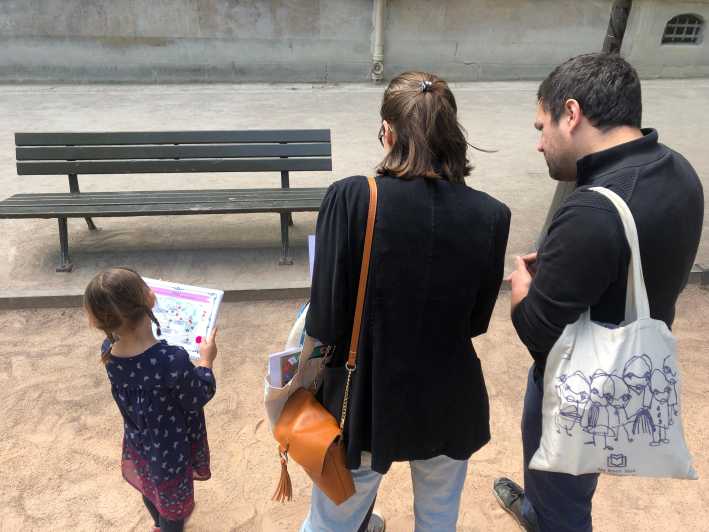
This is the kind of Paris activity that works even if you’ve done a lot of tours already. Instead of following a script, you follow clues. You’ll get booklets that turn famous corners into a puzzle board, which makes the Marais feel more like a game map than a slideshow.
The best part is the blend: you still get to see the neighborhood in a human, walking way, but you also get that escape-game energy—stop, look closely, compare details, and solve the next step. If you enjoy puzzles, you’ll feel rewarded at every checkpoint. If you prefer sightseeing, the booklet’s context pages help you keep your bearings.
And yes, the guide plays a role. This isn’t fully self-guided by default. Your guide can help when you’re stuck, and they share info along the way. It’s a plus when you’re curious, but it doesn’t hijack your time.
You can also read our reviews of more tours and experiences in Paris.



Starting at Saint-Paul Saint-Louis Church and Métro Saint-Paul
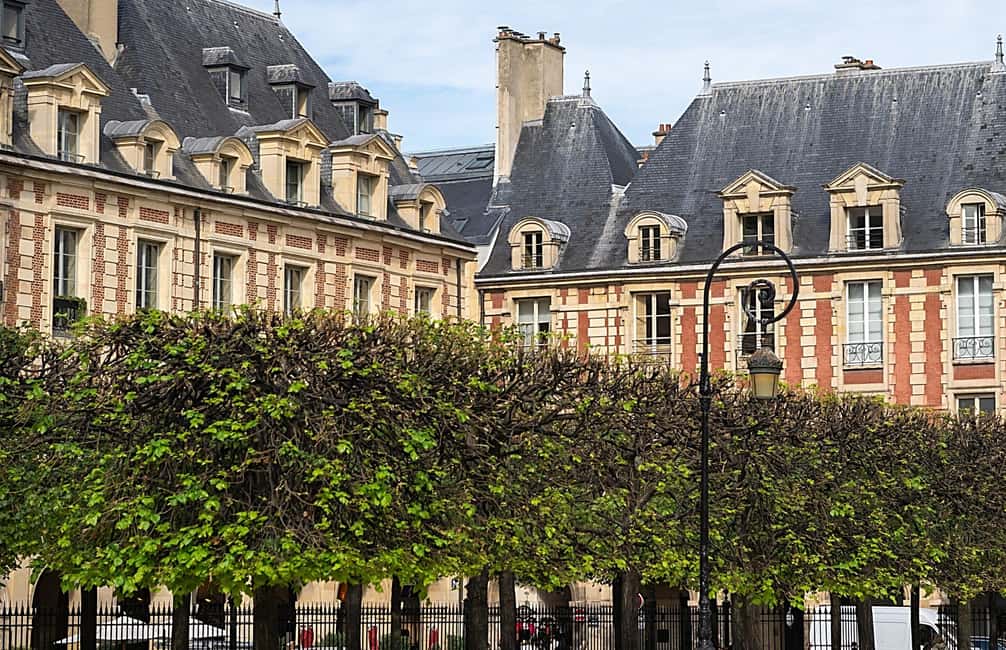
Your case begins at the Paroisse Saint-Paul Saint-Louis area, with a practical starting spot listed at 97 Rue Saint-Antoine. The experience kicks off in front of the church and near Métro Saint-Paul, which is convenient if you’re using transit.
What I like about starting here is that you begin with a place that has weight. Saint-Paul Saint-Louis gives you a strong visual anchor, so the first clue doesn’t feel random. It also helps you settle in fast: you can read the booklet, understand how the riddles work, and get your team rhythm before you’re deeper in the back lanes.
Expect that the first puzzle sets the tone. If you’re the type who likes to solve quickly, you’ll probably be a little impatient at first. If you like thinking things through, you’ll settle in nicely. Either way, you’ll be ready to move when the group heads toward Place des Vosges.
Place des Vosges: where clues meet one of Paris’ best-known squares
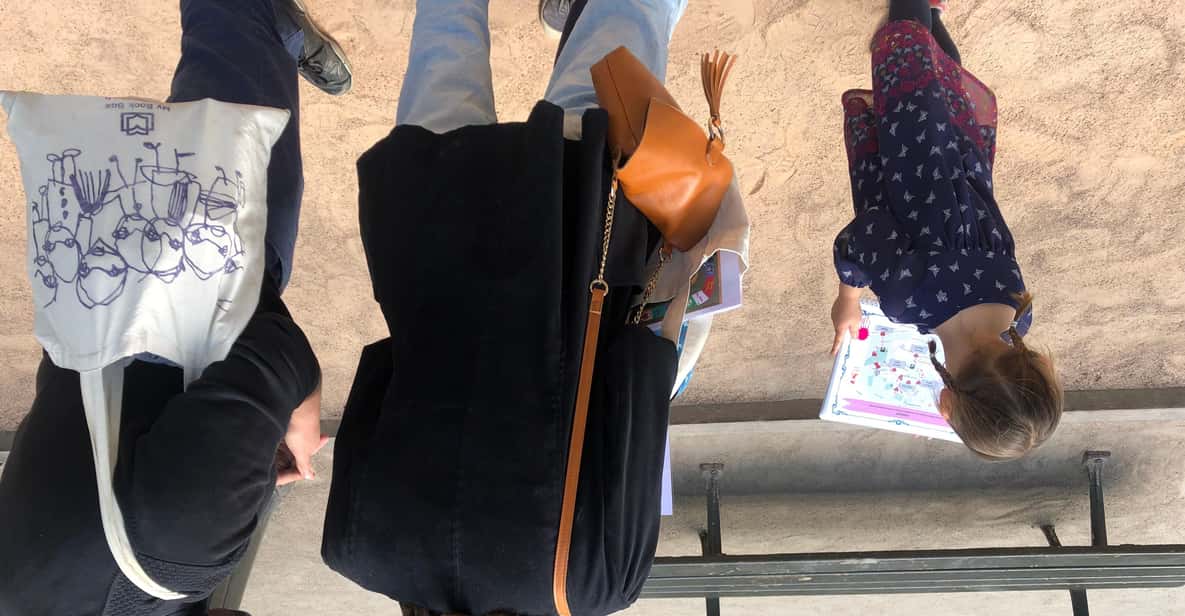
Place des Vosges is one of those spots you’ve probably seen in photos. On this tour, it’s not just a “look around” stop. It’s part of the mystery route. You’ll pass through the area and work a riddle tied to the monumental feel of the square.
Why this matters: Place des Vosges is easy to recognize, but it’s also easy to overlook details when you’re rushing. The booklet gives you a reason to slow down and notice. You’re not trying to become an expert on the spot—you’re trying to solve a specific question, which makes the square feel more personal.
I also like that you don’t have to choose between sightseeing and puzzle time. The tour structure does both. You’ll get the chance to stand in one of Paris’ most iconic layouts and feel how the neighborhood’s “official face” looks.
Carnavalet Museum area and the hunt for what’s hidden in plain sight
After Place des Vosges, you head toward the broader historic core of the Marais. One stop is timed around the Carnavalet Museum area. You’ll pass by it as part of the walking route, and the game continues.
You’ll also hit a “hidden gem” style stretch—a section of walking time aimed at giving your eyes something different to work with. The tour doesn’t promise “secret underground Paris” type stuff. It focuses more on the small changes in street texture: where views narrow, where the architecture shifts, and where a clue might come from something you’d normally walk past.
This is a good moment to remember how the booklet works. You’ll get cultural or history context pages alongside the riddle. So even if you don’t love puzzles, you still walk away with something you can remember later. It makes the tour useful after you leave the street.
Rue des Rosiers and the Jewish quarter atmosphere
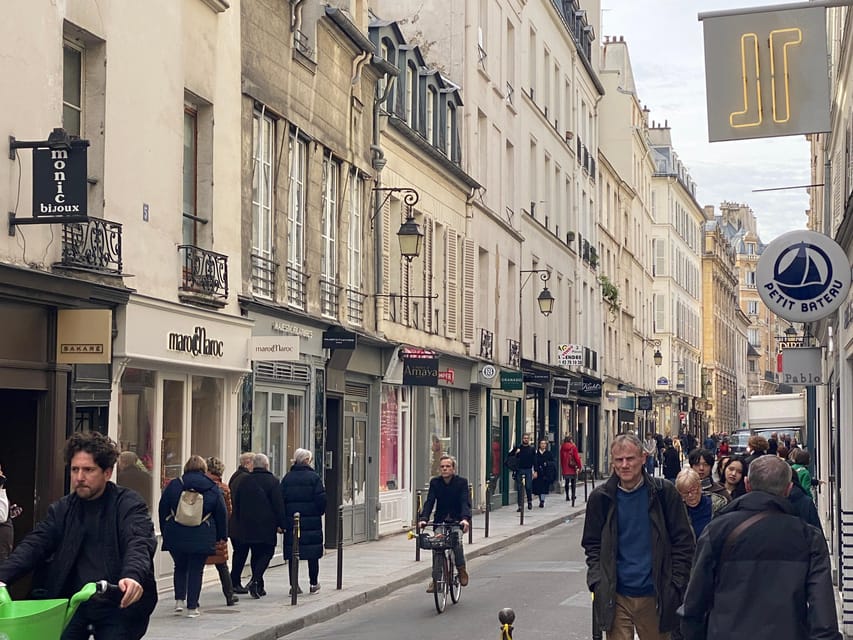
Rue des Rosiers is one of the Marais zones that most people feel immediately. It’s known for food, shops, and a strong neighborhood identity. On this tour, it’s also a checkpoint in the investigation.
You’ll spend time along Rue des Rosiers with a built-in period of free time, so you’re not locked into solving mode the whole way. That’s smart. Puzzle tours can get fatiguing. A breather helps you reset your eyes for the next clues.
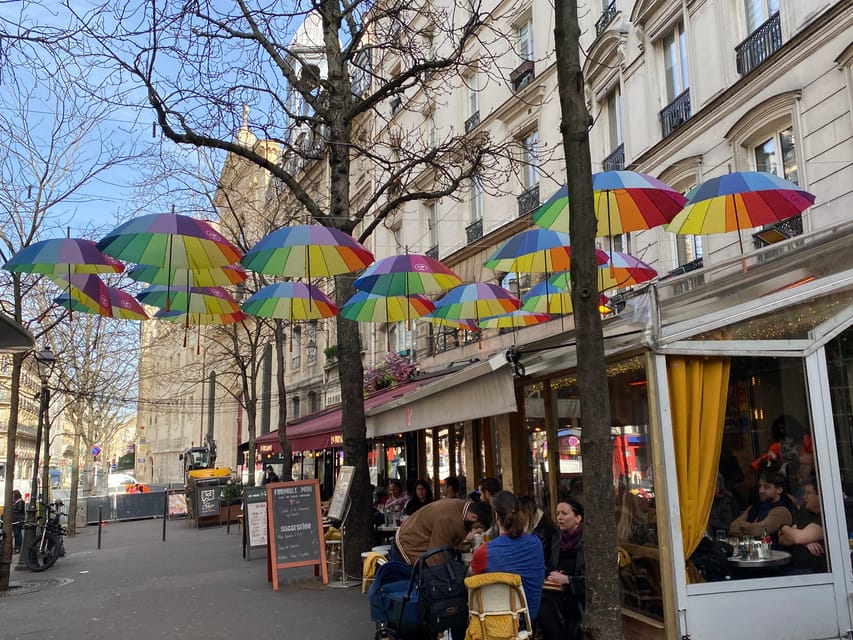
This is also where the tour’s “district blending” shows up clearly. You move from older Marais architecture and formal squares into streets with more daily energy. The experience is designed to guide you through multiple Marais identities—historic, cultural, and contemporary—without forcing one style only.
If you want to shop or grab a drink on your own, this is a good place to do it. Just plan to keep your pace with the group so you don’t miss the next clue handoff.



Marais Gay area clues and the approach to Pompidou
As the tour continues, it transitions into the Marais Gay district. This is one of the most interesting parts of any walking tour: you see how one neighborhood can hold multiple worlds at once. With a detective game structure, you’ll likely notice those differences more than you would on a traditional walk.
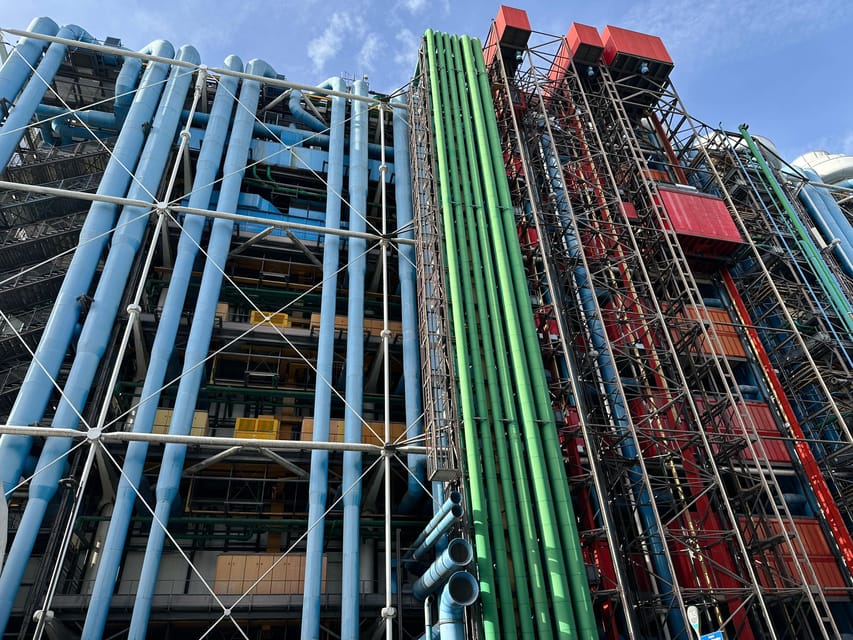
Your final stretch ends at Georges Pompidou Museum. That finish point matters because it gives you a landmark to orient around. You’re not wrapping up somewhere vague. Pompidou is famous enough that you can easily connect to the rest of your day.
One listed drop-off point is Fontaine Stravinsky (1 Place Igor Stravinsky). So depending on the exact flow of your group, you may finish with that nearby option. Either way, you land in a place where you can keep moving through central Paris without feeling stuck.
How the booklets work (and why reading skills matter)
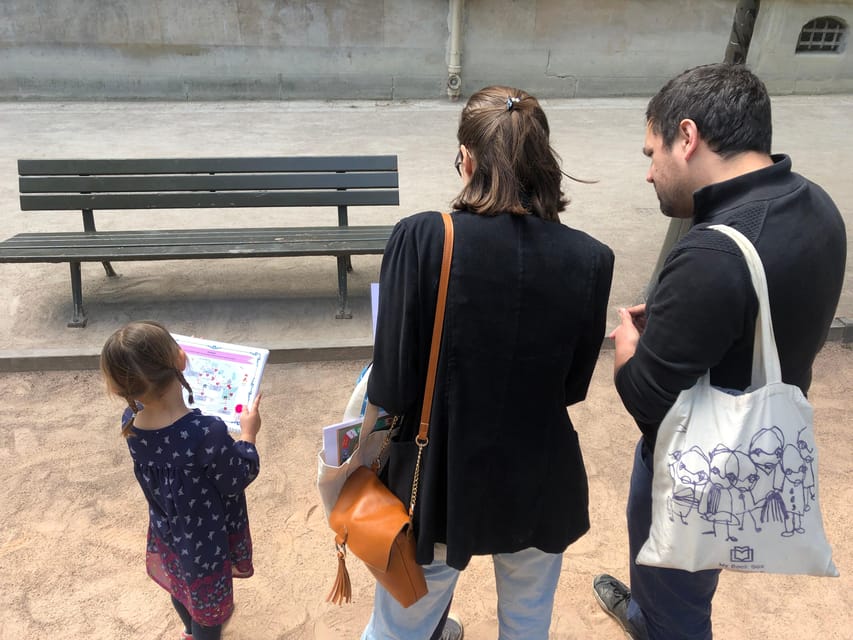
This is a hands-on tour powered by booklets. You get game booklets and use them to solve riddles at each monument or major checkpoint. The idea is simple: follow the clue, use what you see, answer the riddle, and keep going.
The booklet also includes a cultural and historical page, which is a big deal for a “game first” activity. It means you’re not just earning puzzle answers—you’re also picking up context. If the guide is busy assisting a team, you still have the main information in the booklet.
Now for the part you need to take seriously: the tour recommends kids aged 8 or older because they must be able to read to enjoy the roadbook. Younger kids can join, but adults will need to help. Kids under 6 don’t pay for the tour.
If your group includes non-readers, the tour can still be fun, but plan on you doing more of the work. Think of it as a family puzzle session with a walking component, not a hands-free activity for little ones.
Also, the tour can have puzzles that take effort. One review singled out that some riddles were quite difficult. That’s actually a selling point if you want mental engagement instead of easy check-the-box answers.
Group size, pace, and what your shoes should handle
This experience runs as a small group, and your guide adjusts pace to match the slowest team. That’s important because puzzle tours often become stressful for anyone who walks faster than the rest. Here, they build in the ability to slow down, especially when families are involved.
Duration is listed as 2 to 2.5 hours, depending on walking time and time spent solving riddles. In plain terms: don’t cram this into a tight schedule. Give yourself a buffer before your next plan.
What to bring is basic: comfortable shoes. The route is a walking tour, and you’ll be standing at stops to read and solve. There’s also a rule that you can’t bring luggage or large bags, so travel light.
Language options are French and English, and the guide is available for help during the game. The tour is also listed as wheelchair accessible, which is a real plus if you need that option.
Price and value: $35 for a guided puzzle-walk
At $35 per person for about 2 hours, you’re paying for three things at once:
1) the guide (living person support),
2) the game booklets (structured activity materials),
3) the walking route through multiple Marais zones.
A standard walking tour might cost similar money, but it typically offers stories and explanations with limited hands-on involvement. This one gives you participation. If you like solving, the mental component is the value.
It also reduces decision fatigue. In the Marais, it’s easy to wander and then realize you didn’t do anything with your time. Here, the activity gives you reasons to stop, notice, and learn. The history context pages make it more than just a scavenger format.
If you’re the type who gets bored by “pass by this and pass by that,” the puzzle structure is what makes the price feel fair. If you dislike reading booklets or you’re traveling with kids who can’t engage with them, the value drops fast—because you’ll do more interpreting and less experiencing.
Who this Marais detective tour suits best
This is best for people who want to see the Marais with a purpose. I’d especially recommend it if you’re:
- a puzzle lover who likes a challenge (and doesn’t mind slowing down to solve),
- curious about how different parts of the Marais fit together,
- visiting with a group that enjoys interactive activities, or
- traveling with kids age 8+ who can read and follow a roadbook.
It’s less ideal if your day is built around quick photo stops and little walking tolerance. The tour is not a “two photos and done” kind of route.
It can also work well as a team-building style activity if a group books the whole tour. If you’re planning a private group, the tour provider notes they can organize it as a competition, which fits the detective theme naturally.
Should you book this Marais detective walk?
Yes—if you want your Marais visit to feel like an actual activity, not a lecture with stops. The best reason to book is the combination: riddles + real landmarks + guided help. You’ll walk through famous streets and squares, but you’ll do it while solving a case, which keeps your attention.
Book it especially if you enjoy puzzles and you like learning in a hands-on way. The guide support helps when the riddles get tricky, and the booklet’s cultural/history pages mean you’ll still come away with useful context even when you’re stuck for a moment.
If you’re unsure, think about one question: can your group read and enjoy problem-solving? If the answer is yes, this is a fun way to experience the Marais like a local investigator rather than a tourist passing by.
FAQ
Where does the tour start?
The tour starts near Métro Saint-Paul, at Paroisse Saint-Paul Saint-Louis. One listed meeting location is Paroisse Saint-Paul Saint-Louis, 97 Rue Saint-Antoine.
How long is the Marais detective walk?
It lasts about 2 hours, and can run up to 2.5 hours depending on time spent walking and solving riddles.
What does the price include?
The price includes game booklets and a local guide.
Is it available in English?
Yes. The live guide offers French and English.
Is there an option to do it without a guide?
A self-guided tour is available upon request.
Do I need to bring snacks or drinks?
Snacks and drinks are not included, so plan to purchase something on your own if you want it.
What should I bring?
Bring comfortable shoes. You should also avoid bringing luggage or large bags.
What age is the tour best for?
It’s recommended for kids aged 8 or older since they need to be able to read the roadbook. Kids under 6 don’t pay, but adults will need to help younger children enjoy the game.
Where do you end the tour?
The tour concludes at Georges Pompidou Museum. One listed drop-off option is Fontaine Stravinsky at 1 Place Igor Stravinsky.