REVIEW · PARIS
Paris Gourmet Tour
Book on GetYourGuide →Operated by Meeting the French · Bookable on GetYourGuide
Cheese, bread, and history on the Left Bank. I like how this tour turns the Latin Quarter into a walkable story, and I love the hands-on feel of French cheese tasting paired with wine.
The downside is that the schedule can be market-heavy, so expect a mix of walking and time standing at stalls and counters.
You meet at 47 Ter Boulevard Saint-Germain next to the cheese shop, then move through medieval streets near the Sorbonne, hit a standout market, and finish at a regional specialties stop for foie gras and more tastings.
In This Review
- Key moments that make this Paris Gourmet Tour worth it
- Latin Quarter Walking Base: Sorbonne Streets and Medieval Lanes
- The Market Stop: High-Variety Food Shopping in Real Time
- The French Cheese Shop: Learning What 246 Types Means
- Wine Pairing That Makes the Tasting Click
- Bakery Stops: Baguette and Croissant Contrast Without the Guesswork
- Regional Specialties Finish: Foie Gras at the End of the Trail
- Group Size, Languages, and How the 150 Minutes Move
- Price and Value: Why $165 Can Make Sense Here
- Who This Tour Suits (and Who Might Want a Different Style)
- Should You Book This Paris Gourmet Tour?
- FAQ
- How long is the Paris Gourmet Tour?
- What is the group size?
- What’s included in the tasting?
- Where do I meet the guide?
- What languages are available?
- Is the tour guaranteed to run?
- What is the cancellation policy?
- Can I reserve now and pay later?
Key moments that make this Paris Gourmet Tour worth it
- Latin Quarter pacing that keeps the walk tied to real places (Sorbonne area and medieval lanes)
- Cheese-first education with multiple samples so you actually notice texture differences
- Wine tasting that’s meant for pairing, not just sipping
- Bakeries included, from baguette to croissant style pastries
- Foie gras finish at a specialty shop, so the experience ends on something memorable
- Small group limit (8 people) that makes it easier to ask questions
Latin Quarter Walking Base: Sorbonne Streets and Medieval Lanes
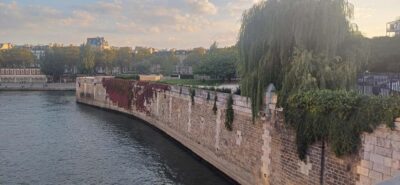
This is a Left Bank food tour, centered on the Latin Quarter—the area known for its students, thinkers, and classic Paris street life. You’ll stroll through the older, medieval-feeling parts of the neighborhood, and the tour is anchored around landmarks like the Sorbonne University area, which helps the walk feel grounded instead of random.
The meeting point is easy to find: 47 Ter Boulevard Saint-Germain, right next to the cheese shop. For the metro, use Maubert Mutualité (Line 10). If you like getting oriented fast in a new city, this start location is helpful because it drops you into a very walkable pocket of Paris.
One practical note: with a tour like this, comfortable shoes matter. The route is built around short stops and quick transitions, and even when the walking is not extreme, the total time on your feet adds up across tastings.
You can also read our reviews of more tours and experiences in Paris.


The Market Stop: High-Variety Food Shopping in Real Time
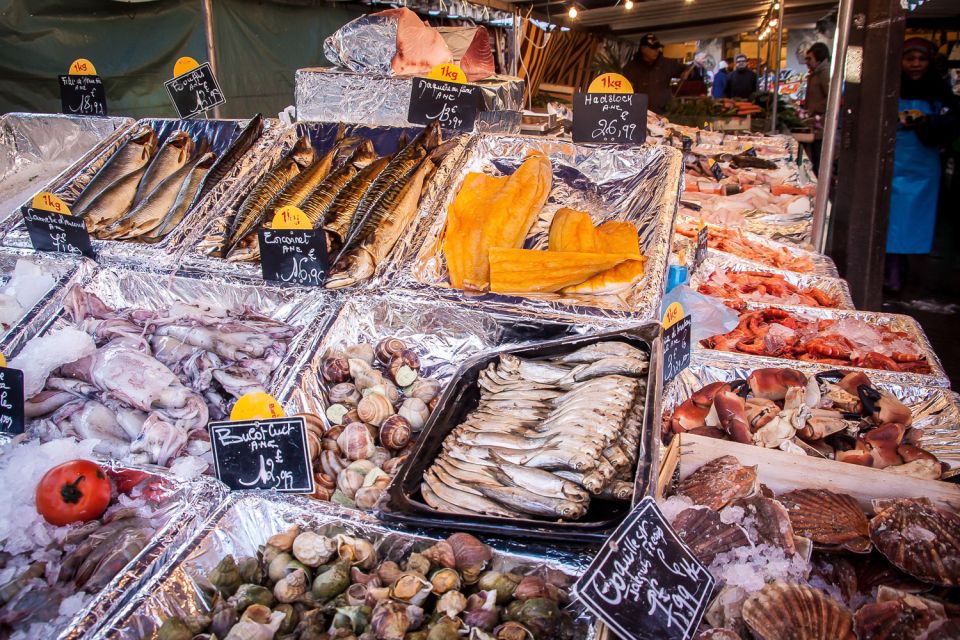
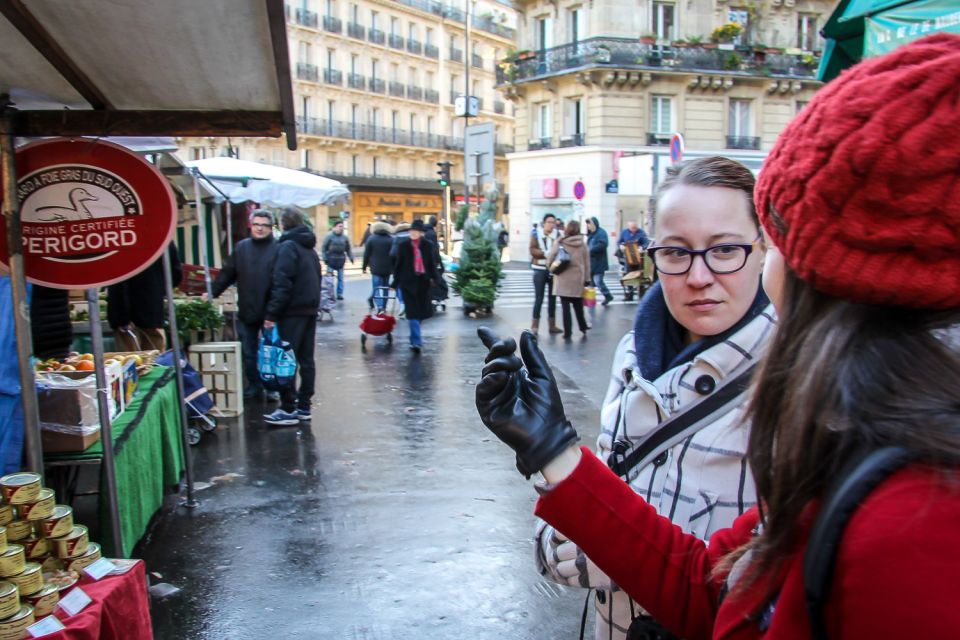
A major part of the experience is a visit to a market known for high-quality food and a wide selection. This isn’t just an excuse to snack. The structure is designed so you see what “good shopping” looks like in France: what’s offered, what stands out, and how everything connects to taste.
This market stop is also where you get a feel for the guide’s style. In past tours, guides like Sabine and Gilles have been praised for being organized and very clear about what to look for, plus they tend to keep the pace friendly so you can actually enjoy the sights while you taste.
If you’re the type who likes to learn by doing, this part can be gold. You’re not studying food theory in a classroom—you’re watching the cues that locals use and then getting samples that make the lessons stick.
The French Cheese Shop: Learning What 246 Types Means
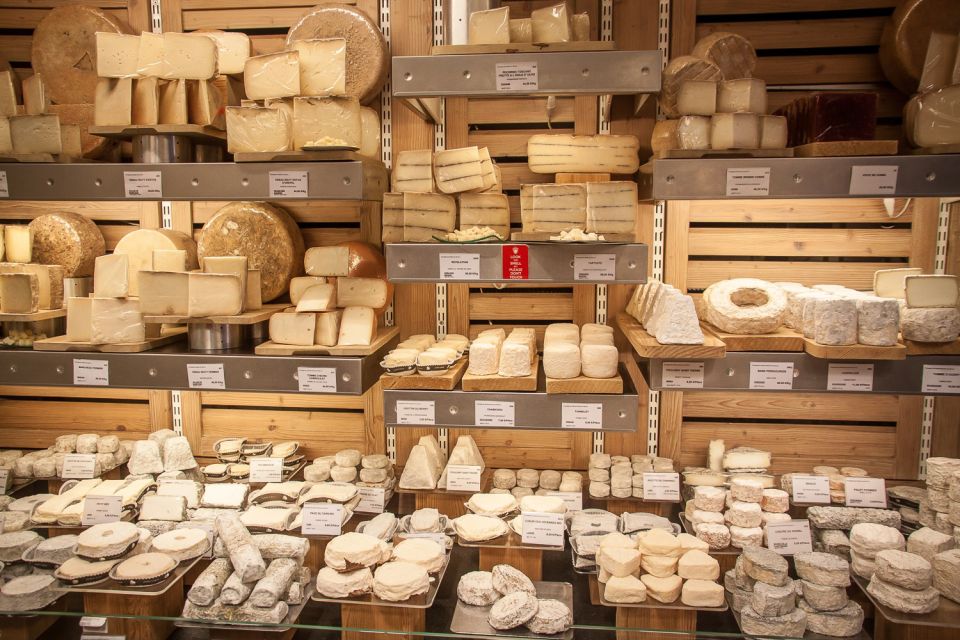
After the market, you head to an authentic French cheese shop, and that’s where the tour gets serious in a good way. You’ll hear the story behind Charles de Gaulle’s famous line about governing a country with hundreds of cheeses—more than a joke, it’s a clue that French cheese culture is huge and highly specific.
What you’ll actually do is sample several cheeses and learn how they differ. The goal isn’t to memorize names. It’s to notice taste and texture: how one cheese melts, how another feels firmer, and how flavor changes as you move from sample to sample.
This is also where the guide quality makes a difference. Guides from earlier groups—like Watanabe, Karen, and Roberto—have been singled out for combining food talk with local context and for keeping the tasting relaxed rather than lecture-heavy.
Wine Pairing That Makes the Tasting Click
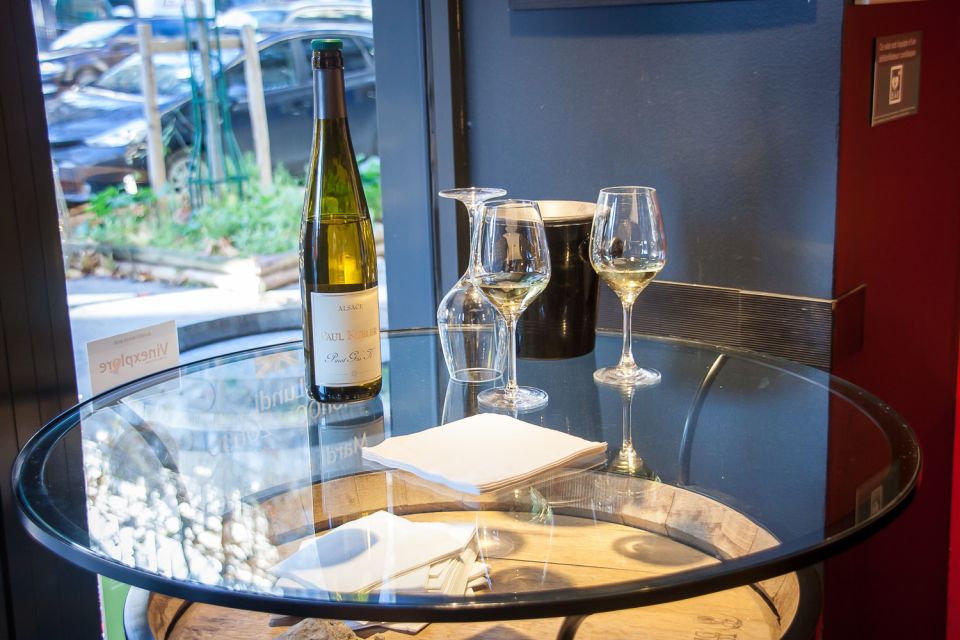
Cheese can be its own event, but the tour pairs it with French wine for a reason. When you try the cheeses alongside wine, you start to understand the logic of pairing: how acidity, sweetness, and body can either sharpen or smooth out what you’re tasting.
You’ll get samples, not a full wine-education course, and that’s a good thing for most people. The tour’s 150 minutes are tight, so the wine focus is practical: enough to help your brain connect flavor profiles, but not so much that you feel rushed or overloaded.
If you’re new to French wine, this is one of the better ways to start. You’ll leave with better instincts for what to order next time in a shop or café, even if you can’t recite every varietal.
Bakery Stops: Baguette and Croissant Contrast Without the Guesswork
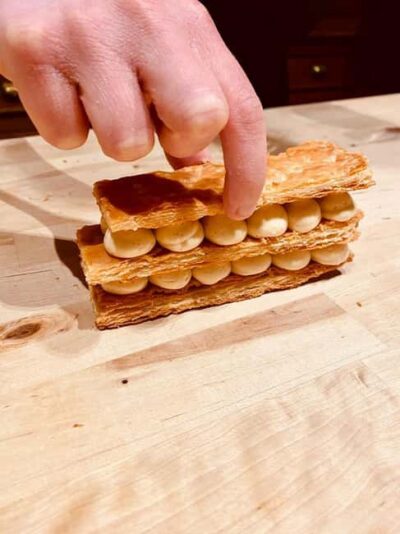
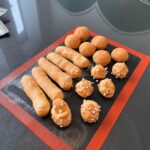
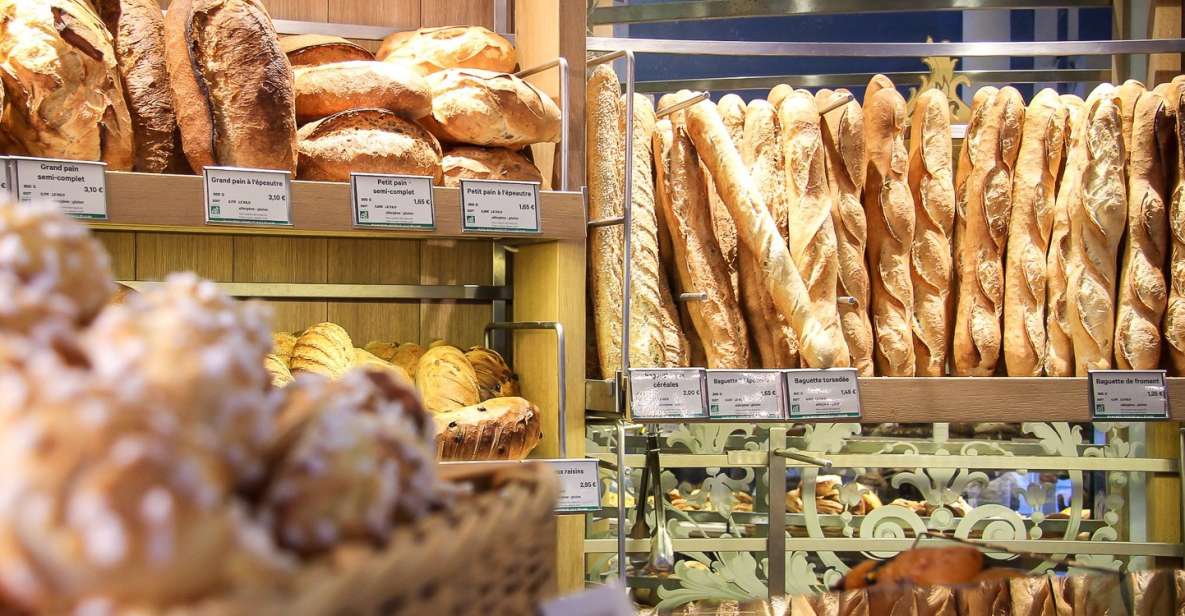
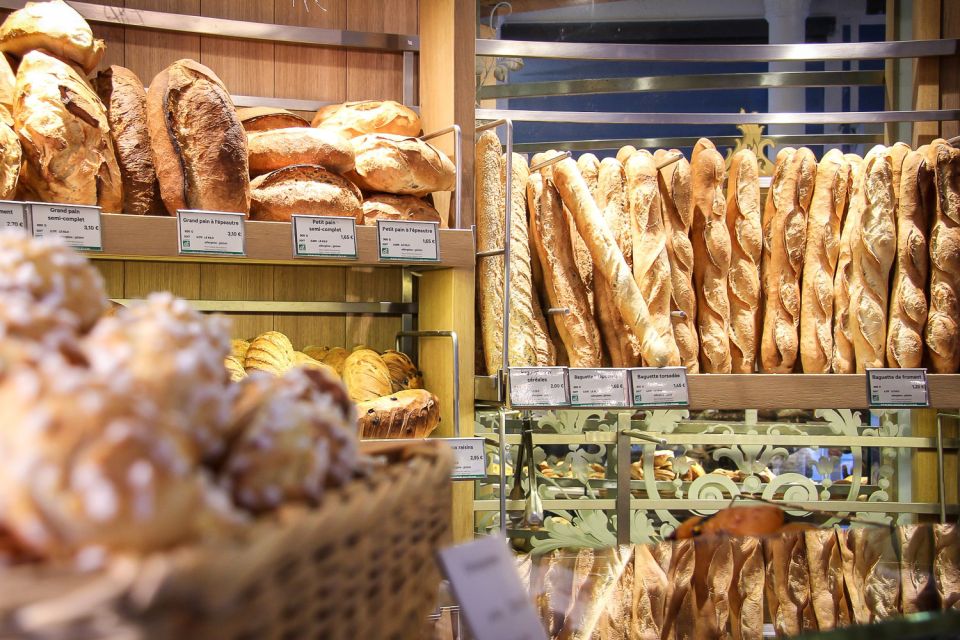
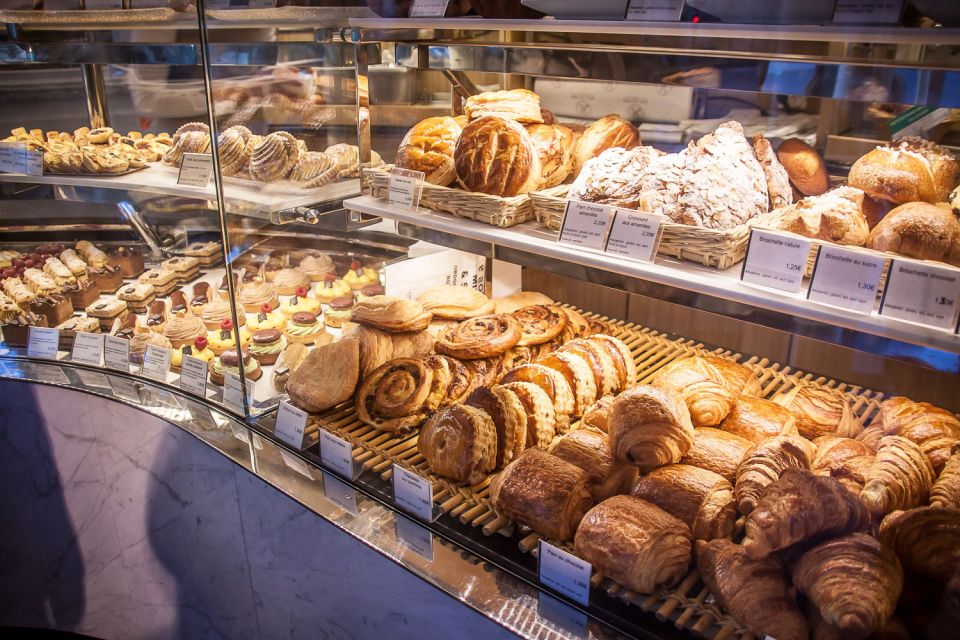
No French food tour feels complete without bread, and this one includes bakeries with an “from baguette to croissant” spread. The intent is simple: you’ll taste a range of French bread and pastry styles, so you can feel the differences rather than just read about them.
This section matters because a lot of visitors treat croissants like one-size-fits-all. Here, you get exposure to the range—crisp outside vs. tender inside, buttery richness vs. lighter dough character. Even if you’re not a pastry expert, your palate can usually tell the difference fast when you’re given multiple samples.
One extra advantage of including bakeries: it balances the heavier parts of the menu. If cheese and wine have you full, bread and pastry can shift the flavor mood and keep the whole tour feeling varied.

Regional Specialties Finish: Foie Gras at the End of the Trail
The tour ends at a regional specialties shop, where you get to taste the luxury delicacy: foie gras. This is the most “Paris” finale in the itinerary because it’s bold, well-known, and very specific to French food culture.
From a practical standpoint, think about how you personally feel about foie gras before you book. If you avoid it for dietary, ethical, or preference reasons, this tour may not be the best fit. But if you’re curious and you want a structured way to try it during a dedicated tasting moment, the shop-style stop is exactly the kind of setting that makes it easier to understand what you’re eating.
Also, because the tour includes bread and has multiple tastings throughout, the finish doesn’t feel like a random afterthought. It lands after you’ve already experienced cheese, wine, and pastry, so foie gras becomes the final piece of the flavor puzzle.
Group Size, Languages, and How the 150 Minutes Move
This is a small group tour, capped at 8 participants. That size is a real value point. You’re less likely to get lost in the shuffle, and you’re more able to ask questions—especially during tastings where it helps to hear what you’re tasting and why.
The tour runs in several languages: Spanish, German, Italian, English, French, Japanese. That multilingual setup also tends to help with clarity, because food talk can get complicated fast when people switch phrasing mid-tasting.
As for timing, the tour is 150 minutes. That’s about right for a “taste + learn + walk” mix without dragging on. Still, based on how the experience is structured, expect frequent short stops. In other words, don’t plan this tour like a sightseeing hike; plan it like a guided sampling session through a neighborhood.
Price and Value: Why $165 Can Make Sense Here
At $165 per person for 150 minutes, you’re paying for more than a guide. You’re paying for curated access: multiple tasting stops (cheese, wine, bread/pastries, plus foie gras) and the ability to try things you might not confidently pick on your own.
What makes the value feel stronger than a basic walking tour is what’s included:
- Sample of different cheeses and wine
- Foie gras
- Bread
If you’ve ever priced out similar tasting experiences in Paris, you’ll notice these little samples add up quickly. Here, the format funnels your time into places that already specialize in exactly what you came for.
Yes, the price is not cheap. But if you want a compact way to taste across categories—cheese, wine, and pastry—and not just eat one snack, this can feel like a good use of your first day or first week in the city.
Who This Tour Suits (and Who Might Want a Different Style)
This works best for food-first visitors. If you like learning by taste and you want a guided path through the Latin Quarter food scene, you’ll probably enjoy the structure.
You’ll also fit well if:
- You’re visiting Paris for the first time and want a neighborhood you can still walk around afterward
- You want a small-group experience rather than a big crowd
- You enjoy cheese culture and want help noticing texture and flavor
You might skip (or at least reconsider) if:
- You strongly dislike foie gras
- You prefer lighter, faster walking with lots of long-distance sightseeing
- You want a strictly vegetarian menu (the included tasting list includes foie gras)
Should You Book This Paris Gourmet Tour?
If your ideal Paris day includes French cheese tasting, a good dose of bread and pastry, and a guided finish with foie gras, this is a smart booking. The small group size, the focus on pairing, and the way the route is anchored in the Latin Quarter make it feel purposeful.
My advice: book it if you want a structured food experience that gives you take-home instincts—what to buy, what to notice, and how different tastes work together. Skip it if foie gras is a hard no for you, or if you’d rather spend your time in fewer shops and more open streets.
FAQ
How long is the Paris Gourmet Tour?
The tour lasts 150 minutes.
What is the group size?
It’s a small group with a limit of 8 participants.
What’s included in the tasting?
The tour includes samples of different cheeses and wine, plus foie gras and bread.
Where do I meet the guide?
The meeting point is 47 Ter Boulevard Saint-Germain, next to the cheese shop. The nearest metro station is Maubert Mutualité (Line 10).
What languages are available?
The live guide offers tours in Spanish, German, Italian, English, French, and Japanese.
Is the tour guaranteed to run?
The experience requires a minimum of 2 people total to operate. If there aren’t enough participants, you’ll be contacted with alternatives.
What is the cancellation policy?
You can cancel up to 24 hours in advance for a full refund.
Can I reserve now and pay later?
Yes. The option is reserve now & pay later, so you can book without paying today.