REVIEW · PARIS
Paris: Montmartre. The old artist village+its unique charm.
Book on GetYourGuide →Operated by Paris through my eyes · Bookable on GetYourGuide
Windmills and views, right in Paris. This Montmartre walking tour is interesting because you follow a local German guide through old artist streets and quiet back lanes, then land at classic viewpoints with real context. I love the small group size and how it keeps the pace human, and I also love that you’re not just snapping photos. You get the stories behind the streets as you go.
One thing to plan for: this is a true walking tour on uneven hillsides. If your feet aren’t used to cobblestones and slopes, comfortable shoes are non-negotiable. It also isn’t suitable for wheelchair users.
In This Review
- Key takeaways before you go
- Finding the tour start at Moulin Rouge (and why it helps)
- Your guide’s perspective: what the German part changes
- Montmartre as an artist village: more than a nickname
- Stop 2: first Montmartre photo stop and guided stroll
- The 30-minute on-foot stretch that makes it feel local
- Exploring the 18th Arrondissement: viewpoints with context
- Stop 4: photo stop plus walking and guided sightseeing
- Sacré-Cœur and the highest point feel: the payoff at the end
- Price and value: what $40 buys you in 2 hours
- What to wear and how to pace yourself
- Who this tour fits best (and who should skip it)
- Should you book this Montmartre artist-village tour?
- FAQ
- How long is the Montmartre walking tour?
- What is the group size?
- What language is the guide?
- Where do we meet and where does the tour end?
- What’s included in the price?
- Is the tour wheelchair accessible?
- Are there any restrictions on what I can bring?
Key takeaways before you go
- A German guide with years in Paris gives an insider/outsider perspective that feels grounded, not scripted
- Montmartre’s artist-village vibe comes through in the little streets and art-story stops
- Windmill-era history is part of the walk, including the time when the hill had more than 30 windmills
- You reach the Sacré-Cœur area for a big Paris panorama from the city’s highest point
- Small group of up to 8 makes it easier to ask questions and keep moving
Finding the tour start at Moulin Rouge (and why it helps)
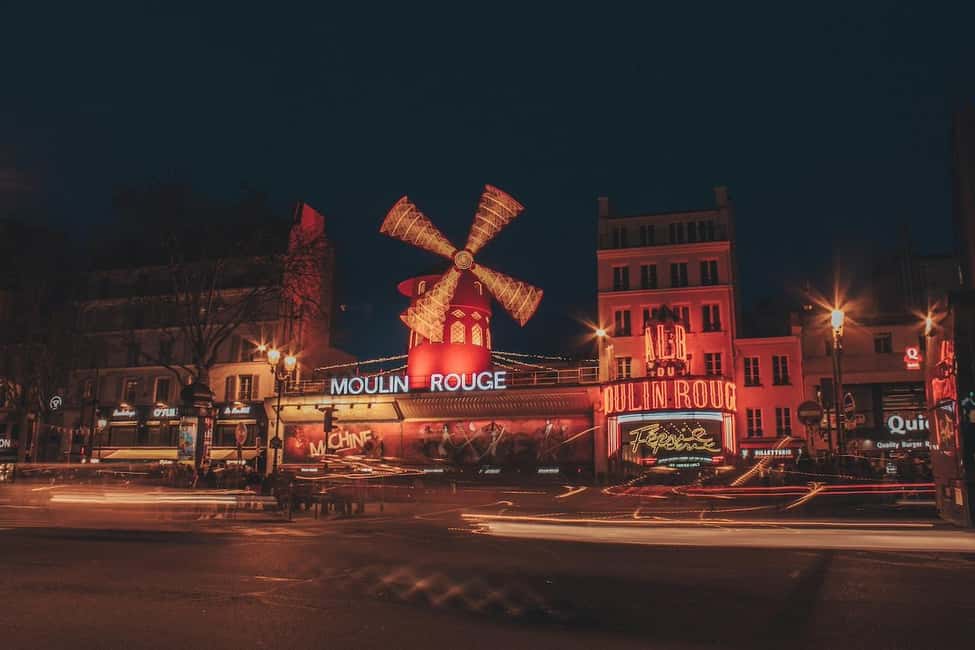
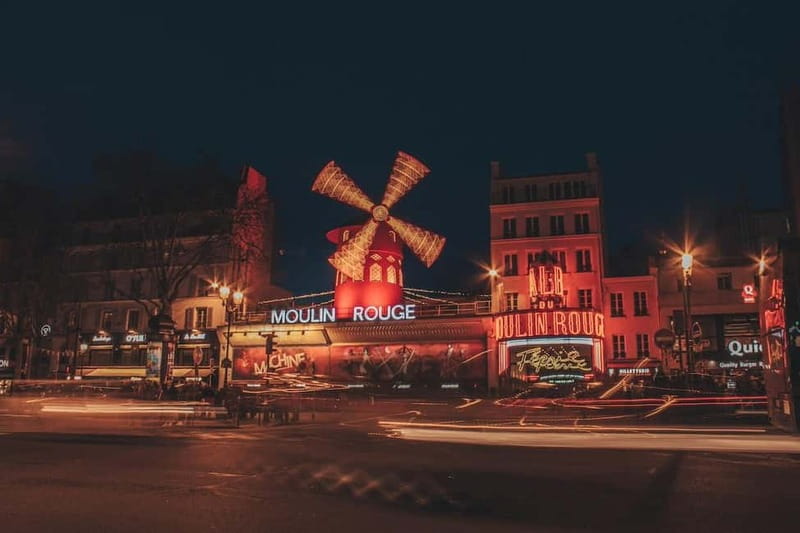
You’ll meet right in front of the famous Moulin Rouge theatre, at the ticket office area (Billetterie). That’s a smart choice for orientation. You get an easy visual landmark, and you can usually tell you’re in the right place fast, even if you haven’t studied the map yet.
From there, the walk begins near a local meeting-point marker called Athys et Stentor. If you like to get your bearings quickly, meeting at a famous spot helps. It also means you can arrive, do a quick bathroom break if you need one, and then settle into the tour without hunting around.
You can also read our reviews of more tours and experiences in Paris.


Your guide’s perspective: what the German part changes
The tour is led by a German-speaking live guide, and the standout detail here is the perspective. The guide has lived in Paris for many years, but comes from Germany. That mix often makes stories feel sharper. You notice different things than a straight local-only narration would highlight, and you also get context for why Paris feels globally unique.
This isn’t a lecture with distant facts. The tour is built around walking, photo stops, and guided sightseeing. You’ll get explanations as you move through Montmartre, and the guide’s German storytelling style tends to keep the energy friendly and easy to follow.
Also: small group. Limited to 8 participants. That matters here because Montmartre streets can get tight. Smaller groups move more smoothly and you’re less likely to lose the thread of the guide’s directions.
Montmartre as an artist village: more than a nickname
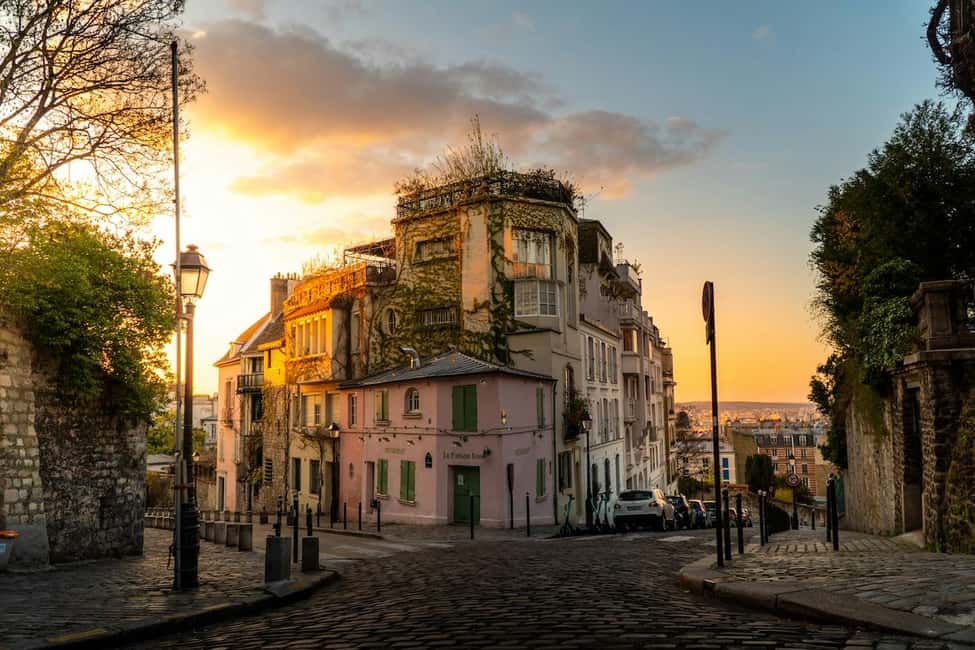
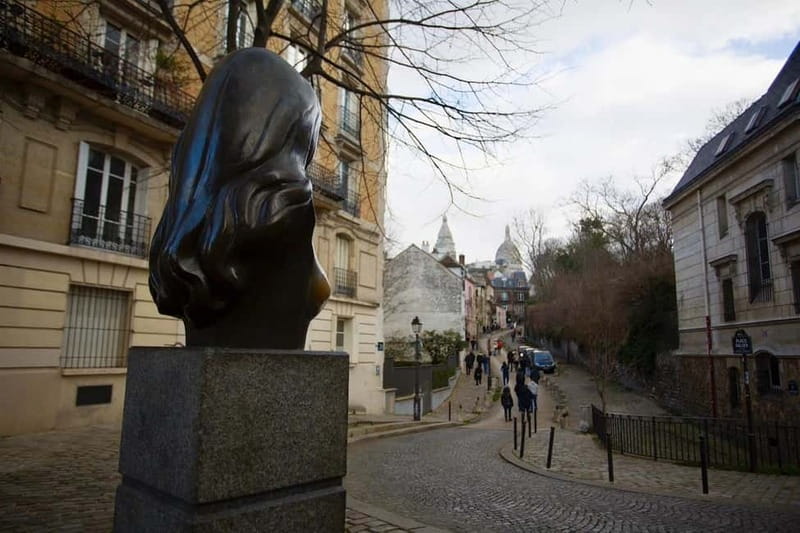
Montmartre is still called the old artists’ village for a reason. The area has long been associated with famous names—Pierre-Auguste Renoir, Dalida, Salvador Dalí, Vincent van Gogh, Edgar Degas, Pablo Picasso, Henri Matisse, and Toulouse-Lautrec, among others. You’ll hear these names tied to what you’re walking through, not tossed out like trivia.
Up to around 1900, Montmartre looked very different. The hill had more than 30 windmills spread across it. That detail changes how you imagine the place. When you’re moving through the streets today, it’s easy to think the scenery has always been the same. The tour helps you picture what was there before—wind-powered industry and a hillside that felt almost rural compared with the city’s bustle below.
Stop 2: first Montmartre photo stop and guided stroll
Early in the walk you’ll get a photo stop and a short guided segment in Montmartre. It’s about orientation and atmosphere. You’ll see how the area opens into those charming lanes, and you’ll get your bearings before the slower, deeper street-walking part.
Possible drawback: if you’re the kind of traveler who prefers long, uninterrupted walking without frequent “pause here” moments, the early photo stop may feel like a quick interruption. For most people, it’s worth it because it sets up everything that follows.
The 30-minute on-foot stretch that makes it feel local
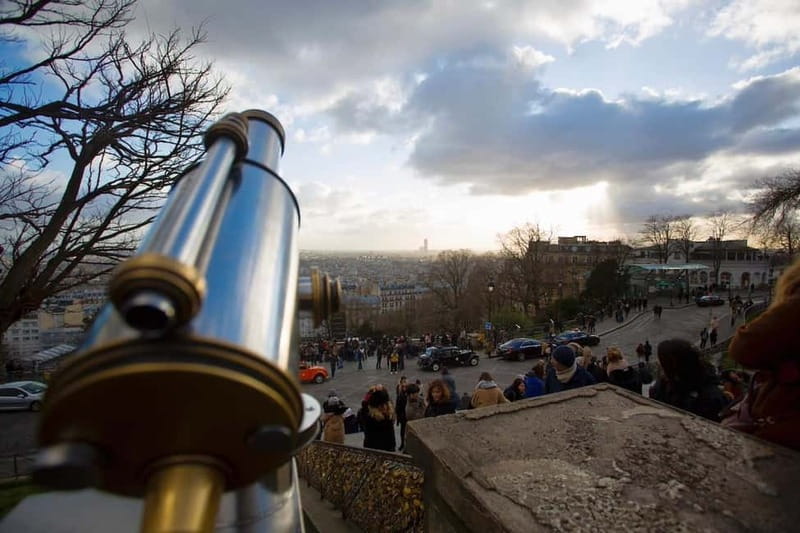
After the initial Montmartre segment, the tour shifts into the heart of the experience: on foot for about 30 minutes. This is where the off-the-beaten-path feeling shows up most.
This part matters because Montmartre’s famous views can draw crowds. The tour is designed to get you into the smaller lanes and quieter pockets where the neighborhood feels like a neighborhood—not a theme park. You’re not rushing through every step. You’re walking at a human pace while the guide points out what to notice.
What you’ll likely appreciate most here is the way the guide connects place to culture. Montmartre isn’t only about monuments. It’s about the lived-in street feel—textures, angles, and tiny corners where art history doesn’t feel like a museum label.
If you’ve only visited Montmartre once before, this is the section that can change your mental picture of it. You’ll stop thinking of Montmartre as one big viewpoint and start seeing it as a sequence of micro-areas with their own character.



Exploring the 18th Arrondissement: viewpoints with context
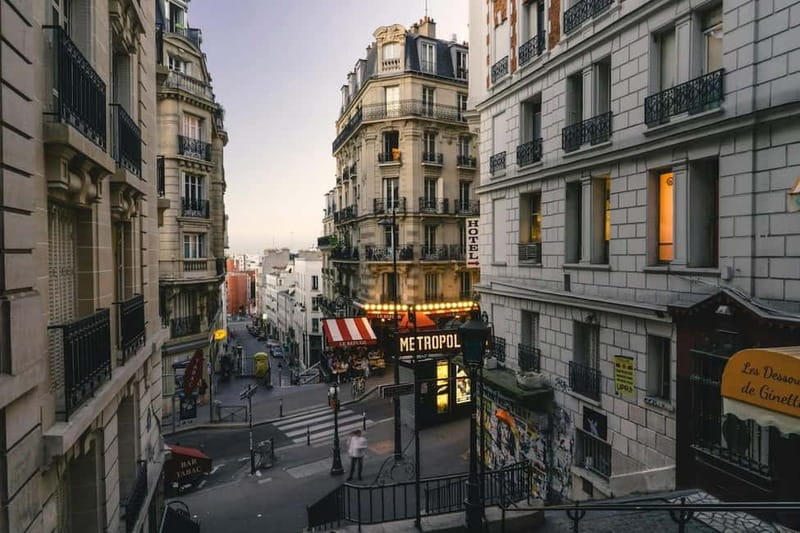
Next comes the 18th Arrondissement segment, about 20 minutes, with another set of photo stop and guided sightseeing. This is a useful transition because Montmartre sits within a larger city fabric.
In practical terms, this stop helps you understand where you are in Paris. In story terms, it’s another layer of art-and-life perspective—how the “artist village” identity sits inside real streets, real angles, and real city movement.
Stop 4: photo stop plus walking and guided sightseeing
You’ll get photo opportunities along the way, plus guided time to see and learn. Expect some scenic views during the walking portion. This is also where the guide’s tone helps: rather than asking you to just look around, the guide helps you see what to look for.
Possible consideration: if you’re coming during a busy time, photo stops can take a bit longer than you expect. The tour is small, but Montmartre can still be busy. Keep your camera ready, but don’t expect a perfectly clear shot every time.
Sacré-Cœur and the highest point feel: the payoff at the end

The tour’s big reward is the Sacré-Cœur area. You finish near 1 Parv. du Sacré-Cœur and you’ll work up toward that classic viewpoint.
A key detail that’s worth keeping in mind: the Sacré-Cœur area reaches about 130 meters high, and it’s described as the highest point in the city. That makes sense when you’re actually there—your view stretches wider, and the city feels flatter and farther away below you.
This isn’t just about the postcard view. The value is in timing and guidance. If you’ve ever tried to reach Sacré-Cœur without a plan, you know how easy it is to spend extra time drifting and second-guessing streets. The tour structure gets you there with context and a clear sense of why the viewpoint matters for understanding Montmartre.
Then, importantly, the activity ends back at the meeting point. So you’re not left to navigate on your own after the best part. You’ll get the full loop of “story + sights + return,” which is a relief when you’re tired or you’d rather not think about directions.
Price and value: what $40 buys you in 2 hours
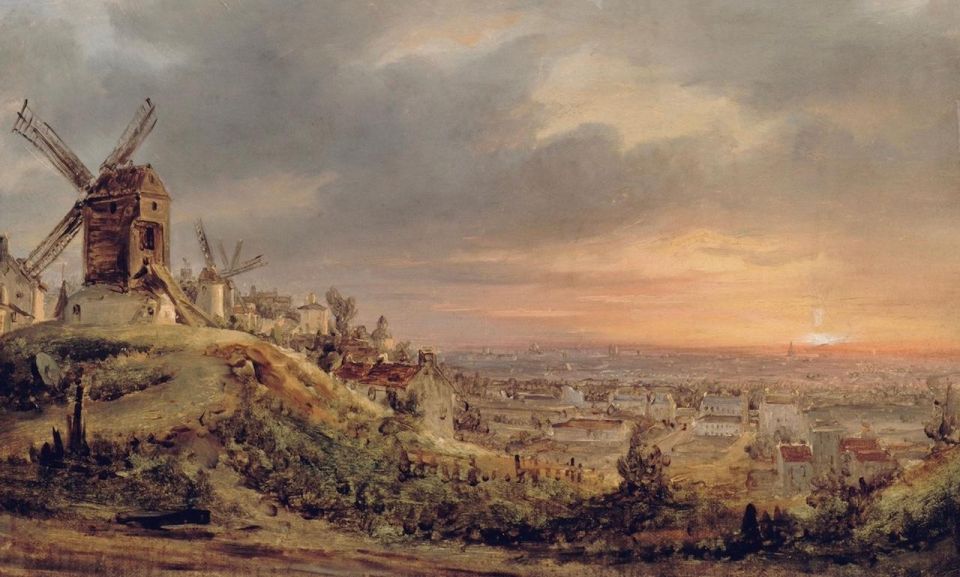
The price is listed as $40 per person, for a duration of 2 hours. For a Paris walking tour, the biggest question is always value: are you paying mostly for the route, or for the guide?
Here, you’re paying for a guide-led experience built around Montmartre’s specific themes:
- artist-village context (with major names)
- windmill-era history (more than 30 windmills up there in the past)
- quiet street exploration beyond the busiest lanes
- viewpoint payoff near Sacré-Cœur (including the height context)
The small group (up to 8) also boosts value. You get a better chance of hearing the guide clearly and asking questions without the group splitting apart on hills.
Not included: any personal purchases you might choose to make along the way. If you tend to browse and buy souvenirs, it’s worth mentally separating that from the tour price.
Is $40 too much? Only you can decide. If you’re the kind of traveler who loves place-based stories and wants a guided route through places with lots of visual distractions, it’s a fair fit. If you prefer self-guided wander time and you already know exactly which streets to chase, you could do Montmartre cheaper on your own.
What to wear and how to pace yourself
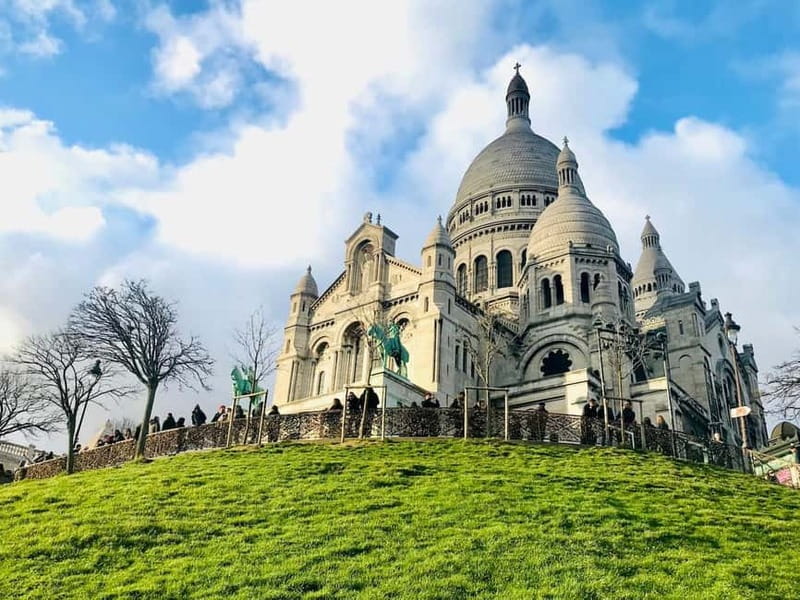
This is a walking tour, and the practical advice is straightforward: comfortable shoes are recommended. Montmartre is made of slopes and uneven surfaces, so you’ll feel every step more than you would on flat city streets.
I also suggest you treat it like an easy hike inside a city. Don’t plan to arrive with “I’ll just stand around” energy. The whole point is moving through the neighborhood and letting the guide lead you from street to street, photo stop to photo stop.
If you’re sensitive to crowds, remember you’ll be in a highly popular area. The small group helps, but it doesn’t erase crowds entirely.
Who this tour fits best (and who should skip it)
This tour is a strong match if you want:
- a culture-focused Montmartre walk, not only a viewpoint chase
- off-the-beaten-path streets and hidden-feeling Paris corners
- a guide who can explain why Montmartre’s artist reputation stuck
It can be less ideal if:
- you need wheelchair access (it’s not suitable for wheelchair users)
- you hate hills and uneven cobblestones
- you want a long, drawn-out tour rather than a tight 2-hour route
If you’re traveling with limited time but want the neighborhood to feel real, this format works well. It’s built for a quick hit that still feels like a proper guided walk.
Should you book this Montmartre artist-village tour?
Yes, if you want a guided route through Montmartre’s old artist streets with real context—especially the windmill-era past and the way the neighborhood connects to major art names. The small group size and the German guide’s insider/outsider storytelling make it more than a basic stroll.
I’d skip it if you’re mobility limited or if you’d rather wander Montmartre completely on your own with no structured stops. For everyone else, it’s a solid way to experience the charm of old Montmartre—and then earn that Sacré-Cœur view from the city’s highest point.
FAQ
How long is the Montmartre walking tour?
The tour lasts about 2 hours.
What is the group size?
It’s a small group, limited to 8 participants.
What language is the guide?
The live tour guide speaks German.
Where do we meet and where does the tour end?
You meet right in front of the Moulin Rouge theatre at the ticket office (Billetterie), and the activity ends back at the meeting point.
What’s included in the price?
A guided walking tour is included. The tour is led by a German guide with an insider/outsider perspective on Paris.
Is the tour wheelchair accessible?
No. It is not suitable for wheelchair users.
Are there any restrictions on what I can bring?
Weapons or sharp objects are not allowed.