REVIEW · FONTAINEBLEAU
Half-Day Bouldering in Fontainebleau
Book on Viator →Operated by Explore-Share · Bookable on Viator
Forget Paris for rock moves. In the Fontainebleau Forest, you get a half-day bouldering session with crash-pad landings and basic coaching, all without harness or ropes. What I like most is the safety-first coaching (you’ll get quick level checks from guides like Olivier and Ivan) and the chance to grow during the 3-hour session if you’re feeling strong. The main consideration: bouldering is still physical, so you’ll want decent stamina even as a beginner.
This is a small-group outing (max 4), and it runs in English and French, which makes it easier to learn technique without language stress. You’re also just about 60 kilometers from Paris, so this feels like a real nature break, not a whole-day commute.
You meet at 77590 Bois-le-Roi at 10:00 am, and you’re back at the same spot afterward. Group equipment and crash pads are included, but you’ll need to plan for climbing shoes on your own.
In This Review
- Key things to know before you climb in Fontainebleau
- Fontainebleau Forest: why this area is special for bouldering
- How the half-day usually plays out (around 3 hours)
- Guides, technique, and the safety mindset that actually helps
- Gear checklist: what’s provided and what you’ll need
- Price and value: what $57 buys in the real world
- Logistics from Paris: meeting at Bois-le-Roi without a headache
- Who this is best for (and who might want to choose differently)
- What makes this day feel worth it beyond the climbs
- Should you book this Fontainebleau bouldering session?
- FAQ
- FAQ
- Do I need climbing experience to join?
- Is the bouldering done with a harness or ropes?
- What equipment is included?
- Are climbing shoes provided?
- How long is the tour and when does it start?
- How many people are in the group?
- What happens if the weather is bad?
Key things to know before you climb in Fontainebleau
- Small group size (up to 4) means more time practicing and less time watching other people warm up
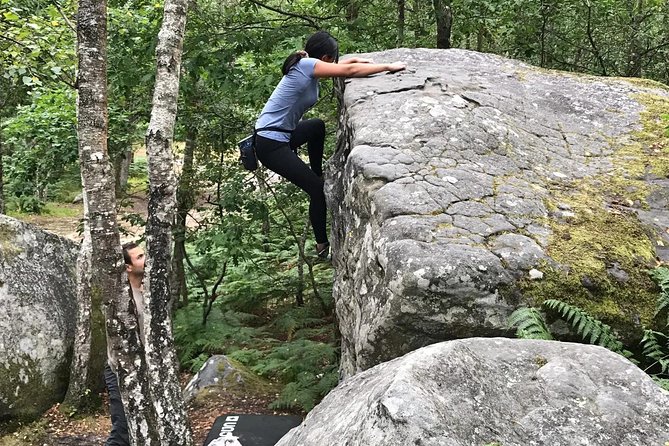
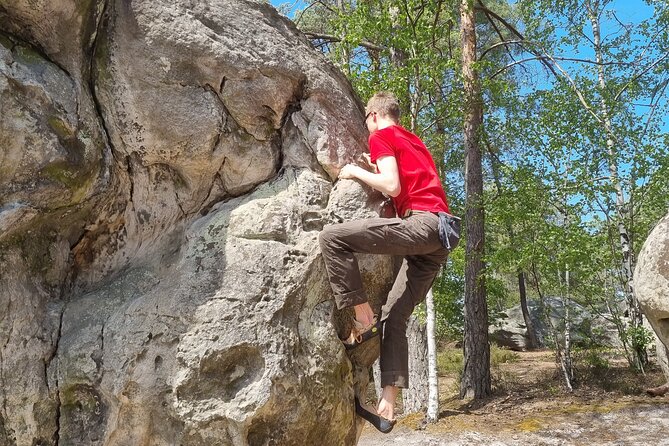
- Harness-free bouldering keeps it simple: short climbs, controlled falls, and crash-pad landings
- Guides adapt to your level quickly (Olivier and Ivan are specifically praised for assessing ability fast)
- You’ll learn safety maneuvers and progression instead of just being dropped at a rock and hoped-for-the-best
- Language support in English and French makes the coaching more useful, especially for first-timers
- Most people can participate, but you still need a good fitness base because it’s a workout
Fontainebleau Forest: why this area is special for bouldering
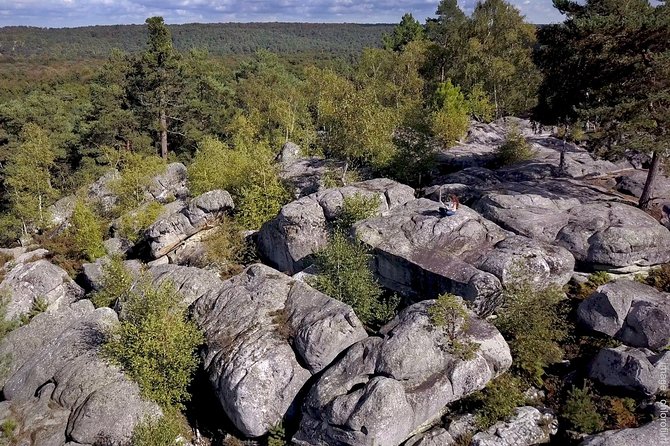
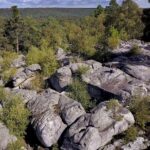
If you’re chasing one of the world’s classic bouldering landscapes, Fontainebleau is where people go when they mean it. The reason it works for beginners and experienced climbers alike is simple: the rock here offers tons of problems at lots of skill levels.
For you, that means you won’t just struggle on moves that are out of your league. A good guide can steer you toward the right size challenges for your body and comfort level—then, if you’re feeling confident, you can try bigger or more demanding lines deeper in the forest.
It’s also a break from city energy. You get real forest time, not just a short park walk. Even better, it’s close enough to Paris that this half-day format feels doable.
You can also read our reviews of more tours and experiences in Fontainebleau.



How the half-day usually plays out (around 3 hours)
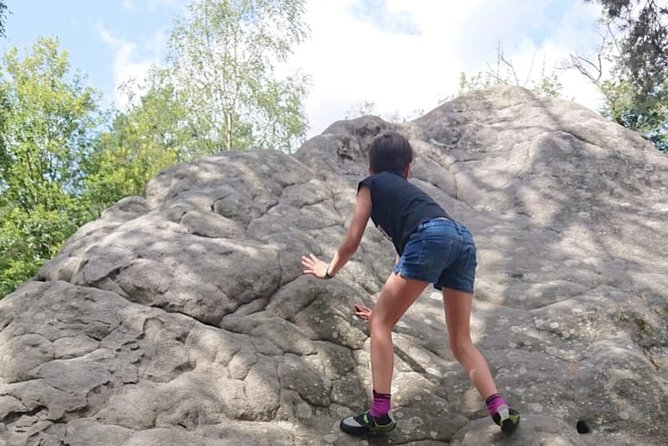
Expect a structured experience, not a free-for-all. In about 3 hours of bouldering time, the guide focuses on helping you understand how to move, how to fall safely, and how to keep improving without overthinking every move.
Here’s the flow you can expect:
1) Meet, gear up, and get a quick safety intro
You’ll start at the meeting point in Bois-le-Roi (10:00 am). Your group equipment and crash pads are provided, and the guide sets the tone: how to approach a problem, where to place pads, and what safe movement looks like when you’re climbing without ropes.
2) Learn basics through your first problems
Right away you’ll work on smaller rock formations—exactly the right setup for a first bouldering experience. The goal is to connect technique to results, so you can feel progression quickly instead of guessing all day.
3) Work your way up with coaching and safety maneuvers
You’ll get guidance on progression techniques—how to choose holds, how to manage body position, and how to make smart attempts. Safety is not treated as a checkbox. Guides are specifically praised for being focused on being sure you’re safe while you try harder lines.
4) Optional deeper exploring for confident climbers
If you’re comfortable and the group energy is good, you may head farther into the forest to find new spots. The idea is to match the experience to you: beginners get a smooth start; stronger climbers get extra range.
In at least one described session, your guide also took pictures and offered helpful advice for the rest of your climbing trip. That kind of personal touch matters because it turns a 3-hour outing into something you can build on later.
Guides, technique, and the safety mindset that actually helps
The biggest quality signal here is the coaching style. Multiple accounts highlight guides who check your level fast and then teach in a way you can use immediately.
For example:
- Olivier is praised for quickly assessing climbing level and coaching someone to exceed what they thought they could do, with strong attention to safety.
- Ivan is noted for explaining things in an easy way while staying mindful of different personalities within a group.
- Anabelle is described as knowledgeable and choosing a great spot to introduce people to Fontainebleau-style climbing.
What does that mean for you in practical terms? It means you’re not just climbing. You’re learning:
- how to manage your body on short problems
- how to attempt safely when you’re getting tired
- how to think about progression without panic
- how to improve your odds on tougher moves
And because this is bouldering without harnesses or ropes, those safety lessons aren’t optional trivia. Crash pads help, but the guide’s guidance on how you try and land is what keeps the day fun instead of scary.
Gear checklist: what’s provided and what you’ll need
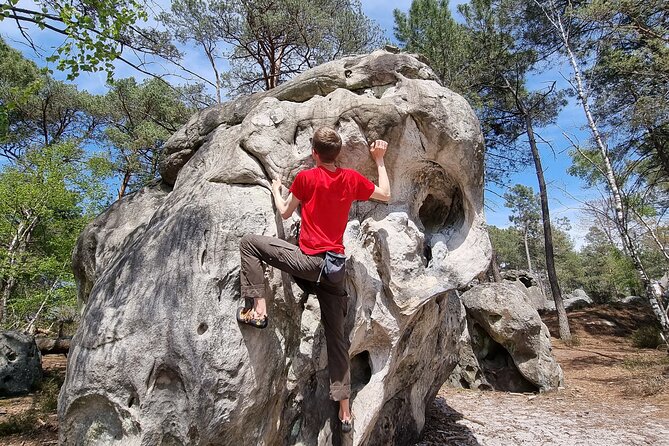
Good news first: crash pads and group equipment come with the experience. That removes a lot of the friction for first-timers.
What’s not included: climbing shoes. This matters more than it sounds. Bouldering shoes are grippy, and they help you trust your feet on small edges and smears. If you show up without the right footwear, you may feel like you’re fighting the rock instead of learning the sport.
So here’s what I’d plan to bring:
- Climbing shoes (borrow if needed, but try to get something with proper grip)
- Comfortable outdoor clothes that you can move in
- A water bottle
- A small layer for changing temps under the trees
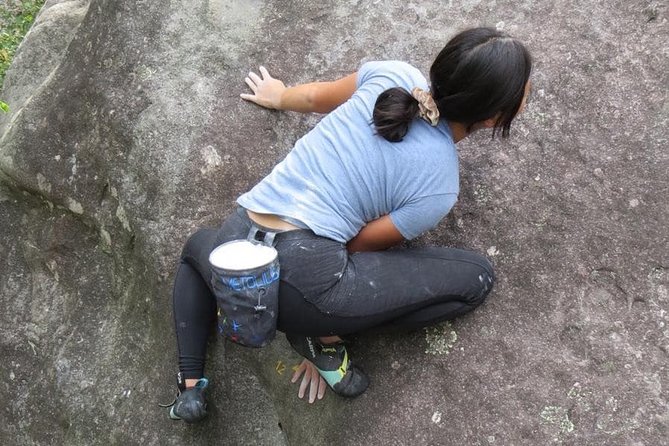
- If you use chalk, bring it, unless your guide tells you otherwise
One more practical note: bouldering is short bursts of effort. If you go in dressed for a gentle walk, you’ll pay for it after the second or third attempt. Go for mobility.
Price and value: what $57 buys in the real world
At $57 for about 3 hours, this is priced like an active, guided outdoor class, not like a random gear rental. The value comes from three specific things included in your price:
- Group equipment: you don’t need to source everything yourself
- Crash pads: key for harness-free climbing
- Instruction and safety coaching: the guide’s role is the difference between fun practice and an awkward day
You’re also getting a small group cap (max 4). That usually means more individualized attention and fewer minutes spent waiting around. In a skill activity, time on task is the real currency.
The only cost you should mentally budget for is climbing shoes, since they’re not included. If you already have decent shoes, the deal gets even better.
Logistics from Paris: meeting at Bois-le-Roi without a headache
This is designed to be low-stress for a day trip. You meet in 77590 Bois-le-Roi, France and start at 10:00 am. The activity ends back at the same meeting point.
The location is also described as being near public transportation, which is helpful if you don’t want to fight for parking. And since the group is small, you’re less likely to feel like you’re stuck in a long pickup line.
One thing to plan around: the activity needs good weather. If conditions are poor, it can be canceled and you’ll be offered a different date or a full refund (so don’t bet your whole trip schedule on it without flexibility).
Who this is best for (and who might want to choose differently)
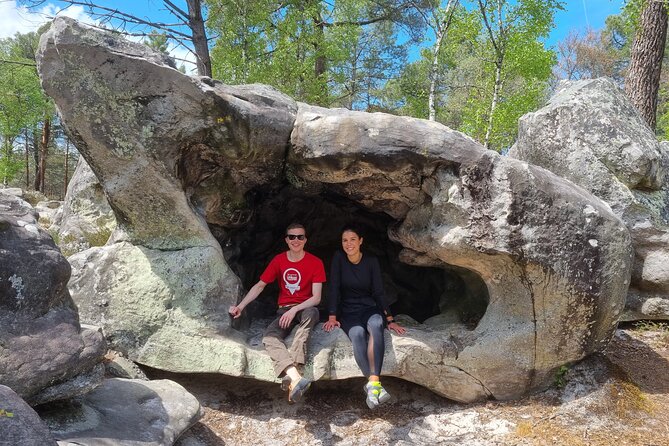
This half-day bouldering outing works for a wide range of climbers:
- Beginners: you don’t need prior climbing experience
- Intermediate climbers: you can practice technique and try harder lines
- Confident climbers: you can potentially go deeper into the forest for more spots
The catch is physical. Even though it’s not rope climbing and there’s no harness, you should expect real effort: pulling, balancing, and moving repeatedly. If your fitness level is low or you’re nursing a serious injury, the day could feel like more work than you planned.
If you’re looking for a gentle guided walk, this isn’t that. But if you want a hands-on way to learn bouldering fundamentals outdoors, this is exactly the kind of activity that gives you a strong start.
What makes this day feel worth it beyond the climbs
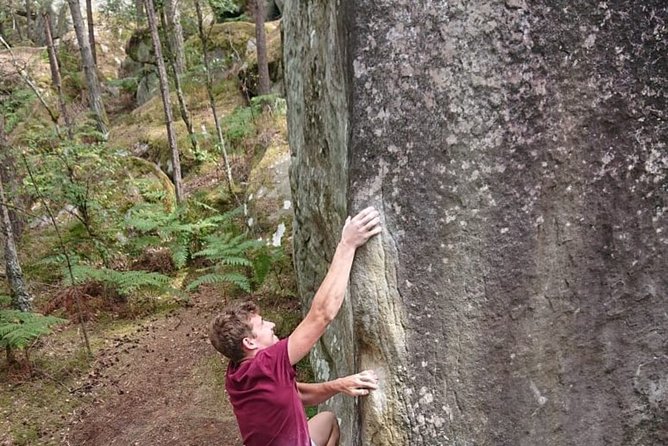
Bouldering days can be either “climb, repeat, leave” or “learn something.” This experience leans toward the learning part.
Why? Because the guides don’t just point you at a rock. They:
- assess level quickly
- teach progression technique
- stay safety-focused
- adjust to the group dynamic
That combination shows up in the way people describe their sessions—especially the emphasis on coaching and safety. If you’re new to climbing, that means you go home with useful instructions instead of only muscle soreness.
Should you book this Fontainebleau bouldering session?
If you’re in the Paris area and want an active outdoor experience that’s truly beginner-friendly, I think it’s a strong choice. The included crash pads and group gear remove the “I don’t know what I’m doing” friction. The small group size helps you get real coaching, which is the difference between trying moves blindly and understanding what to do next.
Book it if:
- you want to try bouldering without a harness or ropes
- you’re open to a physical half-day
- you’d like English or French coaching for technique and safety
- you want to get value quickly, without building a whole gear setup
Skip it (or choose a different option) if:
- you expect a casual, low-effort outing
- you’re not able to do repeated short bursts of climbing and controlled landings
- you don’t have access to climbing shoes and can’t get them
FAQ
FAQ
Do I need climbing experience to join?
No climbing experience is required. The program is suitable for both beginners and more experienced climbers, but bouldering is still physical, so you should have a reasonable fitness level.
Is the bouldering done with a harness or ropes?
No. This is bouldering without harnesses or ropes, using crash pads and safety coaching.
What equipment is included?
The experience includes group equipment and crash pads.
Are climbing shoes provided?
No. Climbing shoes are not included, so you’ll need to bring your own.
How long is the tour and when does it start?
It’s about 3 hours of bouldering and the start time is 10:00 am. The activity ends back at the meeting point.
How many people are in the group?
The maximum group size is 4 travelers.
What happens if the weather is bad?
The experience requires good weather. If it’s canceled due to poor weather, you’ll be offered a different date or a full refund.