REVIEW · PARIS
Paris: Anzac Day Day Tour to Villers Bretonneux
Book on GetYourGuide →Operated by Paris' TRIP · Bookable on GetYourGuide
Anzac dawn in the Somme feels personal. This 12-hour Paris-to-Hauts-de-France trip is built around Anzac Day in Villers-Bretonneux, with stops that make World War I history feel close and human, not distant. I really like that you’re not just driving past landmarks: you get an English-speaking guide and a structured route through cemeteries and memorials.
What I also like is the mix of places with different meanings. The Victoria School connection (a gift from the children of Australia’s state of Victoria to Villers-Bretonneux) gives the day a two-country emotional thread, while sites like Thiepval put a clear spotlight on loss and remembrance. One consideration: it’s a long day with tight pacing around the dawn ceremony, and you’ll want to be ready for that schedule.
In This Review
- Key highlights at a glance
- First stop: Villers-Bretonneux is the heart of Anzac Day
- From Paris to the Somme: long hours, organized bus time
- The Victoria School connection: a memorial with a personal handshake
- The Adelaide Cemetery: quiet ground where remembrance is the point
- The Somme battle sites: seeing the terrain that still holds the war
- Lochnagar Crater at La Boiselle (1916)
- Pozières: a site you can feel in your legs
- Thiepval Missing Memorial: the weight of names and absence
- Peronne and Mont Saint-Quentin: remembrance with a wide view
- Anzac Day Dawn Service timing: why your planning matters
- Price and value: is $330 worth it?
- What to bring (since food and flexibility aren’t included)
- Who should book this tour—and who should skip it
- FAQ
- How long is the Paris to Villers Bretonneux Anzac Day tour?
- Where do we meet in Paris?
- Is transportation included?
- What’s included in the tour price?
- Are food and drinks included?
- Will the tour include the Anzac Day Dawn Service?
- Is the Australian National Memorial central tower open during the Dawn Service?
- Can I cancel for a full refund?
- Is the tour wheelchair accessible?
- Should you book this tour?
Key highlights at a glance
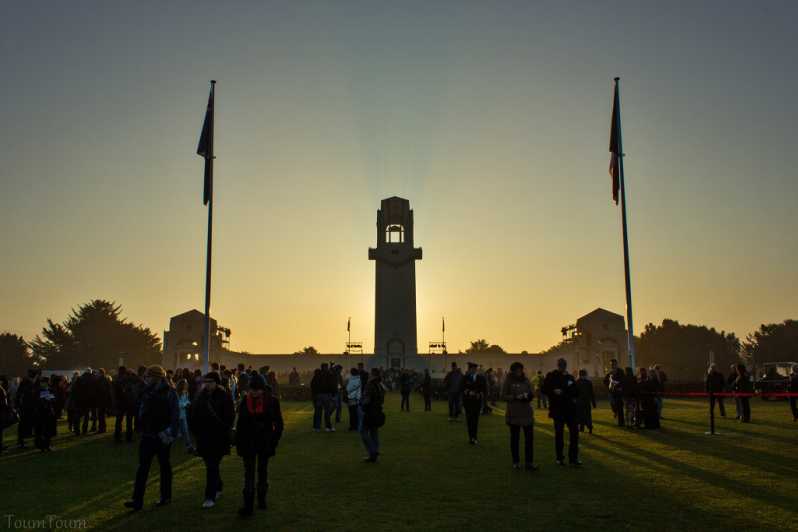
- Anzac Day Dawn Service in Villers-Bretonneux: the emotional centerpiece of the day
- Victoria School memorial link: built 1923–1927 as a goodwill gift from the children of Victoria
- Adelaide Cemetery: a dedicated place to pay respects
- Lochnagar Crater at La Boiselle: a stark, preserved reminder of the war’s scale
- Thiepval Missing Memorial: focused remembrance for those with no known grave
- Mont Saint-Quentin: a memorial at a high vantage over the Somme River
First stop: Villers-Bretonneux is the heart of Anzac Day
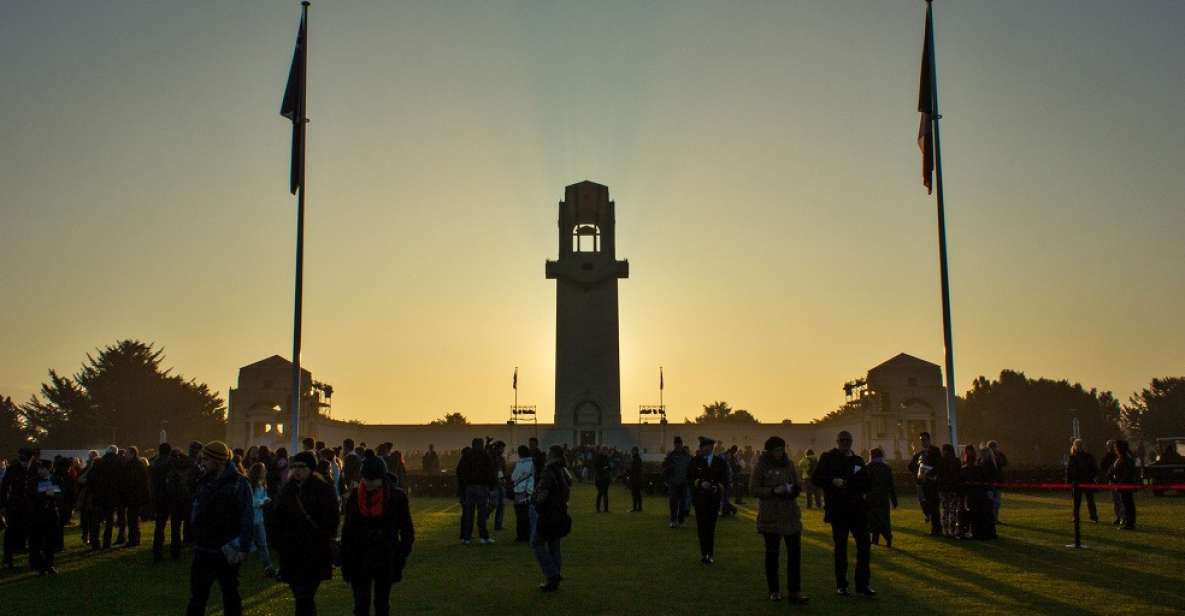
This tour is centered on Villers-Bretonneux, not on Paris sightseeing. That changes the whole feel. You’re leaving the city early, heading north into the Somme region, and the day is set up so you can be present for the Anzac Day Dawn Service there.
Even before you reach the main events, the tour’s rhythm matters. You start with transportation from Paris (meeting in front of the Opera Garnier, at the Metro Opera stop, or bus lines 3, 7, and 8). Then it’s a full-day plan that treats the Somme sites as more than photo stops. The guidance is there to help you understand what you’re looking at, and where each place fits into the broader story.
One small but important detail: the Australian National Memorial’s central tower will not be open to the public due to technical equipment installed for the Dawn Service. So if your expectations include climbing, exploring, or getting views from inside the tower, adjust them now.
You can also read our reviews of more tours and experiences in Paris.


From Paris to the Somme: long hours, organized bus time
The tour runs for 12 hours total, and it’s designed to run with one group, one plan, and one set of timing priorities. Round-trip transport is included, with the vehicle type depending on how many people are signed up: a minibus, a 15-seater coach, or a coach.
That matters more than it sounds. The Somme battlefields are not a cluster you can casually hop between by tram. Having a single transport setup means you spend the day looking at memorials and battle sites instead of navigating rural roads, parking, or coordinating your own rides.
You should also plan for comfort because it’s a full day. The tour strongly recommends comfortable shoes and warm clothing. That’s not just “nice to have.” Anzac Day morning can feel cold even if Paris seems mild, and you’ll be standing and moving in outdoor spaces.
The Victoria School connection: a memorial with a personal handshake
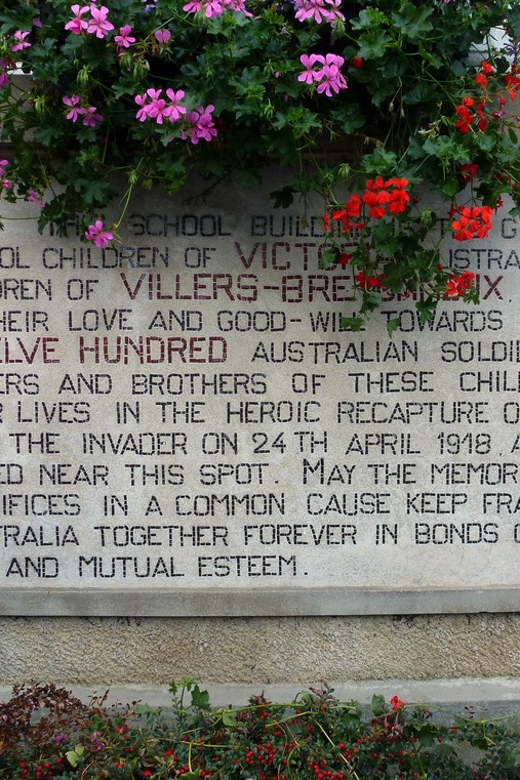
Once you arrive in Villers-Bretonneux, one of the first meaningful stops is the Victoria School. The school was built between 1923 and 1927, created as a gift from the children of Australia’s state of Victoria to the children of Villers-Bretonneux. The idea wasn’t just architecture or symbolism—it was proof of love and goodwill between people across distance.
This stop works especially well if you’re trying to understand why Anzac Day isn’t only about the battlefield. It’s also about what came after: the relationships, the rebuilding of community memory, and the long echoes that people chose to keep alive.
It’s also a good contrast to the cemetery and battlefield locations later. Here, you’re looking at a tribute that speaks with a calmer voice—less about scars and more about connection.
The Adelaide Cemetery: quiet ground where remembrance is the point
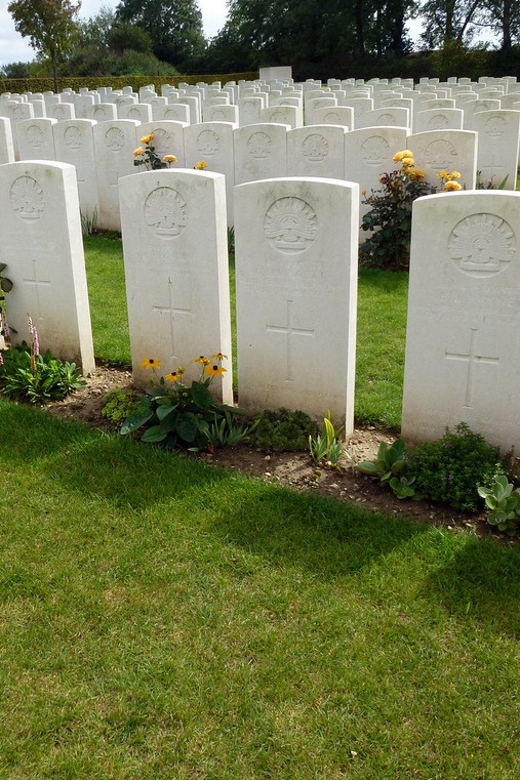
Next up is the Adelaide Cemetery, where you go to pay your respects to fallen soldiers. Cemeteries like this can be heavy, but that’s also what makes them valuable on a guided day like this. With an English-speaking guide, you’re less likely to walk through feeling lost, or to rush because you don’t know what you’re looking for.
Even if you’re not fluent in the details of World War I, the emotional logic is clear. It’s a designated space for burial and remembrance, and your presence there is the core purpose—not shopping, not sightseeing, not a quick look-and-go.
Practical tip: keep your camera put away for a little while. If you’re the kind of person who needs to take a moment, this is one of the best times in the day to do it. The tour format helps because you won’t be wandering on your own schedule.
The Somme battle sites: seeing the terrain that still holds the war
The tour moves from cemeteries into the landscapes of conflict. This is where the day becomes both visual and sobering, and where the guide’s context helps you connect names and places to what you see on the ground.



Lochnagar Crater at La Boiselle (1916)
At La Boiselle, you’ll see the deep Lochnagar Crater left behind at the site of fighting in 1916. The tour doesn’t treat it like a museum object. It’s presented as testimony to what war did to land—and by extension, to people.
What’s powerful here is the stillness. The crater is not a theatrical set. It’s a wound that remains visible long after the original moment. That’s why a guided day can be so affecting: someone helps you slow down and look at the place the way it’s meant to be seen.
Pozières: a site you can feel in your legs
You’ll also visit the site of the Battle of Pozières. The land around these places tends to make your body understand something your brain might miss. Even if you’re not walking far, your pace changes because you know the ground matters.
On this kind of tour, the value isn’t only learning facts—it’s learning how to look. A good guide will help you read the space instead of treating it like background.
Thiepval Missing Memorial: the weight of names and absence
One of the most moving stops is the Memorial to the Missing of the Somme at Thiepval. A missing memorial hits differently than a typical monument. It’s about absence made official, and about people remembered even when there isn’t a known grave to visit.
This is the part of the day where you might feel the tour’s pacing most strongly. The schedule around Anzac Day is built around getting to the dawn ceremony and then continuing the route. That means you should mentally prepare for a structured visit rather than lingering for hours.
Still, this is exactly the kind of place that benefits from a calm, guided focus. If you show up ready to stand quietly and read carefully, it can be one of the most meaningful moments of the day.
Peronne and Mont Saint-Quentin: remembrance with a wide view
Later, the tour includes Péronne and the war memorial of Mont Saint-Quentin, which overlooks the Somme River. This is a different type of experience than Thiepval. Instead of a memorial tied to the idea of missing, you’re looking from a higher vantage point over the broader valley.
The view helps with orientation too. Even if you’ve learned the names on a map before, seeing the geography from a memorial site makes the route of the war feel real. It’s harder to treat it like textbook material when the landscape is visible all around you.
Anzac Day Dawn Service timing: why your planning matters
The Dawn Service is why this tour exists. The core experience is built around it—so expect the rest of the day to be organized around getting you there, and then moving you through the key memorial stops afterward.
One reason this is worth your attention: there are access limits during the Dawn Service. The Australian National Memorial’s central tower won’t be open because of technical equipment installed for the ceremony. That can affect how much you can do at that site. If your goal includes climbing, exploring, or prolonged viewing from that specific area, plan for a different kind of experience.
Also, because the schedule is structured, don’t count on long extra downtime after major moments. Bring the mindset of a ceremony day, not a casual sightseeing day.
Price and value: is $330 worth it?
The price is $330 per person for a 12-hour guided day with round-trip transportation from Paris and an English-speaking guide. Food and drinks are not included.
Is it expensive? Yes, it’s not cheap. But the value angle is pretty clear:
- You’re paying for logistics. The Somme region is far from Paris, and the tour includes round-trip transport.
- You’re paying for meaning. The day isn’t only driving; it’s an English-guided sequence of cemeteries, memorials, and battle sites tied to Anzac Day.
- You’re paying for time efficiency. Instead of piecing together separate transport and planning your own route, you get a ready-made itinerary.
Where you can reduce the sting is what you bring. Since food and drinks aren’t included, you’ll want to handle meals strategically (more on that below). If you’re able to travel with the right expectations—ceremony first, sites second—this price starts to look more reasonable.
What to bring (since food and flexibility aren’t included)
Food and drinks aren’t included, so you’ll want to be proactive. The tour recommends warm clothing and comfortable shoes, but it’s also smart to pack practical extras for a long day.
I suggest bringing:
- A warm layer (and a spare pair of socks if you run cold)
- Comfortable shoes that can handle outdoor ground
- Something small for between stops, since you won’t have a built-in meal plan included
- A method for staying ready for the ceremony (for example, gloves or a hat, depending on conditions)
Also, keep your expectations grounded. This is a respectful commemoration day. You may find it’s not the kind of schedule where you can casually detour or linger.
Who should book this tour—and who should skip it
This tour is a strong fit if:
- You want an organized Anzac Day experience from Paris with English guidance
- You care about visiting major memorials and battle sites of the Somme in a single day
- You prefer structured timing rather than self-driving in rural northern France
You might want to skip it if:
- You need wheelchair access or have mobility impairments. The tour is not wheelchair accessible and isn’t suitable for people with mobility impairments.
- You dislike long travel days with tighter pacing. This trip is built around dawn timing, not flexible sightseeing.
If you’re going because Anzac Day matters to you personally, this is the kind of day that can leave a lasting impression. Just don’t plan it like a relaxed holiday.
FAQ
How long is the Paris to Villers Bretonneux Anzac Day tour?
The duration is 12 hours.
Where do we meet in Paris?
Meet in front of the Opera Garnier, at Metro Opera (or bus lines 3, 7, and 8).
Is transportation included?
Yes. Round-trip transportation is included by minibus, 15 seater coach, or coach depending on number of participants.
What’s included in the tour price?
An English-speaking guide and round-trip transportation are included.
Are food and drinks included?
No. Food and drinks are not included.
Will the tour include the Anzac Day Dawn Service?
Yes. The highlights include experiencing the Anzac Day Dawn Service.
Is the Australian National Memorial central tower open during the Dawn Service?
No. Due to technical equipment installed for the Dawn Service, the central tower of the Australian National Memorial will not be open to the public.
Can I cancel for a full refund?
Yes. You can cancel up to 24 hours in advance for a full refund.
Is the tour wheelchair accessible?
No. It is not wheelchair accessible and is not suitable for people with mobility impairments.
Should you book this tour?
I’d book it if your top priority is being in Villers-Bretonneux for the Anzac Day dawn ceremony and then visiting major Somme memorials in one organized, English-guided day. The route is purpose-built: Victoria School for the Australia–France goodwill link, Adelaide Cemetery for respectful remembrance, and Thiepval plus other key battlefield sites for meaningful context.
I wouldn’t book it if you need a slow, flexible schedule or if mobility is an issue. This is a structured day with real timing demands, and the tower access is limited during the ceremony.
If you’re the type who can handle a long day with a quiet, reflective pace, this one can be deeply moving—and it saves you a lot of planning stress from Paris.